Hacker News new | ask | show | jobs
by hinterlands 362 days ago
I've done some projects like that, although not with as many parts! I think the main disappointment that awaits the author is that within two years or so, the epoxy will turn yellow. These resins are unfortunately not UV-stable, even if kept in a reasonably well-lit area indoors (bookshelf, etc).

There are resins you can use for projects like that if you want them to last, but they're less fun to work with.

3 comments

Modern epoxies often claim to be UV stabilized, and as far as I can tell, this is a relatively recent advancement. For reference, I used Entropy CCR (slow cure) for the final model: https://entropyresins.com/product/ccr-clear-casting-epoxy/

I guess we'll wait and see!

We had UV-stabilized resins for the past two decades or so, but it just slows down the process. I used several UV-stabilized products and it just doesn't last.

For the UV-stable options, you have polyesters (which are very smelly) and premium aliphatic polyurethanes (which are finicky to work with).

Would putting some UV filter glass, the kind often used in museums, work to protect it the resin? I'm wondering if you fixed a glass casing around it that way... granted you'd have corner seems for the glass though
Maybe a cylindrical glass instead?
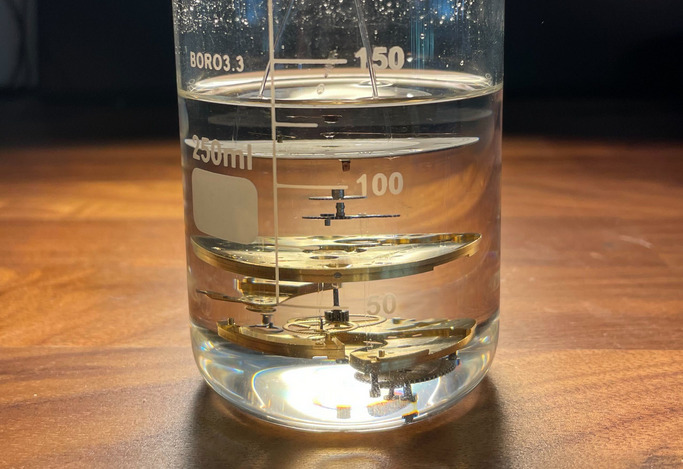
I tried that. Refraction makes it hard to understand what you're even looking at. https://fellerts.no/img/epoch/first-cast.jpg
I was thinking about a larger with less curvature glass. It might also be interesting to see if it's possible to match the refractive indexes of the epoxy and the glass.
Yellow and not transparent anymore?

Or just a yellow tint?

Just an orange-yellow tint. Here's a good example: https://preview.redd.it/k98iwl9flsk71.jpg?width=1080&crop=sm...
Hm, the left example does indeed looks bad in the sense of loosing transparency. But it was kept in direct sunlight.