|
|
|
|
|
|
by layer8
396 days ago
|
|
|
The point of inline replies is to quote just enough to establish the context of the reply, and to enable replying to multiple separate points without having to separately establish each point as context. Case in point: > It takes so much effort to read the email to figure out who said what Email clients used to color each quoting level, and mails started with something like: John Doe wrote on $date:
> Jane Smith wrote on $date:
> > Joe Shmoe wrote on $date:
> > > what they wrote
> > what they wrote
> what they wrote
and you knew that Jane was green and Joe was cyan. The respective points were also closer together, so you had to scroll less than you have nowadays.> while also keeping state of all the different threads. That’s why we had threaded views that showed messages in a tree, and showed when the subject (line) changed. People were encouraged to edit the subject line to reflect topic drift, so that you had a good overview when looking at the thread visualization, which would omit repetitions of the same subject text and only show where it changed. Example (threaded view at top, colored quotes at bottom): https://robot.unipv.it/clipedia/images/mutt-threads.png |
|
|
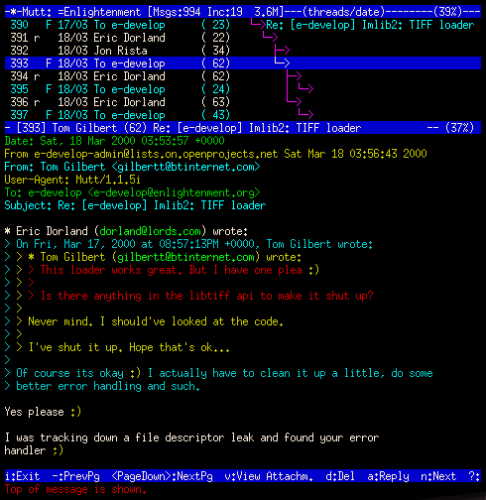
Scroll a couple of screens in the message text and you see something like:
(maybe with different colors) but you have to remember the stack/colors to decipher who is saying what.Unfortunately I have not seen mutt coloring the index with the same colors as the quoted text, which would help a lot (if you have a view that shows the index along with the message).