| Of course, there's the C Major thing :) And I didn't know about Movable Solfège, thanks! I'll have to study that. But, to put it in audio perspective rather than comparing words and letters, why is the note that corresponds to 440 Hz named A and not F -- implying that, going lower and lower from 440 Hz for each note, 261.63 Hz would not be named C but rather A instead. Or, to use maybe a comparison that would work from whence those two notation systems were created/named (I figure with a keyboard nearby), why is the first note of a standard piano octave (you know, this: [1]) labelled C and not A? Since it's the first note of the octave and since the German system is using the alphabet (which, well, starts with A), wouldn't it have made sense to have that first octave piano key be labelled A too :) [1]: https://www.hellosimply.com/blog/wp-content/uploads/2022/03/... I've seen this conversation several times online, and it's funny to see how participants cannot agree on what is being talked about here, and no conclusion is reached. So I'm aware that I might be asking a super dumb beginner question, but I really do wonder why Do=C and not Do=A. Don't hesitate to slap me with a "origins of musical notation systems" link, I love to read about music and history :) |
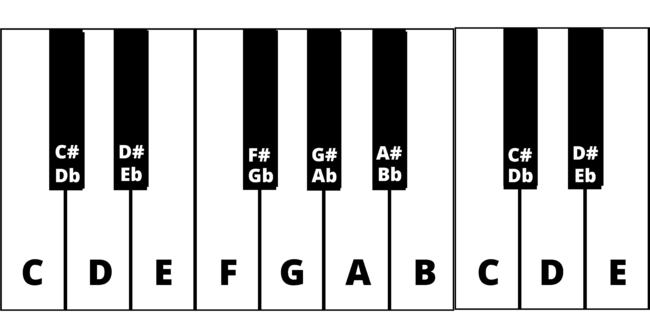
The piano has C natural in the middle of a full 88 keyboard, which is why it is a "natural" scale to pick (C major only uses the white keys, while A major would use three black keys).
So if you are learning another instrument, your "base" note will sometimes be entirely different.
Many "non-western" tradition also aren't tuned to 440 Hz, and even many _western_ traditions don't use 440 Hz for A, 415 Hz is also common.
[addendum] And why Do/Ut, Re, Mi? Because of a Gregorian chant where each sound sorta fell into a vocal range of monks ... then you adopt Do to whatever "sound" the instrument is closest, many years pass and deviations and standardizations ...
[addendum] I recommend starting out researching Guido d'Arezzo (and the Guidonian hand) a bit, that is where we get do/re/mi .. which was used as a teaching aid (which is maybe why Solfege as a term is often used in combination to sight reading or singing from sheet music). Almost no matter what language someone sings/voices Do/Re/Mi/... ... it falls naturally into a vocal range, irrespective of octave.
And then one could look into the hexachord ... and deep into a very deep well of confusion.