|
|
|
|
|
|
by rtkwe
469 days ago
|
|
|
I don't know if he mentioned, the name doesn't show up in the transcript, it but this seems to be very close to an unrolled Curta, the main difference being that it doesn't use 9s complement for subtraction so it has a more complex bidirectional carry mechanism. Otherwise the function is very similar down to shifting the turns and output accumulator to multiply the entry number. The big drum he makes many of is just one in the Curta that actuates every output dial through a full rotation. 9s complement makes subtraction extremely satisfying on the Curta because it causes a carry on (almost) every single output and turn accumulator dial. |
|
|
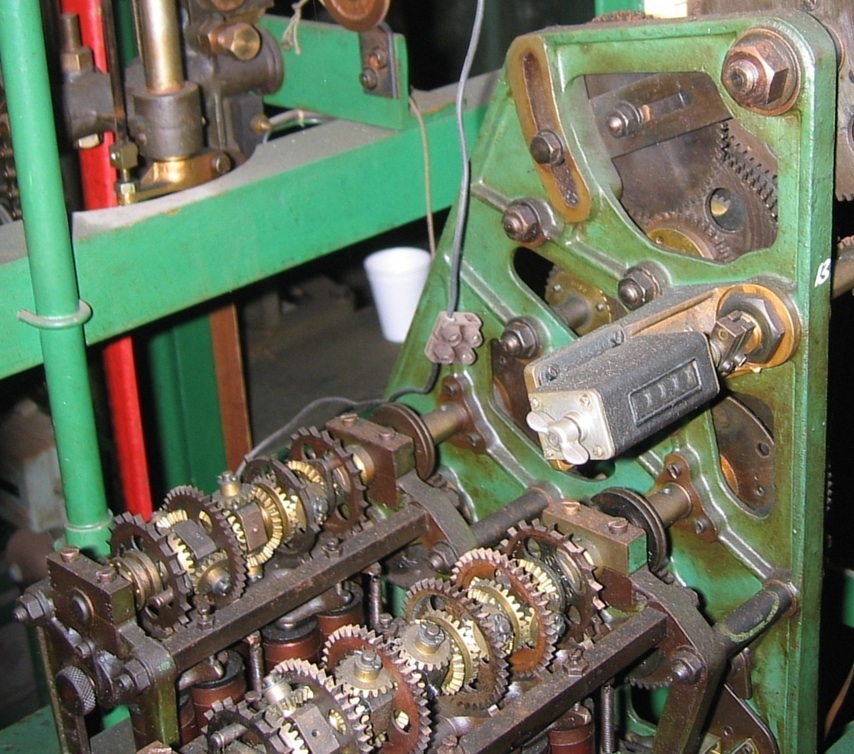
The "big drum" you mention is sometimes called a Leibniz Wheel, though this naming convention is misleading in some ways: http://journals.cambridge.org/abstract_S0007087414000429. As that article argues (though I disagree with some points), the history of calculating machines is more nuanced than a linear progress narrative suggests. So, I tried to keep my narrative a little tighter and not go much into the calculators of the late 19th century and the designs in the 20th century like the Curta. Also, the Curta's (awesome!) story has been told many times, so I did not feel the need to go into it. Sorry to go on this long, but I think this history is fascinating and how we tell it speaks to how we understand how technology changes through time.