I've spent the last few months in between searching for jobs exploring engine analysis of chess games and how parts of the analysis can be used to construct narratives about how the games went, so I opened up this article very quickly. This is a fine first attempt but I feel it's missing something very important, mainly the win/draw/loss percentages. Chess engines previously used centipawn as a way of comparing moves and positions within the search space, but now many if not most of the top engines are also incorporating the win/draw/loss percentage estimations that come from neural networks.
To that end, Julian at the Chess Engine Lab has developed a style of narrative and analysis that I feel like really uses the WDL percentages well.
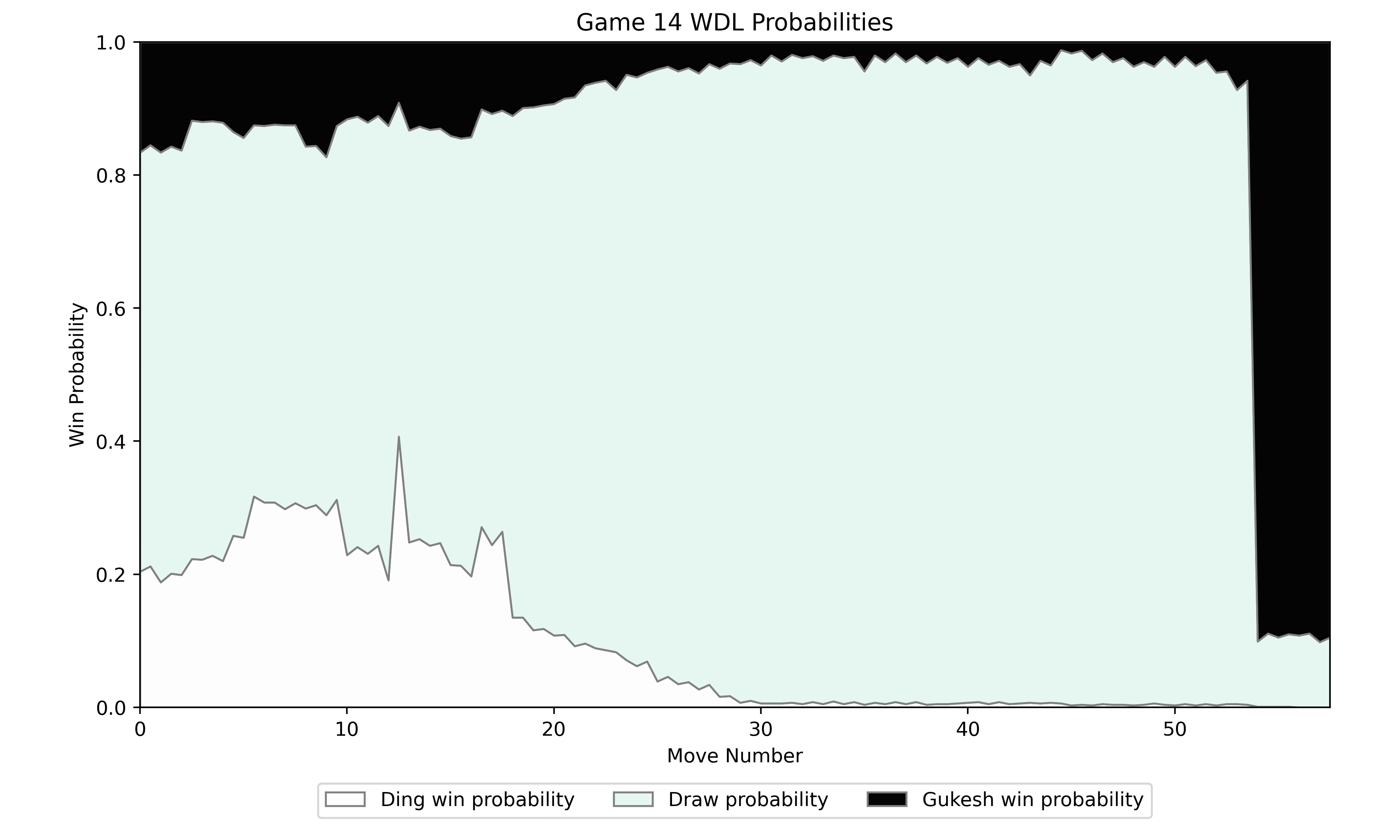
His series on the 2024 World Chess Championship is great and I haven't seen anything else come close in terms of using a chess engine to craft an accessible analysis of the matches. Take one look at the WDL percentages from Game 14 and it becomes extremely clear what's about to happen and how the game evolved:
https://substackcdn.com/image/fetch/f_auto,q_auto:good,fl_pr...
That’s the joy of high level engines being a thousand points better than the best human player! The chess engines are further away from the grandmasters than the grandmasters from us. Engines consistently see our mistakes that would take a hundred grandmasters a hundred life times to find. What the chess engine calls a mistake might only be understood as such after twenty moves that nobody could understand until suddenly it becomes clear that the chess engine is going to crush the other player. There’s so many layered levels of logic that it passes into mysticism again. In the same moment, I think we are entering a new age of understanding games, with the engines better able to explain themselves via WDL and new measurements for things like sharpness and value of tempo being explored. It’s a fun time to be into chess explanations.
The overarching story seems less like Ding made a blunder but more that Gukesh missed quite few opportunities to beat Ding long before the final game.