|
|
|
|
|
|
by cossatot
602 days ago
|
|
|
Based on the location and focal mechanism of the earthquake (https://earthquake.usgs.gov/earthquakes/eventpage/nc75095651...), this is a strike-slip earthquake on the plate boundary between the Pacific and Gorda/Juan de Fuca plates. Strike-slip earthquakes occur when two plates slide beside each other during an earthquake, usually along a steeply-dipping if not vertical fault. These kinds of earthquakes almost never produce damaging (or even really noticeable) tsunamis because there is no real displacement of sea water by seafloor movement, unlike a thrust or subduction zone earthquake. The USGS's automated systems calculate the location and focal mechanism/moment tensor pretty much instantly from the seismic network. The system should know that a significant tsunami is unlikely based on the parameters of the earthquake. On the one hand, it's good to be cautious, but on the other hand, a system designed to cry wolf is also self-undermining. Maybe they should have a tiered warning system? |
|
|
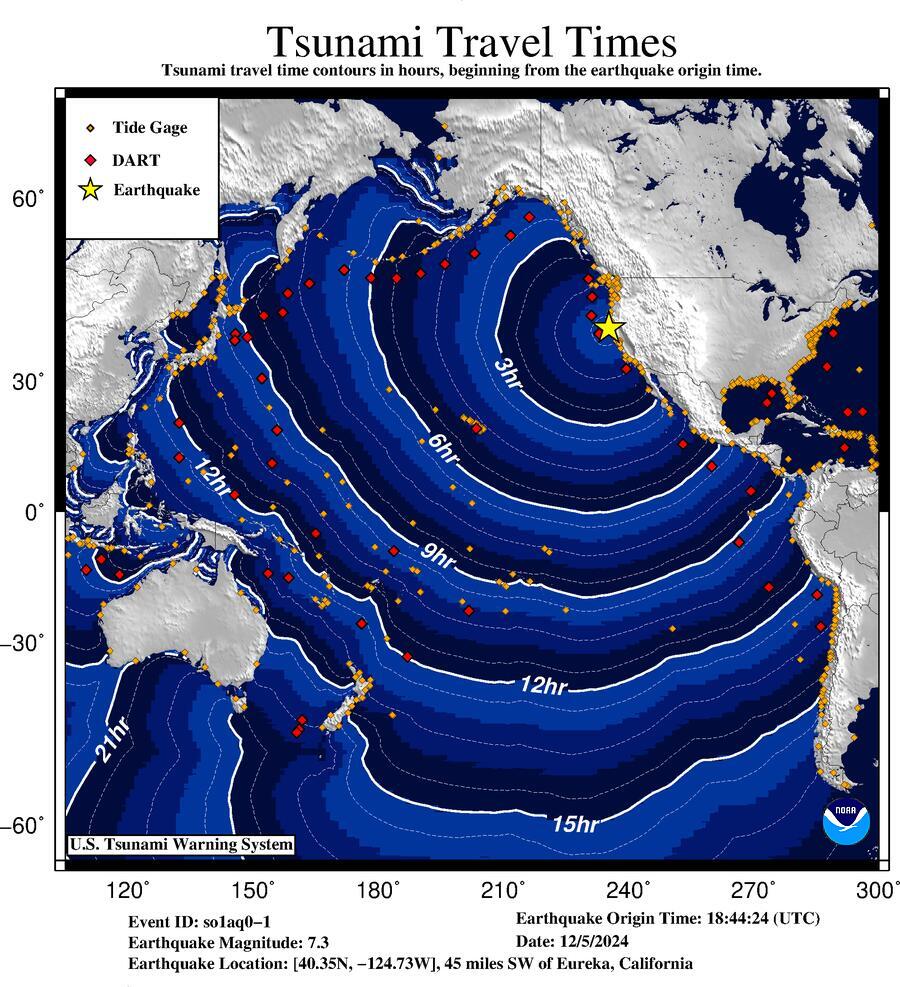
There are many steep canyons on the Pacific coast, and here is just one example of mass casualties from a tsunami resulting from a submarine landslide triggered by a strike-slip fault earthquake:
Caltech, 2018[1]: "Contrary to Previous Belief, Strike-Slip Faults Can Generate Large Tsunamis"
[1] https://www.caltech.edu/about/news/contrary-to-previous-beli...