|
|
|
|
|
|
by hollerith
710 days ago
|
|
|
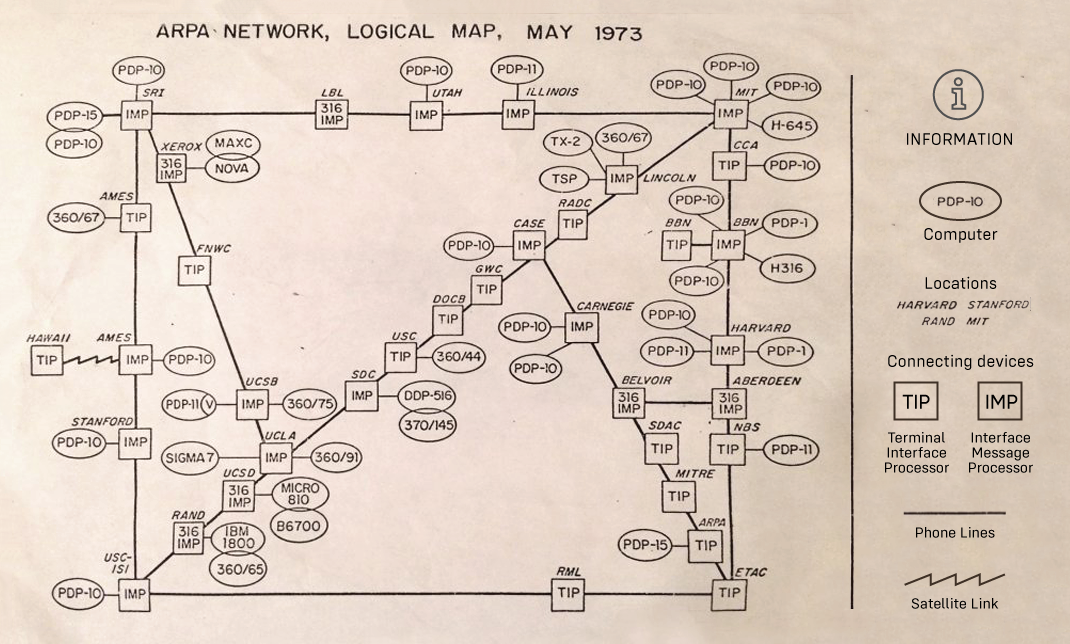
Interesting. I want to point out though that the document you link to is dated 1980, which is late in the development of the internet (ARPAnet): by then the network was 11 years old and research on packet-switching had been going on for 20 years, which is one reason I find it hard to believe that the Labs (or anyone at AT&T) contributed much to the development of the internet like great grandparent implies when he imagines the Unix guys saying, "why can't we work on the the future of a global inter-net? Why do we have to hide it as a text processing system?" Yes, the early internet (ARPAnet) ran over lines leased from AT&T, but I heard (but have not been able to confirm by finding written sources) that AT&T was required by judicial decree (at the end of an anti-trust case) to lease dedicated lines to anyone willing to pay and that if AT&T weren't bound by this decree, they would probably have refused to cooperate with this ARPAnet thing. I concede that after 1980, Unix was centrally instrumental to the growth of the internet/ARPAnet, but that was (again) not out of any deliberate policy by AT&T, but rather (again) the result of a judicial decree: this decree forbade AT&T from entering the computer market (and in exchange, IBM was forbidden from entering the telecommunications market) so when Bell Labs created Unix (in 1970), they gave it away to universities and research labs because it was not legally possible to sell it. In 1980 (according to you, and I have no reason to doubt you) AT&T no longer felt bound by that particular decree, but by then Berkeley was giving away its version of Unix, or at least Berkeley had an old version of Unix from AT&T which came with the right to redistribute it and would soon start to do exactly that, and Berkeley's "fork" of Unix is the one that was responsible for the great growth of the internet during the 1980s. Specifically, even if an organization wanted Unix workstations for some reason other than their networking abilities, the ability to communicate over the internet was included with the workstation for free because most or all of the workstation OSes (certainly SunOS) were derived from Berkeley's open-source version of Unix (although of course they didn't call it "open-source" back then). |
|
|
Meanwhile everyone and their pet dog Woofy was exploiting the recent explosion in portability of Unix and thus source-level portability of applications, using unix as the OS for their products - because it enabled easier acquiring of applications for their platform.
With some Unix vendors (among others Sun, which arose from a project to try to build "cheap Xerox Alto"), providing ethernet networking and quickly jumping on BSD sockets stack, you had explosion of TCP/IP on unix but it still took years to get dominant.