| With Mongo, you don't. Bullshit. The sharding impl in MongoDB still[1] crumbles pitifully[2] under load. Regardless of sharding MongoDB still halts the world[3] under write-load. Their map/reduce impl is a joke[4][5]. If you had done the slightest research you'd know that every single aspect that you need to scale out Mongo is either broken by design or so immature that you can't rely on it. MongoDB may be fine as long as your working set fits into RAM on a single server. If you plan to go beyond that then you'd better start with a more stable foundation - or brace yourself for some serious pain. [1] https://groups.google.com/group/mongodb-user/browse_thread/t... [2] http://highscalability.com/blog/2010/10/15/troubles-with-sha... [3] http://2.bp.blogspot.com/_VHQJkYQ5-dY/TUO3RAn8SNI/AAAAAAAABq... [4] http://stackoverflow.com/a/3951871 [5] http://steveeichert.com/2010/03/31/data-analysis-using-mongo... |
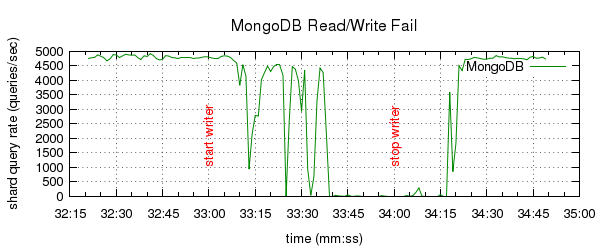
[2] is from a year and a half ago. It doesn't belong in a sentence that includes the word "still." I work at foursquare, btw. Those outages happened on my first and second days at the company. I wasn't so keen on mongo then either. We've gotten much better at administering it. Basically all our data is in mongo, and it has its flaws, but I'm still glad we use it.
[3] is also from a year and a half ago. Mongo 2.2 will have a per-database write lock, which is at least progress, even though it's obviously not enough. Since 2.0 (or 1.8?) it's also gotten better at yielding during long writes.
I have no experience with their mapreduce impl and can't speak to it.