Hacker News new | ask | show | jobs
by ftth_finland 748 days ago
Not that I disagree that things are more expensive on AWS, but this is a bit simplistic, not to mention apples to oranges.

1) You cannot buy just one IPv4 address, you have to buy at least 256.

2) Owning address space isn’t free, you have to pay RIR fees. Fees depend on your region, but start at around a grand per year.

1 comments

ARIN it's $250 for /24 and a IPv6/40 with an ASN.
So for 256 * 33 and 250 a year i can get 256 ip4 addresses? For a noob can you explain a bit more? If i want#d to use a few at multiple different physical locations around the world iss there anything making that a bad idea/impossible?
The main technical limitation is that /24 is the smallest prefix that is widely accepted. So you can't just announce a /32 (single IPv4) at different locations.

Generally speaking, if you own the IP space, it just needs to be announced in BGP and traffic will come. You can either peer with someone yourself and get transit from them, or have them advertise it for you.

It's possible even for a private person to do it, if they have one of several workable mixes of knowledge, time, cash, contacts and technical requirements. I've done it for a while.

The main practical question really is who will peer with you and with what conditions. For example, your ISP will absolutely not do this on a consumer plan, but might on a business plan. AWS will do it for busineses as well: https://docs.aws.amazon.com/AWSEC2/latest/UserGuide/ec2-byoi...

If you want to learn more about BGP, anyone can sign up for DN42, which is a free, large, shared environment that is a small scale replica of the internet. Everyone gets to be their own AS, get some IP space allocated, establish links to other participants (usually VPN tunnels over the real internet), and do BGP peerings over them. https://dn42.eu/Home

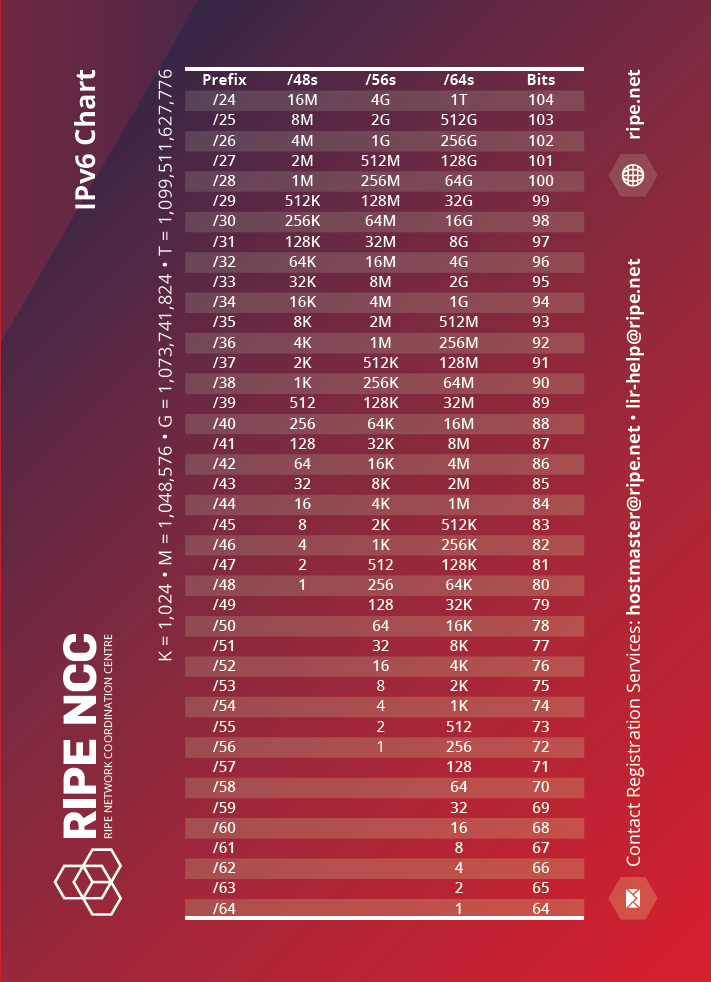
Like the other comment said, a IPv4 /24 is the smallest that can be used. I would recommend an IPv6 allotment as /48 is the minimum size as a /44 allotment (largest you can go while staying at $250/yr) is the way to go. Graphic below.

https://www.ripe.net/media/original_images/IPv6Chart_2015.pn...

ARIN also has requirements. You can't get IPs without dual peering and you may need to justify your use case with them. They do have experimental options but are very friendly to help you through the process.