Hacker News new | ask | show | jobs
by hedora 803 days ago
A recent study (made it to HN) used a novel sensor to count microplastics in bottled water. The numbers were 10x higher than expected, but the real surprise was that 50% were shed from the plant filtration system.

I’m guessing RO is similarly bad (the membrane is made from one of the plastics in question).

3 comments

I have been buying 5gal water jugs from a local Seattle company until recently, with the articles on all the microplastics shedding from the bottles into the water inside.

I did buy no-plastics Aarke glass/steel carbon filter pitcher for my drinking water.

It's hard to find water filtration without plastic involved, hopefully other options will come to the market, but their offering is pretty good so far.

>It's hard to find water filtration without plastic involved, hopefully other options will come to the market, but their offering is pretty good so far.

What about distillation as a filtration method?

Are the micro/nano plastics filtered by distillation?

Interesting what method of filtration the chip factories use, as they need 100% pure water for the cpu making process.

I've been drinking distilled water for a few years now, and the quality and peace of mind have been great. I documented it in https://www.nayuki.io/page/drinking-distilled-water .
Its not that interesting. Distillation works but its not healthy to consume. You could distill the water without plastics involved but then you need to add back minerals before drinking.
Debunked urban legend. Likely retcon from various mythology involving the chemistry lab's "deionized water" bottle which every chemistry teacher has to make up convincing reasons for the class not to drink from.
Maybe my thinking has been wrong. I always thought you would need to supplement for some of the minerals you might be getting from the water. I could be totally wrong here then, will need to do more reading.
Any water you drink is already very much hypotonic relative to your bodily fluids. Your minerals mostly come from your food, not your water.

I’m no expert on biology (I’m a chemist), but I drank quite a bit of DI water in grad school because the tap water was so gross.

Also, heavy water (D2O) tastes sweet. And it also won’t kill you when consumed, contrary to urban legend (at least not in quantities you can reasonably afford).

Isn't reverse osmosis also filtering out minerals?
Yes, and as another poster pointed out my thinking that the importance of those minerals might be incorrect. I always thought you needed to supplement on top of distilled water.

For RO, a lot of the systems include a mineral cartridge.

It’s for taste. Distilled water tastes like crap. I don’t know the science behind it, but “good” water (eg coming from hetch hetchy) tastes amazing in comparison.
100% pure water sucks the salts and electrolytes out of your body though, so you'd need to dope it again with some minerals
Debunked urban legend. Likely retcon from various mythology involving the chemistry lab's "deionized water" bottle which every chemistry teacher has to make up convincing reasons for the class not to drink from.
It's not a legend, it's just chemistry.
It's mythological biochemistry. It does not reflect empirical evidence.
Water is hardly the worst of it. Most people I know microwave food in plastic on a regular basis, and have been doing so for decades.

If you wonder about the crazy rise in colon cancer, I'd say doing that plus keeping a cellphone next to your ass 16 hours a day would definitely be more than enough in an animal model.

Cell phones use a variety of wavelengths to communicate, topping out in the gigahertz range for things like Wifi. It's impossible for light in that range cannot to cause cancer. It's literally less possible for it to cause cancer than visible light. (Which is in the terahertz range)
I think you’re underestimating the myriad biological pathways which can all contribute to cancer, and also the unusual chemistry that can be induced when you tickle molecules at the right vibrational modes. There’s a whole body of literature describing so-called “microwave chemistry”, and these methods can greatly accelerate certain reactions – far more than simple heating with the same amount of energy can do.

With that said, I still put my cellphone in the front pocket every day, for most of the day.

Curse the time limit on editing. Impossible for it to cause cancer. Not "cannot to cause". Ugh. Why does HN have that dumb time limit anyways?
IDK about the cell phone radiation but given the trickle/torrent of bad indicators about our biology and plastic, my rule is no plastic near food, at least at home where I can control it. Definitely no freezing, heating, or microwaving plastic near food. Feels like one of the many accepted facets of space-age modern life that is too convenient to examine closely for most people, and I think it retrospect it will be viewed somewhat as we view lead in paint and fuel, asbestos in buildings, smoking in public, etc.
One thing I am sad about where I'm exposed to a lot of plastic but have little choice is that I wear a dental guard at night. This probably more than makes up for all the plastic food contamination I avoid in other ways. But after shattering three teeth from grinding in my sleep (waking up to a loud crack and an exposed nerve), I've decided it's the lesser of two evils.
Funny you say that because I have an appointment with my orthodontist this week to discuss whether or not I can have a permanent retainer so I can stop wearing the plastic one they gave me. If the answer is no, I’ll just forgo the retainer and deal with crooked teeth. I don’t want to sleep with plastic in my mouth every night.
We use a distiller now that is all stainless into a glass carafe. It has a small paper/charcoal filter that sits in a porcelain housing just before it drips. What is left over is gross. Not what it looks like, that is just minerals. But it smells like things I shouldn't be smelling. I'd like to build a glass only solar still to save all that power, and to avoid the high temps that I suspect are causing some reactions that release VOCs. Not all of which might be getting caught by the charcoal.
Do you have a link to the product? Interested in something similar.
It's become impossible to find a coffee maker where water doesn't come into contact with plastic. There used to be a pretty decent one: Gourmia GCM4900. It had some subtle design flaws, and only lasted 5 years. (If I can buy another one, I probably can somewhat mitigate that and make it last longer)
I use a moka pot. No plastic, no filters to replace. Great coffee. Takes a little bit longer but it's worth it.
This comes close to no plastic:

https://flairespresso.com/products/espresso-makers/flair-cla...

There's a silicon gasket, and they offer a stainless steel plunger upgrade. There is some plastic in the portafilter that coffee will touch (unless you run in bottomless mode).

The bigger problem with most espresso makers (but not the model I linked) is that they use brass for the heating block / boiler and that leaches lead into the water.

This matters less in coffee shops (where they use up the water in the boiler in a few hours or maybe a day), but a lot more at home (where you might only refill the boiler once a week or even once a month).

What do you use for freezing food if not plastic containers? Heating and microwaving, okay, I can work around the plastic containers/plates, but the freezer I have no idea how I'd do that. Especially that the freezer's casing is still plastic
Glass containers work fine and come in the same shapes as plastic containers do. They are heavier and take a little more space due to being thicker, but it's a small difference.

They do have plastic lids most often, but the lid doesn't have to touch food.

Yup, the IKEA one’s are more than good enough. And they’re borosilicate so you can even use them in the oven.

The plastic issue is also why I think people doing sous-vide are insane. You’re vacuum sealing meat into plastic and then giving it a nice long leeching in hot water. Sometimes with acidic foodstuffs!

Cheers, thanks for the info! So as long as the plastic does not touch the food, I'm basically good to go?
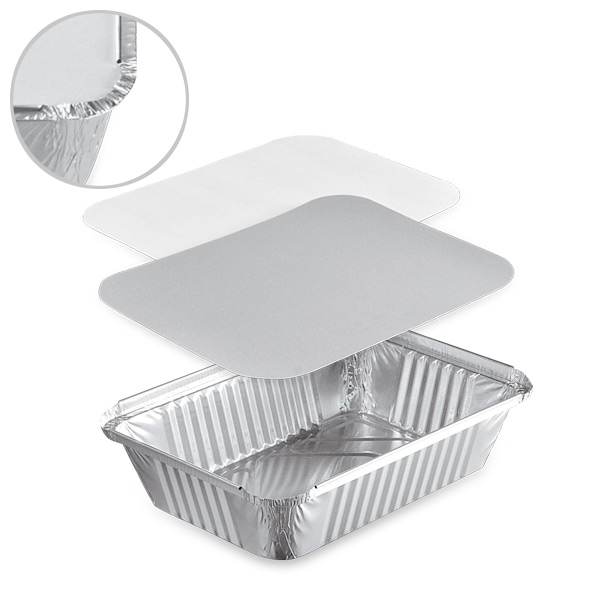
Aluminium trays, like that: https://www.emballagefute.com/img/plat-a-four-alu-sertissabl.... Yes, it’s non-reusable, pick your poison :/.
which study was that? anyone got the link? thanks!
Simply putting the comment text in Perplexity [1] leads to the following result:

https://www.pbs.org/newshour/science/scientists-find-about-a...

[1] https://www.perplexity.ai/