Hacker News new | ask | show | jobs
by itishappy 810 days ago
Not without significantly complicating your antenna setup (and the data processing setup too). You guessed it, getting multiple directions simultaneously is hard. Note how the current system only detects distance and speed in 1 dimension.

Here's an analysis from someone smarter than me:

> To enable the new features, radar systems now use multiple input/multiple output (MIMO) antenna arrays for high-resolution mapping. Traditional radar systems usually contain two to three transmitting antennas and three to four receiving antennas, which lead to a beam providing limited short-range coverage and a narrow field of view unable to generate images. The limited angular resolution is insufficient to differentiate among vehicles, pedestrians, or objects that are close. The MIMO approach increases the underlying channels from only nine to anywhere between 128 and 2,000. Given radar’s significantly lower costs — even with all the enhanced technology — it’s easy to see how the two technologies will increasingly be on more equal footing.

https://www.oliverwyman.com/our-expertise/insights/2023/jul/...

1 comments

So would this mean that with a few more transmitting and receiving antennas it could have comparable resolution to lidar?
In theory, though it sounds like to compete with LIDAR it will need about 1000x more antennas, with a related increase in electronics.
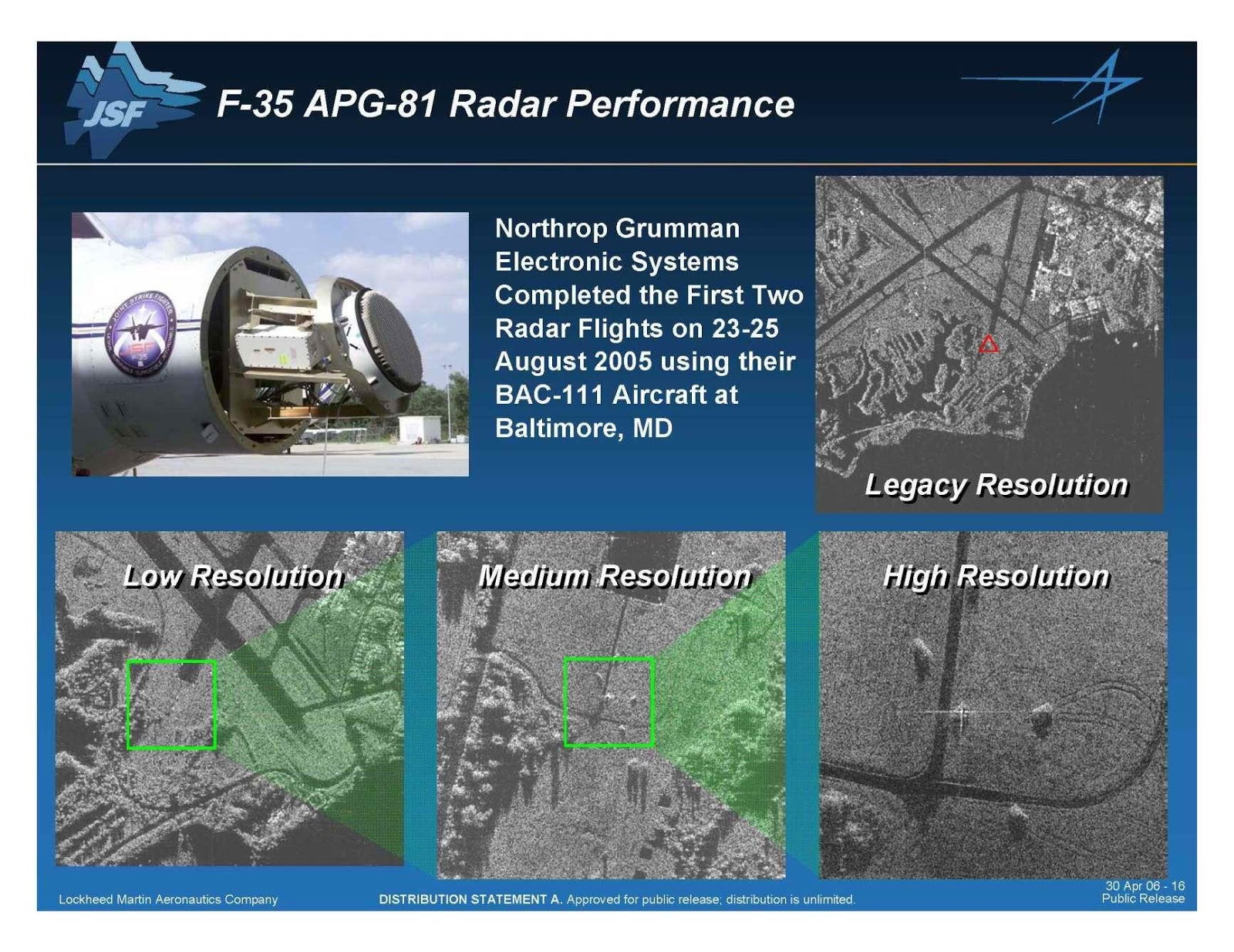
Cutting-edge AESA radar like on the F-35 is incredible. It actually looks like a black and white photograph. I think your guess on antennas is roughly correct based on what we know about modern AESA.
Isn't that Synthetic Aperture Radar though? You can get similar results (black and white aerial pictures) by strapping a pretty basic siso radar system on a drone.
I’m honestly not sure what the difference is. I kind of understand SISO, MIMO, and beam steering concepts, but just the basics from nerding out on my Starlink dish.

This is what I’m talking about: https://www.twz.com/f-35-will-get-new-radar-under-massive-up...

Specifically this image: https://www.twz.com/uploads/2023/01/03/20065813381381024.jpg

I don’t know how targeting works, but with this level of resolution, I think basic image algorithms can start to come into play. It blows my mind.

Yes, that looks like regular SAR imagery. Checkout @umbraspace if you want to see some really nice SAR images captured by satellites launched along starlink satellites.

https://twitter.com/umbraspace

Any idea if these antennas can be made small/on a PCB, effectively miniaturizing them?
Thanks!