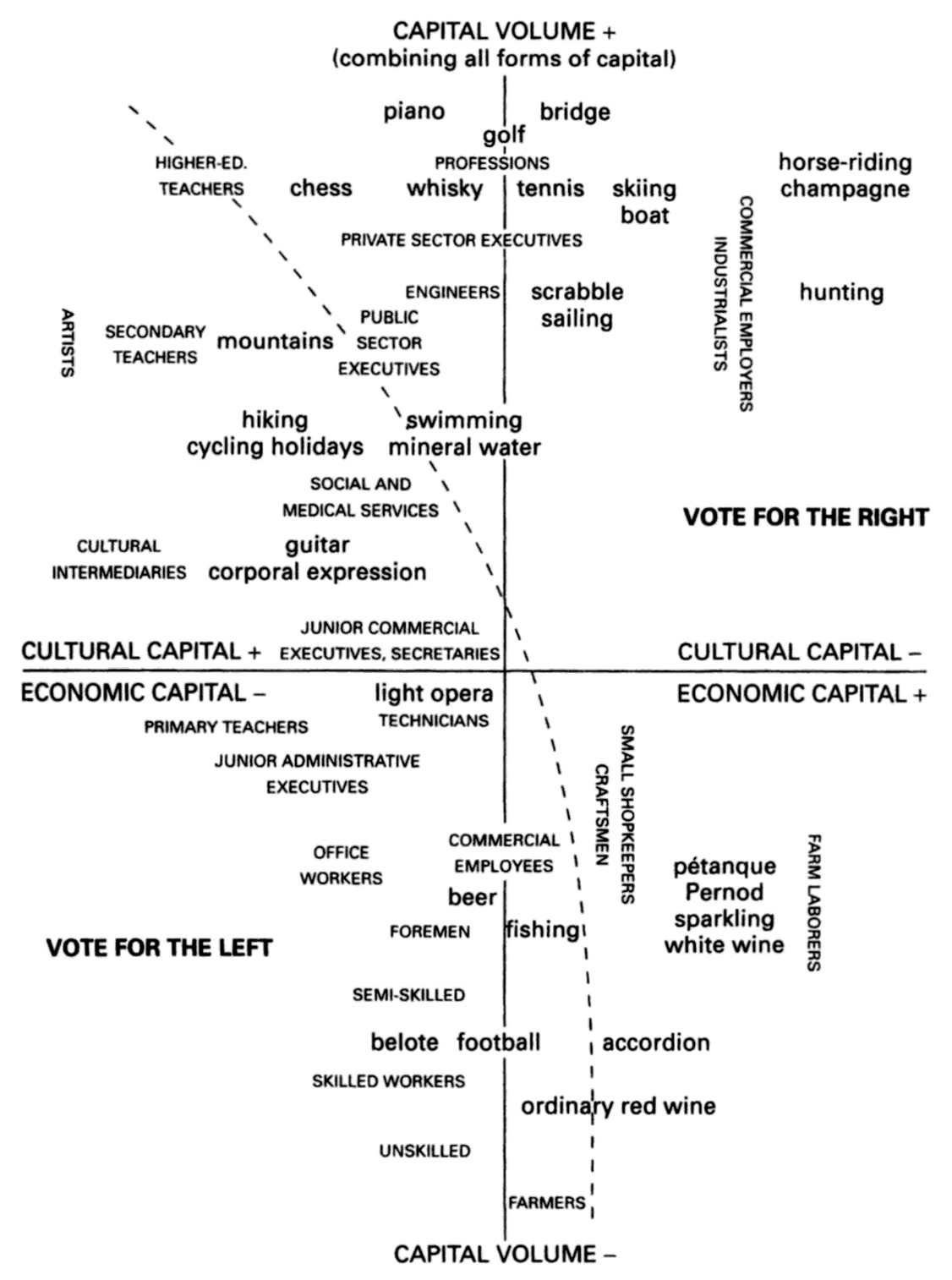
One cannot guess with post-modernism. Classicism has fixed standards of beauty, you can measure them looking at a piece of an art and grade them. The follow ups like Renaissance art tried different standards of beauty, but the idea was the same: you measure level of art looking at the art. But post-modernism had shown then you can make a pile of trash and it might work like an art installation. The really interesting question is if any pile of trash can serve as an art installation? Or maybe you need a pile with some special characteristics? If so then what are those characteristics?
How does Queen Bey's cover in that comment compare to David's Napoleon[2]?
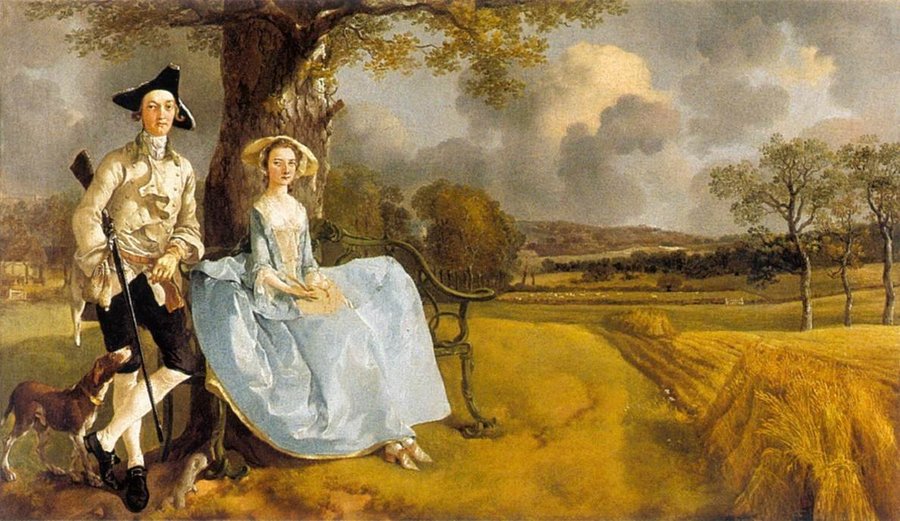
How does Queen Liz' picture from that comment compare to her younger self[3]? to the Beyoncé cover? to Gainsborough's Mr. & Mrs. Andrews[4]?
From the standpoint of the graphic arts[5], do either of these queens count as artists? or as celebrities?
In which quadrant of [0] do celebrity news tabs belong? "Marianne"? (with what accuracy can we guess a website's target quadrant by its immediate visual impression?)
[5] the Muses all seem to be patrons of the literary/musical arts; are there equivalents for the visual arts? WTF is Urania ("astronomy & astrology") doing in that group?
suggests that X né Twitter has poor demographics in the hexagon. Are they better among anglophones than francophones?
(Louis Vuitton, Zara, pop music, and Marvel all fall exactly on the cultural centreline; do we suppose they were lucky, or that they poll —and position— often?)
I wondered when Jon Berger would show up. His analysis of the Gainsborough picture was very eye opening to those viewers raised on more traditional analysis such as that of Kenneth Clark.
Along the same vein, Francis Frascina's commentary on Guernica (see youtube) is also enlightening. Both Berger and Frascina are very much of their time (vaguely marxist veneer of the 1970s?) but the beauty of these works is that they inspire conversation in succeeding generations.
I see a conversation from Berger (1972) with preceding generations:
(Ep 1 18:40) > ...as soon as the meaning of the painting becomes transmittable, this meaning is liable to be manipulated and transformed.
Hesse's The Glass Bead Game is from 1943, and I believe the "game" played in Castalia was meant to be exactly this sort of manipulation and transformation; creating new work by combining and transforming old, kind of like https://en.wikipedia.org/wiki/Millefiori , but for all sorts of work, not just glass.
EDIT: heh, at 19:44 Berger gets around to the https://en.wikipedia.org/wiki/Kuleshov_effect (without, however, mentioning Кулешов) ... and at the close of the programme he even cites a reference*! (on broadcast TV? what kind of marvel is this?)