Academia is one of the very few places where you can do research of your choice. If your theory is like a bug in your brain then you have few other options.
You can’t do that either. You are dependent on grant funding which means you can’t just research what you want, you need to tailor it to what the grant writer wants. If you want to truly research what you want you need your own huge pile of money.
Even in academia the freedom of inquiry is circumscribed by performance expectations by peers and administrators, especially pre-tenure. While tenure-track professors do not have managers telling them what to research and how to go about doing it like many industry researchers do, they are often expected to publish regularly (preferably in top venues, and at top universities this is required), do “impactful” work (where “impact” is often measured by citation counts, awards, examples of adoption by industry, etc.), and raise money for the university by acquiring grants. Grant agencies such as the National Science Foundation have their own requirements that have a way of circumscribing a professor’s research direction, and they are very competitive to earn.
So, it is more accurate to say that academia gives professors the freedom to run their own research organization, but if that professor wants a good shot at getting tenure and staying in the good graces of the university, the professor needs to be mindful of the expectations that the university has placed and the requirements of funding agencies. Even if a professor is mindful of these things, research is inherently risky, and a professor runs the risk of not getting tenure due to research results and grant-earning efforts not meeting expectations.
This is distinct from the idea that a professor can do whatever research he or she wants. Theoretically this is true in the sense that there will be no manager watching over the professor’s shoulder, but if the professor isn’t meeting the university’s performance expectations for publications and grants, the professor won’t make tenure, and even post-tenure the university could find ways to make life difficult for the “unproductive” professor.
I’ve thought long and hard about this, and I personally believe that a professor actually has more freedom in predominantly teaching environments. At teaching-oriented universities, the publication and grant-earning requirements are typically lower than that of research universities. At all-undergraduate colleges, sometimes there are no expectations for research. Of course, reduced research requirements mean increased teaching requirements, which could be challenging for researchers who don’t have an interest or talent for teaching. But for those who love teaching and who want reduced or even non-existent “publish or perish” pressure, then a teaching-oriented institution is a great alternative. Even if one’s research is restricted to winter and summer breaks due to the workload of teaching, this certainly beats trying to do research as a hobby on nights and weekends while juggling a 9-5 job and only getting 2-4 weeks PTO per year.
This is true, but what makes academia attractive is the idea of being paid to do research. One doesn’t have to be in the NBA to play basketball, but there’s a world of difference between playing at the local park versus being on the Golden State Warriors.
Of course, the reality of research careers is quite different from the pursuit of research itself. They’re quite competitive, especially in fields that lack a lucrative industry, and there are many restrictions on freedom that many people aren’t aware of until they actually become researchers. I learned these realities the hard way, and I’m in the process of restructuring my life to where I can pursue research as a hobby rather than as a paid profession.
Of course, the hardest part about pursuing research as a hobby is making a living outside of it. If a person who wants to be a researcher is aware of this reality, then he or she could prepare by developing some marketable skill, product, or service and use that to make a living while devoting time outside of money-making to research. However, for those deep in research or academia who feel trapped in postdocs, adjunct positions, or other unfulfilling positions but who spent their who careers preparing for an elusive permanent research job without developing other skills, it can be a very painful transition, even if in the long run stubbornness results in an even more painful outcome.
> One doesn’t have to be in the NBA to play basketball, but there’s a world of difference between playing at the local park versus being on the Golden State Warriors.
Depends on the research field. For example, Einstein did some of his best work without any university affiliation.
This is true; one doesn't need a university affiliation to do research in many fields. In Einstein's case, he famously worked as a patent clerk during his day job while working on his research during his spare time. However, there is a difference between pursuing research as a unpaid side activity versus being paid to do research; that is the sentiment I wanted to express with my local park vs. NBA analogy. While arguably pursuing research as a hobby provides a great deal of freedom (e.g., no publishing or "impact" demands from management because there are no managers), the problem is making a living that is sufficient for paying for shelter, food, and other necessities typically requires 40 or more hours per week of work, which relegates research to nights and weekends, which I don't believe is enough time to engage in deep work, though it's not impossible and there are many people who have done this, Einstein included (https://www.dpma.de/english/our_office/publications/mileston... and https://www.ige.ch/en/about-us/the-history-of-the-ipi/einste...). It just requires a job that is not too intellectually demanding. On the flipside, working as a paid researcher means you don't have to worry about trying to carve out free time to do your research. However, "he who pays the piper calls the tune" has become the mantra of research institutions these days; the days of pure curiosity-driven research, whether in academia or in industry (pre-divestiture Bell Labs and Bob Taylor-era Xerox PARC), are long past. These are the tradeoffs of being a researcher these days, and I've come to know this the hard way.
As someone who was very into photography as an undergrad and observing the reality of the profession for almost all photographers, I basically made the almost certainly wise decision to get a "real" job and do my photography as a hobby.
The article itself is basically a direct description of how people are lured into academia with exactly that expectation, and then end up in the gig economy. Not "choosing" much of anything. The market says you're the academic equivalent of a taxi driver.
There are other locations to consider theory if theory's your thing.
NGOs and Foundations: Earth science, plants, genetics, ecology, astronomy, education, data science, sampling/measurements, foreign affairs, international politics, finance, economics, public outreach. Ex: The Carnegie Foundation and Sub-Foundations: https://en.wikipedia.org/wiki/Carnegie_Corporation_of_New_Yo...
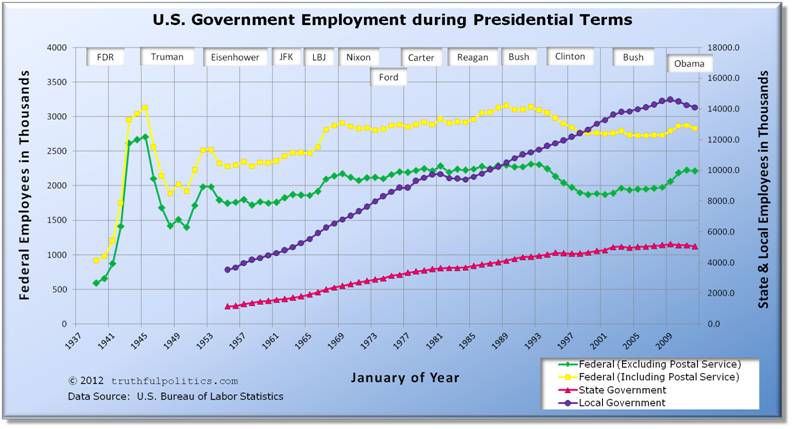
Gov: support of aeronautics, engineering, data science, computer science, forestry, agriculture, architecture, almost every hard science, economics, finance, law, even recreational specilists. [1] Feds have ~3M employees. States have ~5M employees. Local govs have ~14M employees. [2]
A lot of the jobs are workaday jobs, yet there's still a bunch out of ~22M that are somewhat "research". Formerly a contractor at NASA, and even for a contractor (not civil servant), seven publications. Mostly, minor citations, maybe 10-15, yet still, seven publications on research topics.