|
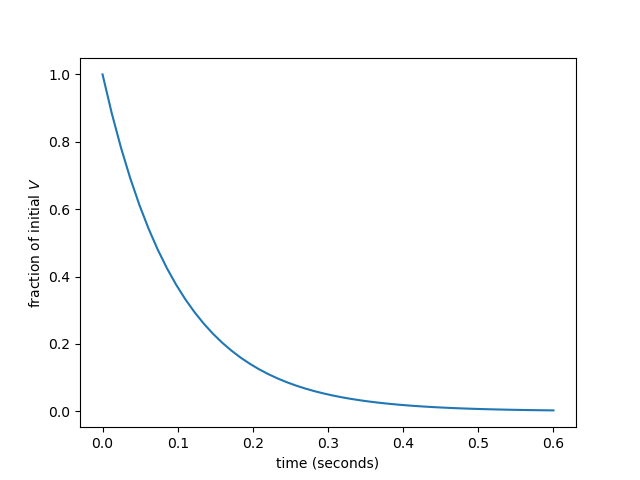
anyway, so, a lot of the disconnect in the conversation is that i was talking about the performance characteristics of 40 years ago, while you were talking about the performance characteristics of now. and the cost functions have changed significantly. it's still the case that you can display an uncompressed raster image on a raster device faster than a vector image, at least if it's already in your vram, and the extra cost of rendering vectors on a raster display is why vector images were comparatively little used in the 01980s, when all mainstream use cases of raster images used uncompressed images. but i agree that that's only minimally relevant to whether an svg or a png would be faster for a line-graphics timeline on a website! with respect to current performance, i still disagree with this: > Decompression time also scales much more significantly for larger raster images than computation time does for rendering vector images. for all the compressed raster image formats i'm familiar with, decompression time is fairly precisely linear in the image size, either input or output. vector graphics rendering attempts to reach this ideal, but often fails, because in most vector formats there are interactions between objects that usually have to be taken into account in drawing. so they have to use all kinds of clever algorithms to approach the linear-time ideal which raster compression formats reach almost without effort, and those clever algorithms tend to have high constant factors considering the 640×480 http://canonical.org/~kragen/sw/dev3/rc.png, which is produced by http://canonical.org/~kragen/sw/dev3/plotrc.py, which can also generate the same plot in eps, pdf, or svg. it ought to be close to a best case for vector rendering, imagemagick on my system takes 21 milliseconds to convert the png to uncompressed binary netpbm format (ppm p6, best of three tries); pngtopnm takes 29ms. generating encapsulated postscript instead and converting it with imagemagick, it takes 465ms. with pdf, 199ms. with svg, imagemagick takes 635ms, but that's obviously because it's badly implemented. (i just don't have a convenient way to benchmark the svg engines used in my browsers.) apache batik's 'rasterizer' command takes 1294ms, and i thought maybe that was a question of jvm startup overhead, but actually, if i run it with a nonexistent filename as input, it takes only 205ms, so about 1100ms of that is actually processing the svg, so it's actually the svg processing that's taking the time. benchmarking programs in hotspot is riddled with reproducibility problems, though so in this tiny, badly done benchmark, different vector formats came out as 22 times slower than png (eps), 9.5 times slower (pdf), 30 times slower (svg), and 52 times slower (svg in batik). i suspect that in my browser svg would be only about 4 times slower, which would optimistically mean that for images the size of my entire screen it would actually be faster if they were this simple; but i don't have a good way to prove it i think what this shows is mostly that vector formats are not simple, not that they're inherently slow. but i don't mean 'simple' in the sense that 'they are ultimately always encoding a grid of pixel values', as you said; i mean 'simple' in the sense that the code required to display vector formats on a raster display takes a lot more effort to write. as a crude measure of this, we can compare the amount of code in the svg and png implementations i have installed here. png is about 340k, if we include zlib, which we probably should: $ ls -l /lib/x86_64-linux-gnu/libpng16.so.16.39.0 /lib/x86_64-linux-gnu/libz.so.1.2.13
-rw-r--r-- 1 root root 219056 Nov 27 2022 /lib/x86_64-linux-gnu/libpng16.so.16.39.0
-rw-r--r-- 1 root root 121280 Nov 5 2022 /lib/x86_64-linux-gnu/libz.so.1.2.13
qt 5's svg implementation is 360k, but it is linked with, among other things, libharfbuzz (for text layout), libfreetype (for text rendering), libicu72 (i assume for text rendering), libpng, zlib, the zstandard library, and the brotli librarybut all of that is just the file format — it doesn't even include the vector rasterization code! that's done by the graphics engine in qt core, which is vaguely similar to cairo or libart in that it implements things like path items, rect items, ellipse items, line items, text items, group items, rotation, shearing, scaling, translation, and a bsp tree index to make the aforementioned interactions between drawn items efficient the other svg implementation i have installed is librsvg2, which is the implementation used by things like vlc, the gimp, gnome, r, netsurf, links2, and cairo. it's uh $ ls -l /usr/lib/x86_64-linux-gnu/librsvg-2.so.2.48.0
-rw-r--r-- 1 root root 11070952 Jul 30 2023 /usr/lib/x86_64-linux-gnu/librsvg-2.so.2.48.0
11 megabytes by itself, and it also links in libpng and zlib (and brotli, and liblzma, and harfbuzz, and pango, and freetype), plus cairo to do the actual rasterization, which is another 1.2 megabytes: $ ls -l /lib/x86_64-linux-gnu/libcairo.so.2.11600.0
-rw-r--r-- 1 root root 1187432 Dec 9 2022 /lib/x86_64-linux-gnu/libcairo.so.2.11600.0
so maybe a good estimate is that png is 30 times simpler than svg and 4 times simpler than basic vector rendering |