This may be a dumb question but near me is a cement factory that (incidentally) makes stackable concrete blocks the size of a car. They stack them multiple stories high and multiple blocks deep, at least while being stored at the factory.
What about lava makes it so we can’t redirect the flow around neighborhoods with these things?
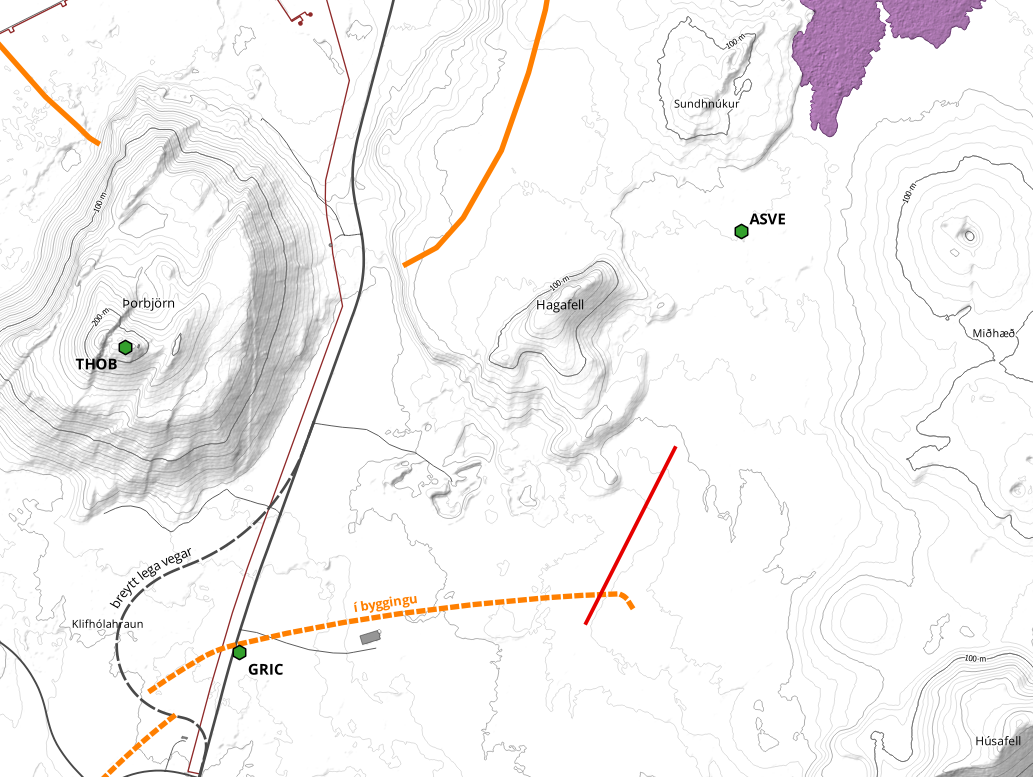
There is a berm that got built around the north of the town but unfortunately the fissures go under the town. The initial eruption came across the barrier so a lot of the lava has been diverted. The second eruption was inside the barrier so not a lot can be done. If you scroll down the linked page there’s a map of the flow and barriers.
There’s footage of them saving the machinery being used to build the barriers.
Go to about 11:58 on the timestamp in the bottom right corner, you will see the lava flowing along the berm (which is doing a good job of protecting a large building) while workers with bulldozers and diggers close the gap in the berm that the road goes through.
The fissure close to the town opens up at about 12:20. The lava flowing behind the berm reaches the road at about 12:50.
In this case, I believe it’s that the eruption is getting bigger and lava is seeping out of new & unexpected places in the ground, thwarting the existing redirection barriers. They do have some flow barriers, but the lava is oozing around them. They were hoping it wouldn’t come to this, but at some point, if the eruption gets big enough, lava barriers become pointless.
it is less about density and more about viscosity, which depends on the type and temperature.
I had an opportunity to interact with lava during a Hawaii eruption, and people could run/walk across red hot and flowing lava, but it would start melting the bottom of your shoes. This lava was definitely on the colder end of the spectrum, with a consistency like bread dough.
On the the other end of the specturm, there are very hot low viscosity lavas similar in consistency to soup. If you tried to step on that, it would be like falling into a pool.
Imagine owning the house over the road where the lava is heading right now, watching the disaster in slow motion. I guess the lava flow could stop right in front of it?
Iceland has socialised National Catastrophe Insurance. The premiums are very low but if your house is lava'd or avalanched you get a reasonable payout.
Of course it's better if that doesn't happen, but if it does there's solid support for the victims.
Hopefully, everyone is safe. But what of the homes? I'm interested to know what generally occurs, in terms of insurance, when homes and property are destroyed by lava flow? Is there insurance coverage for such events? Are the homeowners covered to rebuild/buy new homes elsewhere?
Yeah they evacuated the entire town from what I heard. So there is no danger to any lives. I'm pretty sure the city has accepted that as long as no one dies, that everything else can burn.