Hacker News new | ask | show | jobs
by notyoutube 902 days ago
Reacting to your first point: As far as I know (western europe), heatpumps mostly are used to heat water to then heat your house, and renovating generally means reducing breathability of the house itself, which, combined with the temp difference, means condensation/mold problems. You then have to correct that by opening windows intelligently or installing air ventilation, and then a heat exchanger to not lose too much heat. Like you say, it seems to be a no-brainer then to instead combine heat pump _and_ ventilation, so that the ventilation itself works with a heat pump.

The only counter-argument I have is that if all the heating were done using ventilation, you might have to live in a very windy house, but I feel like entirely decoupling the two is not the best solution to that problem…

3 comments

It makes a lot of sense to feed your ventilation output to a heatpump input for energy recovery with an air-source heatpump.

But otherwise I think there is a lot of value in other forms of heating. Specifically in radiative heating. Floor heating is great for that, but other water-based systems are also possible.

> if all the heating were done using ventilation, you might have to live in a very windy house

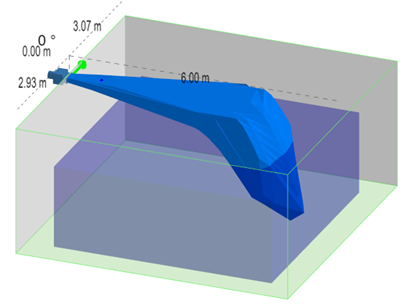
Not an issue at all. A properly installed ceiling vent will blow air along the ceiling, where Bernoulli's principle makes the fast moving air stick to the ceiling until the speed drops enough for the higher density to make it sink gently.

https://blog.swegon.com/hs-fs/hubfs/Bild4-1.png?width=1100&n...

There's also significant engineering calculations and guidelines/rules about the expected volume of air that is expected to enter/exit vents vs their size and grille restrictions. This is more to prevent loud airflow, but there's also charts for air distribution for room sizes.

Now, most HVAC contractors go by gut feel/rules of thumb, but if you want to pay for it, a well designed system would never be 'windy' or noisy.

> renovating generally means reducing breathability of the house itself, which, combined with the temp difference, means condensation/mold problems

Look up Passivehouse standard, modern construction can make extremely effocient buildings, but it relies on the building being nesrly airtight, so it must have ventillation.

'Natural' ventillation naturally steals your heat, it's incompatiable with efficiency