When you get past the author's ridiculous pooh-poohing of Apple's products, the actual analysis of the cell phone industry that he quotes is pretty well right on the mark and sadly still applies to the industry in 2012.
While the iPhone 1.0 lagged well behind established smart phones like the BlackBerry in a lot of areas, the iPhone was revolutionary in its overall quality, its user interface, and its web browser. It's often hard to predict how important those things will be. And all people had seen at that point was a demo from Steve Jobs.
But what the market research really failed to predict was that average consumers would start dumping their carriers and switch to AT&T just to get their hands on this new iPhone. That led virtually all other major carriers to jump through whatever hoops necessary to get the iPhone on their networks to avoid being left out in the cold. And the rest is history.
In an industry where it's the manufacturers who have to jump through all the hoops to get support from the carriers, this role reversal between Apple and carriers turned the industry on its head. Nobody would have predicted that in January 2007.
The fact that so many people couldn't wrap their heads around the iPhone's success is rather shameful. Sure, there's a lot of solid reasons why there was plenty of friction and many hurdles, but at the end of the day money is supreme. Is it shocking that $1400 of guaranteed revenue per phone would ultimately be embraced by the carriers regardless of their reluctance about some aspects of the process?
Ultimately what happened was that so many people fooled themselves into the idea that they understood the market and the industry better than they actually did. More so, they didn't want to admit that this development coming out of left field represented a superior understanding their their own knowledge, which was too much for their egos.
"Is it shocking that $1400 of guaranteed revenue per phone would ultimately be embraced by the carriers regardless of their reluctance about some aspects of the process?"
If you add "in a world where, each month, there are a zillion devices with $1000 guaranteed revenue that, if you are lucky sell well for maybe a month" : yes.
At the extreme, it can be not worthwhile to sell a product with a $1.000.000 guaranteed revenue if, in order to make that sell, you have to instruct personnel at thousands of shops, provide marketing materials for those shops, buy advertising space, etc.
It is not only that $1400 that makes the iPhone attractive, it also is the fact that you just have to put up a hand-written sign "we sell iPhones" to sell them in large quantities, not for a few months, but for over a year, without any changes to the model. That is what surprised many people.
I think it's forgiveable, the success just didn't seem obvious until you touched one of them. I remember being unimpressed by the iPhone until I actually used it. And then I opened the browser and that was it for me, that was my a-ha! moment.
Hindsight, of course, is 20/20--but to be fair to this journalist, there were some very real reasons to think the iPhone wouldn't really succeedn (at least not in an industry shifting way). At the time, the carriers maintained almost full control over the whole ecosystem and if entrenched players like Nokia couldn't force their hand on anything, what reason did people have to believe Apple could? Moreover, the initial price point was exorbitant for a phone in that day--and people should remember that the real explosion of iPhone sales didn't happen until the 3g brought about the subsidized model.
What was underestimated was the public's desire for a smart phone catering to people as people not people as employees.
And let's not forget that it brought about a "touch-revolution." In 2007, all the anti-Apple group could talk about was how "without a physical keyboard, it's just going to suck."
With all of that said, reading this piece suggests the author was more drumming up pageviews by presenting a contrarian view than actually writing an article he believed in.
I think the simultaneous rise of successful social networks like Facebook played an incredibly large role in making people want to have the Internet with them all the time.
> let's not forget that it brought about a "touch-revolution."
And let's not forget that when the iPhone was released it was not the first app enabled touch screen phone. I would say that Palm did just as much (if not more) for the touch revolution. It just did it in a bit more clunky way. The iPhone brought the sexy into the mix.
I remember being very excited about these devices (and others like the Treo) before they were released, then invariably found myself profoundly disappointed (or at the very least underwhelmed) when I actually got my hands on one.
None of them really succeeded in delivering anything more than an iPaq or a Palm Pilot and a mobile phone awkwardly squashed together in an ugly package, and they all required you to use a stylus that all-too-frequently got lost or broken. In the case of the 770, it didn't even have a phone! (To be fair though, in its favour it was the first device I saw that had a really good mobile web browser app).
Until the iPhone, "smartphone" really meant putting "groupware" [1] functionality in a mobile phone, and just having an Outlook-a-like on a phone clearly wasn't appealing enough for the mass market: in fact it was just downright boring...
The biggest difference with the iPhone aside from the capacitive touch was that it delivered an excellent mobile web browser alongside a reasonably decent phone, and all that other stuff was just an afterthought.
In retrospect I'm amazed that nobody else realised that the web - the same technology that transformed the internet from a niche technology into a must-have in the mid-90's - was the killer app for a smartphone (As I alluded to above though, kudos to Ari Jaaksi's team for at least trying with the N770 etc., even though the rest of Nokia seemed to be utterly clueless).
Most user friendly device before iPhone was probably Danger's HipTop aka T-Mobile Sidekick. It was actually fun to use, and innovated smartphone usability in huge number of ways. But it seemed marketed as more of a toy, too bad.
Let's not forget a number of PocketPC touch (stylus) devices were also phone-capable. That was YEARS before the iPhone. It had "apps" too, but we simply used to called that "programs" at that time. And there was no central market/appstore or anything. Most of these devices were very open.
Had one of first Compaq iPaq GPRS sleeves, ordered directly from Hong Kong before US availability. (Late 2001, early 2002.) And Handango was my "app store" of choice.
The 5 years from 2002 to 2007 were interesting, but in hindsight seem to share so little with post iPhone industry.
It clearly did not reach critical mass at that time. There were a number of obstacles to adoption - devices were powerful enough to do things, but compatibility with office software was not well built-in (If I remember correctly you could not synchronize emails with Outlook right out of the box). But third party applications were often very good and feature-plenty. The media players were especially capable and well designed.
It was however, impossible to upgrade the software at that time (the OS), which rendered your device obsolete every time a major WindowsMobile version was released. This is happening again with Android and I can't say this is a very good idea.
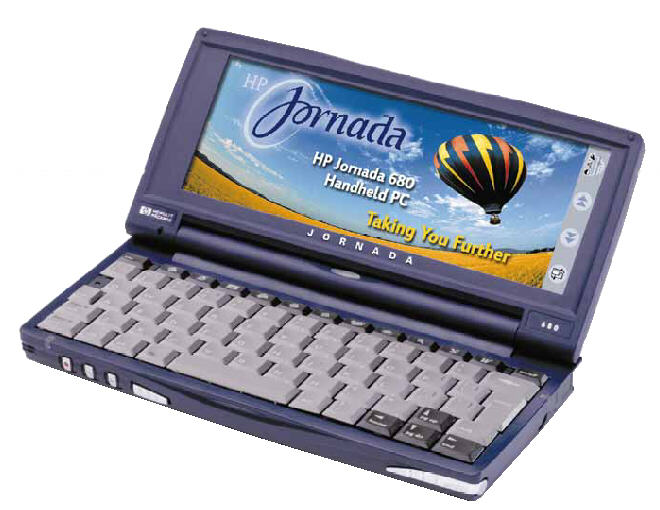
The interface on those was more of a barely usable desktop experience, that happened to use a stylus. You could not call it a "touch interface". My brother had a HP Jornada, and while he used through college, it was kind of sucky. It ran Doom, though.
I disagree. Those devices were very usable but, of course, you needed 2 hands to do anything with them. You could do a lot of stuff with it, and a number of apps were way more advanced than what you see on android and ios nowadays. The finger interface has got much better, but a stylus was way more precise for many purposes. The surface covered by a finger induces great limitations to the interfaces you can create. There's no miracle.
The funny part is that I know a lot of people that miss having a stylus... so much so that many are buying them now for their phones. I miss having one every time I have to take off a glove to interact with the nav app on my phone.
That's the technology. Apple actually made people want those touch devices. They were the first ones to package it correctly.
I'm sure there were many people who thought and wrote about rrepublics and democracies before the French revolution. But the revolution was what did it.
Maybe the technology of those other phones was revolutionary. But revolutionary technology no one wants hardly matters. Apple found the revolutionary package.
I think a lot of people wanted to use the Palm touch devices. There was a time when "Palm Pilot" was the "Kleenex" or "Band-aid" of the PDA world. Everything was a "Palm Pilot" even if it wasn't. Even future Palm products were "Palm Pilots" to the outsider. Now, Palm did not do a super job when it moved to the PDA+Phone mashup. It was clunky... not sexy.
Keep in mind this was right after the iPhone announcement. Although he lays it on a bit thick with the "Apple cult" nonsense, it's understandable given the extreme level of hype at the time. The analysis of the state of the industry was good, and really it's an amazing accomplishment that the iPhone was good enough that none of the powers that be could stop it.
The only part where he goes off the rails is this:
> Lastly, the iPhone is a defensive product. It is mainly designed to protect the iPod, which is coming under attack from mobile manufacturers adding music players to their handsets.
This is just a blatant misunderstanding of how Apple operates that anyone could have refuted in 2005, 2000, 1995 (maybe not quite as strongly here), 1990, or 1985. The potential of the iPhone as a smartphone was obviously a lot more than a simple music player even if its feature set seemed weak compared to Blackberry.
It was both "defensive" and "offensive". Rather than standing still milking profits of the iPod until the entire market slowly dwindles as other mobile devices begin to incorporate music players as well, Steve Jobs moved onto the next thing with one foot firmly planted in the portable music player.
It was exactly how Steve Jobs operates, from the Apple II to the Macintosh (personal computer), from the Mac to the iPod (hardware + software), from the iPod to the iPhone (mobile device, battery). All transitions were done from positions of strength, stride to stride.
People get so caught up in existing paradigms and the resultant hegemonies which enforce them that they become blind to the obvious.
This journalist is not alone in this. Examples permeate both media history and just criticism in general. For anything that is "obvious" there is always a contrarian who seems unable to see movement which we see as obvious.
Anyhow, the iPhone announcement in 2007 was interesting from my viewpoint being in a major record label because of how it portended the complete and utter end of control. It brought domestically something that was already happening in South Korea, where "ownership" of content meant little to the average consumer.
Of course the label folks thought it would mean more money from ringtones, and were bitterly disappointed that it didn't support custom ones out the gate.
Basically people saw what they wanted with the iPhone announcement, not what was actually there.
What was happening in SK was that the hardware of the device started mattering more to consumers than the content on it. They tried to duplicate this in the US with Helio and failed. Unlike in SK, the bandwidth doesn't' make up for the crappy device, since our cell network is so far behind.
South Korea made content owners supper optimistic about things like "Comes with Music" (from Nokia) and the "dead-before-launching" Beyond Oblivion. Lock in via cell hardware was their last hope.
The original 2007 iPhone was ridiculously good. It's five years later and it still feels ahead of its time. There's no way Apple would put that amount of effort into their version 1.0 if it was just a "defensive" move.
What about iOS feels ahead of it's time? iOS is showing it's age in my opinion. With Contracts and Charms in Windows and Intents in Android, I feel cramped and limited every time I use iOS (where Twitter integration is "magical" and things like Instagram are necessary). Even with ICS and it's makeover and hardware acceleration it's hard to give iOS the "magic" edge these days.
That having been said, it's of course very popular and better received on average than Android (I think ICS adoption will help with this), and dooms-day articles like this are silly when written and fun to look back and laugh at.
I struggle to think of a single time Android has crashed on me. The iOS browser, on the other hand, crashed 3 times in my first day with an Apple device.
But the primary reason I use Android is that it has features iOS doesn't; proper cross-app integration with intents, a replaceable launcher, a user accessible file system and best of all, I never have to deal with iTunes. I absolutely loathe iTunes.
I've never had problems with fragmentation (probably helps that I run Nexus devices - I've had more issues running older iOS on iPod Touches that hadn't been upgraded owing to upgrade fees); and I find UI more consistent - or at least did, before the menu button was deprecated (I happen to like menus for their discoverability). The back button is awesome. It's been some time since I was in the Apple app ecosystem, but I still don't think they let you have things like AIDE, Tasker or Locale.
I do think iOS devices have higher frame rates, fewer dropped frames and lower touch latency. ICS recent apps button latency is a joke - nearly a second on my galaxy nexus at times. The iOS text selection mechanism is better. And having switched from HTC to Samsung, I'm not impressed with the hardware (though the margin between iPhone 4 screen and Galaxy Nexus screen is quite small). But I also think iPhone 4 glass back is a triumph of style over usefulness.
User accessible file system? Are you kidding me? It's one of the great things to get rid of this thing. I see no advantage in there. Especially on mobile devices. Only another thing to understand and handle to get things done.
I'm talking about what I want in a device and OS. The file system isn't directly in any of the default apps, and nor is it visible in most apps. But if you want a file browser, you can install one easily; and nor is data siloed inside specific apps when it doesn't fit into predefined categories like Photo | Video | Music.
That's right: I want control over my data. I don't want apps from third parties thinking they're in control of my data.
Really at the end of the day, we can only choose the devices that work best for us, personally. As an ex-iPhone user, I take issue with most of your list, but that's just me. iPhones are great for a huge number of people.
None of those are facts and in my experience the anecdote goes the opposite way. My Galaxy Nexus has locked up ONCE on me ever, my iPhone breathern crash often enough that it happens weekly just from being at the bars.
Fragmentation is a joke. My phone has never, ever, ever had a privacy issue and that's also hilarious given the weeks of iPhone privacy issues (GPS, iOS5, Contacts)
>-iOS is faster (no lags) and not as buggy as Android
hahahahaha
>-iOS ecosystem/app market way better than Android
hahahaha
Do people really believe this stuff still? Yes. Faux wood and fake plastic looks great in apps. So futuristic.
Sorry - I have to address this for posterity - I'd hate for this post to become the HN word on the Galaxy Nexus.
I have access to 2 Galaxy Nexuses - one is mine, and another is a work phone used as a sample MTP USB device. Both are the the most crazy, crash-happy computing devices I've ever had the misfortune of using. For a.while my GN was literally crashing once every 2 days. I'd pull the stupid thing out of my pocket after feeling it vibrate to discover that the case over the CPU was burning hot and OS was rebooting and showing that ugly startup animation. Online forum complaints suggest that i'm not the only obe seeibg this.
Then there's the flaky behavior. Once every week a system process on my GN will crash. This service has something to do with the radio modem because I'll turn my GN on and discover that it isn't on 3G and that ive been missing phone calls and texts for who-knows-how-long.
I cant believe that i returned an iphone 4S to buy this lemon.
I'm sorry your experience has been like this. I would argue that you did get a lemon and you should talk to VZW about getting it replaced. Both of the Nexii I had were fine (until I broke one of them :/) and the other hackers in my dorm love theirs as well. I'd recommend at the very least a system restore and then paying attention to what apps you install.
I have one that will happily restart itself and run my GPS down all damn day long. Got rid of it pretty quickly.
What does that have to do with the usability of my device? In terms of the app store, I can click a button on my browser and by time I've turned the screen on on my phone, it's done downloading.
>that crap was obsolete the day it came out
What on Earth are you talking about? The Galaxy Nexus (esp since it has ICS) rolls with any of the big dogs in terms of performance (in raw numbers, let alone actual day-to-day usage)
>Galaxy Nexus S 3 Super S v2
Uh, Samsung's rumored to be announcing the S3 in the coming weeks. Like 6 months after the Nexus and a year after the SII. So a pretty typical product upgrade cycle. What's your point anyway. That doesn't make the Galaxy Nexus obsolete.
(it's fun to watch these comments flip back and forth as people come through and downvote in masse)
Clearly these people did not see the same Jan 2007 demo that I did. Grown men were going apeshit in the audience and millions around the world were glued to their computer frantically refreshing live blogs. My entire office officially stopped working to "watch" the keynote. Hundreds of thousands were already talking about dropping Verizon for the iPhone. Hindsight is 20/20, but no one in their right mind would've predicted it would fail. Apple sealed the deal when they finally subsidized the iPhone in Sep 2007.
To this day it's remarkable how big a chance AT&T took on the iPhone and how big a departure it was (and is) from how the industry usually works. They only went to AT&T after Verizon told them to take a hike.
Don't forget that there's a whole segment of these guys who are basically paid to get it wrong--being the one guy who says, "this obvious winner is going to fail" attracts a lot of eyeballs.
Remember, being a pundit isn't about being correct; it's about getting people reading what you write.
The best explanation I have heard for why analysts exist is because the market demands them. People want to read about this stuff so someone has to write it.
This one hits all the bullet points for clueless Apple punditry, including calling Apple a cult and asserting that people will buy anything Apple makes, however stupid and useless. Nothing has really changed in this regard, there are still tons of bloggers and other assholes lazily tossing out the same old talking points about Apple selling overpriced toys to vain idiots.
Are you sure your were poorer, in an overall wholistic sna. Did your purchase enrich your life by $599?
I know I got more than two years of use out of my iPhone 1 and then passed it on to my 2 year old daughter who used it for over a year. Well worth the investment and for all the little gripes or complaints I did have I still feel like I got more than I paid (including phone cost + carrier fees).
You're right - I'd say the phone improved by life by more than $599. I was coming from a typical crappy phone with a joke of a web browser. The iPhone is the first phone I really used to access the web.
While the iPhone 1.0 lagged well behind established smart phones like the BlackBerry in a lot of areas, the iPhone was revolutionary in its overall quality, its user interface, and its web browser. It's often hard to predict how important those things will be. And all people had seen at that point was a demo from Steve Jobs.
But what the market research really failed to predict was that average consumers would start dumping their carriers and switch to AT&T just to get their hands on this new iPhone. That led virtually all other major carriers to jump through whatever hoops necessary to get the iPhone on their networks to avoid being left out in the cold. And the rest is history.
In an industry where it's the manufacturers who have to jump through all the hoops to get support from the carriers, this role reversal between Apple and carriers turned the industry on its head. Nobody would have predicted that in January 2007.