|
|
|
|
|
|
by dangus
933 days ago
|
|
|
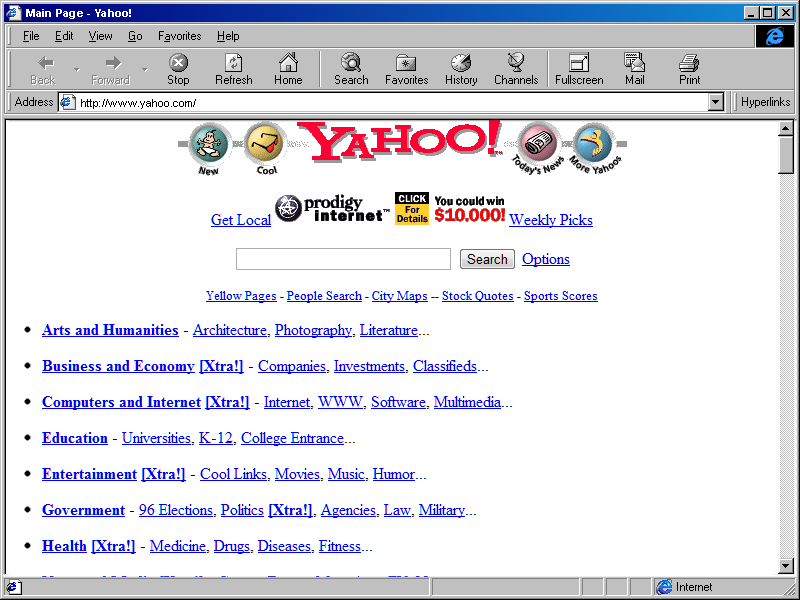
This idea that design peaked in the 90s does a big hand wave over a whole bunch of horrible examples of the user interface from that era. Is the Space Jam website peak UI design? What about Microsoft’s “hell of tabs” settings dialog boxes? Or the original Amazon home page: https://www.versionmuseum.com/images/websites/amazon-website... What link do I click to find my order status? Where do I go to search for a book by keyword? What will happen if I click the link for “first time customers click here?” Same deal with Yahoo!, what to the “new” and “cool” and “more yahoos” buttons do? http://2.bp.blogspot.com/-JAp1M-Q_0_Y/TkAwsyueWxI/AAAAAAAAAM... If I want to check a build status on my phone what’s the excuse for the web page to not display nicely on that device? You really think there’s no good reason for me to want to do that? Doesn’t modern CSS allow you to completely customize the viewing experience for both platforms in the same codebase? |
|
|

The desktop application GUI - which is really what people are claiming hit the peak in the 90s, really did. Menus, windows, tabs, dialogs, scroll bars etc... all were fairly well settled, and users understood them. A user who knew Word for Windows could do pretty well using WordPerfect for Windows. Most day-to-day applications were pretty easy to figure out because discoverability was very well done, and wizards and how-to dialogs helped users through the rough bits.
There was consistency between applications - save in areas where the OS didn't really provide GUI guidance - so design, CAD, and other creative apps (hi, Adobe) often had divergent ways of doing things and came with a steep learning curve. The web took off because it actually worked a lot like the multimedia CD-ROMs that preceded it - and websites were a lot easier for developers to build.