Hacker News new | ask | show | jobs
by dTal 946 days ago
>The designers say the issue isn't necessarily one of cost, pointing out that their pylons are made out of the same material as a regular pylon, simply put together in a different way.

I feel compelled to point out that any "artistic" deviation from structural optimality will necessarily use more material to achieve the same sturdiness, and hence cost more. And when you have to put one every few hundred meters across a whole country, that's kind of a big deal.

5 comments

>>any "artistic" deviation from structural optimality will necessarily use more material to achieve the same sturdiness, and hence cost more

A slavish adherence to this maxim condemns our age to a plague of depressing ugliness in our commercial and governmental structures

There are phrases for this, starting with "Penny Wise and Pound Foolish".

I have little doubt that the persistent lack of inspiration, or even whimsy, in architecture helps undermine our society's coherence. If no one builds anything of which we can collectively take pride and experience joy, where is the inspiration for cohesion?

There are myriad examples of wonderful government or commercial architecture from centuries ago. Centuries from now, will anybody GAF about any of today's structures?

We can do better, and it is more than worth it to do so.

I kind of disagree.

If you design something well, it can be beautiful and functional and doesn't have to cost more.

But then I quite like big standard pylons, so each to their own.

"worth the cost" is a very different argument from trying to pretend there is no cost.

And those tiny ground contact areas don't look cheap to stabilize.

Reminds me of the Poly Bridge low budget runs: https://gallery.drycactus.com/?level=713DropMeOff&type=win&o...

Given a finite amount of dollars and materials, how much variation can there be in building something of structural soundness? Turns out a lot, at least in he video game :)

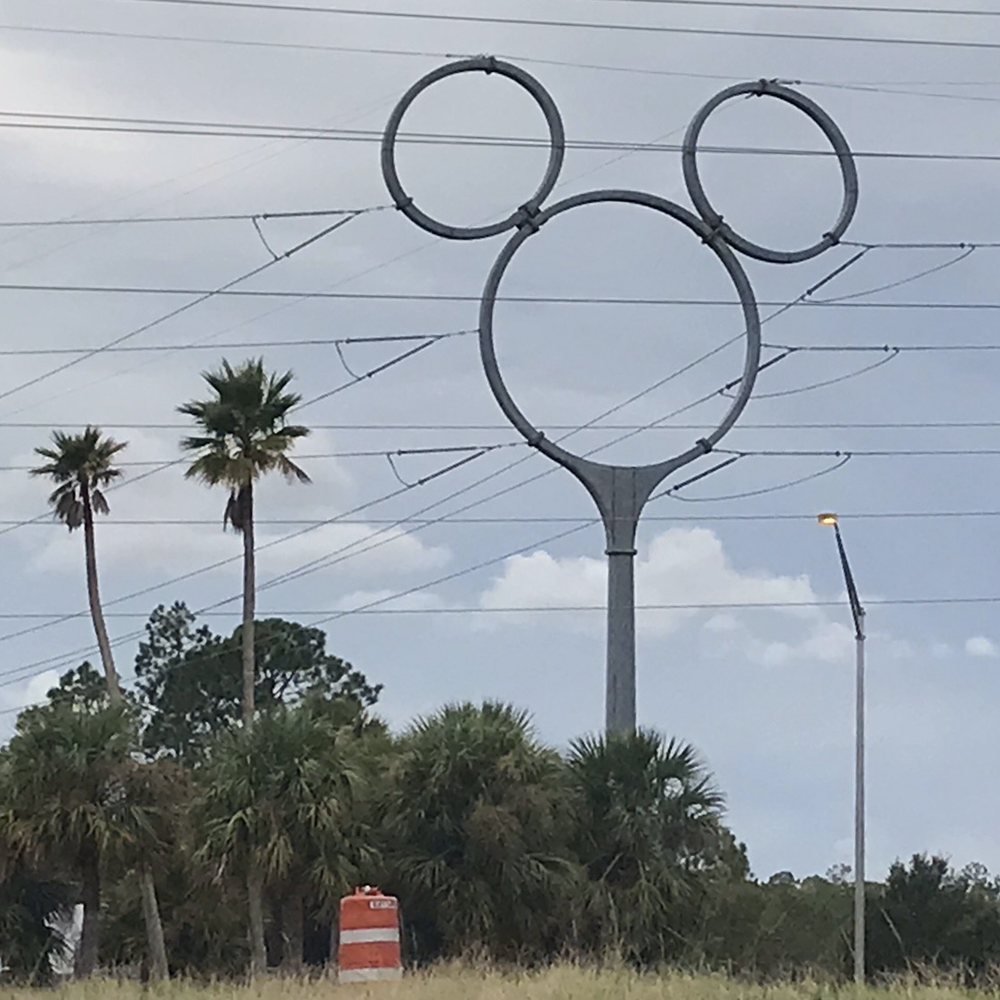
Disney has alternate pylon designs in Orlando.

https://s3-media0.fl.yelpcdn.com/bphoto/ZljmUm9VF-aE2plYy5Py...

And while you're spending more, just put them underground. No need to make it a 10% like it 80% don't care 10% hate it art situation.
It's a combination of things, really. Underground is about twice as expensive as above-ground, harder to maintain and repair, and pretty much impossible to upgrade.

A lot of the medium-voltage stuff is already underground in some areas. All new 50kV-150kV stuff has been going underground for decades, and the stuff remaining above-ground just hasn't reached its replacement age yet. Despite its drawbacks, above-ground is unpopular enough that burying them is worth it.

However, the high-voltage stuff (220kV & 380kV) is still almost entirely above-ground. Those cables are extremely difficult to construct, and anything beyond a dozen miles or so simply isn't technically possible yet.

Interesting writeup on underground power lines, and the difficulties of maintaining them:

https://hackaday.com/2021/10/05/repairing-underground-power-...

It's not going to cost 5-10x more to make the artistic design. And there are reasons beyond installation cost to avoid underground transmission -- maintenance is also way more expensive, and I believe it's also more fragile that way.
Well, I don't know the relative costs, but it's done, and looks a lot better (and with more agreement)!
Depends on location. Underground costs more and is harder to repair.

So for earthquake prone areas, you will find above ground power pylons everywhere simply because that is safer and cheaper than the alternative.

Where disasters are unlikely, they tend to be underground.

Some modern designs of big pylons really ruin the landscape, spending more for something less awful can make sense