I understand that KDE is a clusterfuck, but giving the money to the American desktop environment instead of the European one is not really a good look.
You think KDE is a clusterfuck?! When was the last time you used GNOME? File Roller still doesn't support drag'n'drop in Wayland; issue now open for over 5 years.
It pains me to see them throwing money at the wall instead of creating dedicated jobs, paying (German) engineers to fix bugs and develop long needed features. Given how low German wages are, they could pay around 10 engineers for a full year with that money.
I wouldn't attach too much weight to negative comments. People love to complain, and on the other hand those who are perfectly content often don't feel the need to advertise that. That is not to say that Linux DEs are perfect, mind you, but maybe not as bad as comments on HN would suggest.
Yeah, I use GNOME on my laptop every day, and I say it's pretty good. Things "just work" enough for me to focus on doing my work or enjoying myself without having to worry about the DE, and I like the defaults, mostly; it's not just a matter of convenience. And the keyboard shortcuts and mousepad gestures on GNOME are great as well. But from the way GP complained you'd think the Linux desktop were ruined.
I just switched my work computer from a Linux laptop running Gnome (on Wayland, with working drag and drop) to a MacBook Air M2. The hardware is a great improvement, the desktop environment is not.
I think it’s also a matter of getting used to it. I used Linux from 1994-2007 and Mac since. I had some Linux desktop excursions in between and I always come back surprised how broken the Linux desktop experience is. Let alone there would be something great like Shortcat or Raycast app menu search.
The only thing that is annoying in macOS is the lack of good tiling, but there are good third party options that add tiling.
I’m not sure there is a piece of software in existence that doesn’t have a group of angry HN users posting about their pet bug that no one else has heard of.
> I’m partial to KDE myself, but honestly anything with a sensible panel is usable
I’m the same! I’ve never understood how people have such strong emotions when it comes to a desktop environment. They all (including Windows, macOS, and even iPadOS) feel like they are good enough to me and I enjoy switching to something different once in a while.
Desktop mode is KDE on X. In that case your comment is true, steam will just run on KDE.
Game mode is a wayland session with gamescope as a WM, but it isn't controlled directly by the user. The steam client controls the WM and exposes those controls to you through menus and handles stuff like notifications and being a driver for the controller, so you could call it a DE in game mode.
Can't find any "kde" or "plasma" references in the process list under normal operation. It's only after you reboot into the desktop mode that you start seeing process names like "plasmashell", "kded5", "startplasma-x11" and so on.
I'm not entirely convinced that using SteamOS can really be counted as "using KDE" in any way.
Historically it was a GNOME app, but it isn't any more. All apps that are currently part of GNOME are listed at https://apps.gnome.org; File Roller isn't there.
US tech wages for a single position are probably on average more than the typical EU tech company makes in total revenue per year. 60k is like a god tier wage here.
Time's too valuable to make that worthwhile, especially when a large amount of them boil down to: Wayland is not X and tools designed for interfacing with X-specific details will not work on Wayland without modification.
"American", "European"? Free / Open Source software like that does not have nationality, it's a collaborative effort of thousands of developers around the globe. It's irrelevant what nationality the initial founders once had.
>It's irrelevant what nationality the initial founders once had.
That is not the point.
Most big open source projects end up with an entire commercial ecosystem backing them. KDE has probably directly created many more jobs in Europe/Germany than GNOME. Such things should be taken into consideration when determining who deserves grants paid by EU/German tax payers.
GNOME Foundation is based in Orinda, California, United States
KDE e.V. is based in Berlin, Germany
Both have corporate and individiaul contributors from around the wold but these are not indentically distributed with Gnome being more popular in the US compared to the EU. Calling these two desktop environments "American" and "European" is of course not painting the full picture but it isn't entirely wrong either.
I guess I'm one. For some uses I want to be able to capture literally thousands of lines in a terminal session. I used to be able to do that with gnome-term. The "edit > select all" used to select the entire scrollback buffer. Now it just selects the visible portion. There is no option to change to the previous behavior. The value for providing that option is deemed not sufficient for the additional code complexity.
Yes, I know there are other ways to do this (e.g. screen), but they require planning in advance and I don't always know when I want to do that. There have been other things that I used that have also been removed over the time that I used Gnome.
I appreciate Gnome for the smooth experience they provide but have switched to KDE which better meets my needs and wants.
That’s an application, not a DE, problem. There is no reason to use the defaults if you have particular needs, or spend much time in some environment.
People don’t make much art in MS Paint, or code in Notepad, despite those being the default for most computer users.
I think GNOME is very explicit in pushing you towards using independent applications that best fit your needs, while also providing simple to use, but not very feature-rich, defaults. I appreciate that approach.
That was my point: I understand who power users of terminals are; I understand who power users of graphics software are; I understand who power users of CAD are. But a DE is a glorified application launcher; there really isn’t much there of which to be a power user.
> People don’t make much art in MS Paint, or code in Notepad, despite those being the default for most computer users.
This is very Windows-specific problem. macOS, iOS, Android, ChromeOS, KDE nowadays all include decent sets of apps, thankfully. I will not miss the days of installing PDF readers (half of them full of ads), ZIP decompressors, image viewers (IfranView), MP3 players, etc.
Sadly, last time I was daily-driving GNOME (~2 years ago), this was exactly my experience - Evince was extremely laggy on big PDFs compared to Okular, Eye of Gnome had little functionality compared to Gwenview, File Roller lacked drag-and-drop and some formats that Ark supported, Gnome Terminal lacked many keyboard shortcuts that Konsole had, Gnome Software looked like just a proof-of-concept, etc.
> I think GNOME is very explicit in pushing you towards using independent applications
I wasn't aware this is the case, but I could accept this philosophy and be happy... if the distributions (Ubuntu, Fedora, etc) shared this opinion and thus made their default flavor have GNOME WM with e.g. KDE apps. Sadly this is not the case, so I've started recommending my non-tech-savvy friends (that became curious to try out Linux since Windows got so bad) to go for full KDE experience.
The ones that want a DE that works exactly how they like it. I quickly lose my focus from having to deal with even the most minor annoyances and KDE lets me change the little things very easily.
Second part does not make any sense though because power users come in various forms and shapes. Not every power user need to customize the hell out of their desktop. Some prefer, just let me do my work and get out of my way kind of a desktop.
Which tend to break on every release... unless you're using an older version of Gnome... which you never want to do because there's always one core feature you need that is built into a later version of gnome.
No, they don't. Most of the time updating an extension for a new gnome version is simply a matter of adding a number in the manifest file, but even when it isn't, they all get updated very quickly. Gnome 45 changed some core APIs so basically every extension had to be updated, and yet from ~10 extensions I use only 1 was not supported immediately upon GNOME 45 release, and even it got updated less than a week later.
>Nah it's the most capable desktop on Linux these days.
I still haven't used anything more 'just works' and 'capable' than xfce, what has KDE added in the past decade or so since I used it that made it 'most capable'?
KDE is not even remotely a clusterfuck. It is stable and has been a reliable desktop for my job for years. KDE and Gnome are the two most popular desktop environments on Linux and both are stable and usable.
So, clusterfuqt? On topic: KDE is great, switched from Gnome years ago and never looked back. In general, I appreciate the effort of Gnome, but it's not for me.
On the meantime, school agencies in my country have given an undisclosed amount of money to Microsoft and Google. Each school uses at least one of them
Maybe because it allows you to configure it so much, that you might actually break it. Gnome on the other hand is the Duplo among desktop environments, it drives me mad.
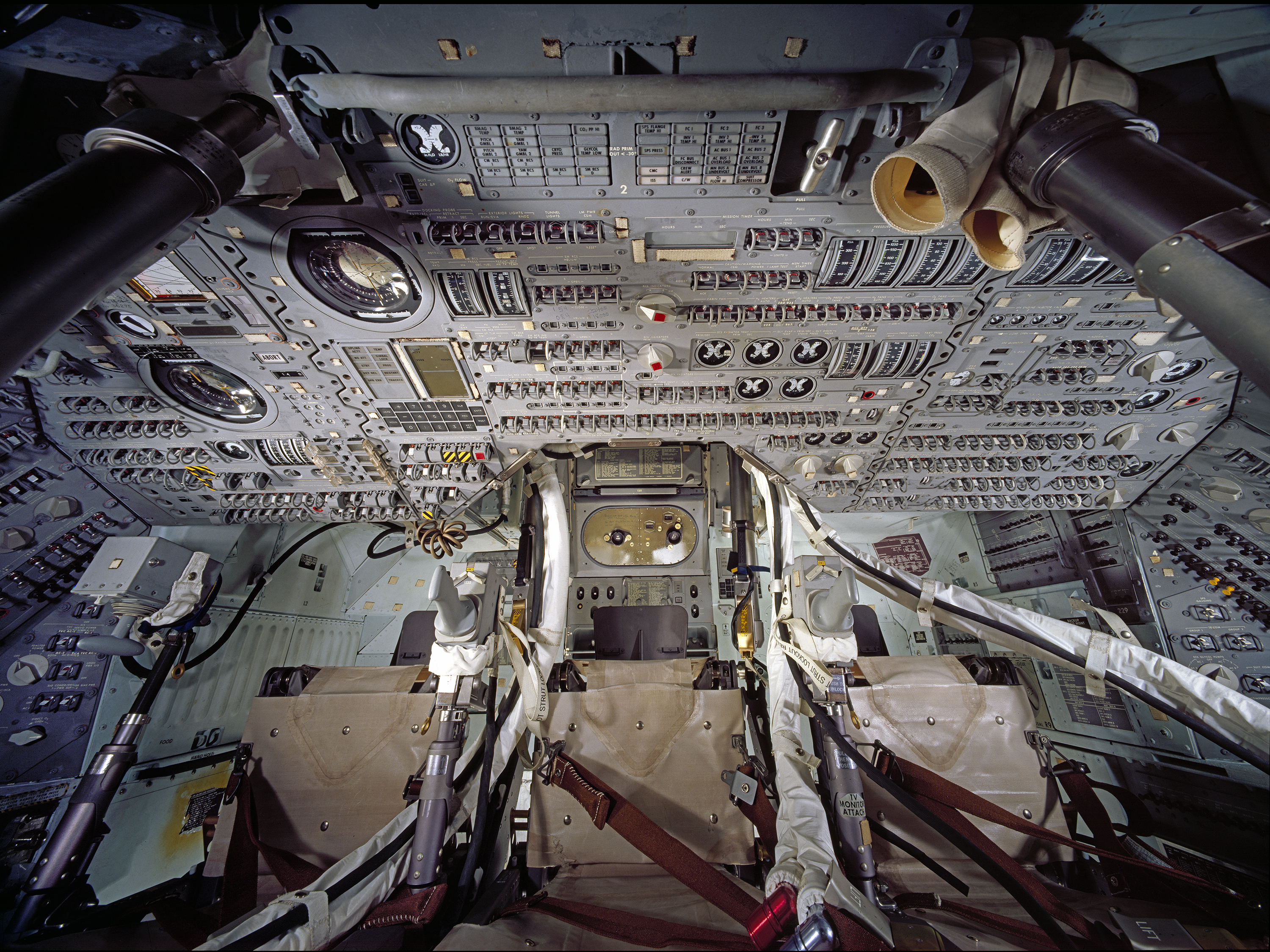
1. You can configure about anything (which may be a good thing) but all of this "configuration" looks and feels like Apollo 11 Command Module.
2. UI\UX is lacking. Too many controls all over the place or at least too sticking out.
PS: "all over the place" is just the best phrase I can thing of in english to describe KDE. But most of all this is just about two different views on how a DE should look and feel like.
KDE fans prefer this "I have all the inputs in one place even if I use 80% of them once a year" and "I can configure every pixel even though I won't do it ever".
Gnome fans prefer "clean and simple (and opinionated)" and "this DE gives me 80% of what I can possibly want for 20% of effort".
My reason for switching from gnome to KDE was that it was not possible for gnome to manage more than one Bluetooth adapter. A scenario that quickly occurs when you use a docking station. KDE had no problem with that. Another thing is the crusade against tray icons by gnome.
So yeah, I like the cleanliness of gnome actually better than KDE, which is really a bit messy. But when this "cleanliness" comes at the price of stripping away essential functionality, there's no choice.
KDE is actually hard at work to fix these problems and make sure programs have e.g. better defaults, are more consistent, and easier for new users (see for example the KHamburgerMenu widget, which even gives users a choice if they prefer an old fashioned menu). The core principle of the KDE HIG is "simple by default, powerful when needed": https://develop.kde.org/hig/
The difference is that KDE prefers doing this incrementally, which takes longer especially outside of core apps like Konsole and Dolphin, but it also prevents clusterfucks like the gnome-terminal vs gnome-console situation, and reduces churn in general.
My point being that you seem to be suggesting, in parent and sibling comments, that there are manifest and myriad configuration options provided by KDE AND that you feel you must use them.
You contrast this to Gnome, where there are NOT comparable configuration options, and you are 'happy with minor issues'.
I don't see how this is materially different from simply choosing to not use the extensive KDE configuration capabilities and being as 'happy with minor issues' as you would be with Gnome.
I'm misunderstood here then. I'm not saying that a feel I must use them. I'm saying the KDE UI by default exposes too many controls and provides settings to control this (more or less).
While Gnome exposes less controls (and arguable better UI desicions). Resulting in cleaner UI by default.
> "I can configure every pixel even though I won't do it ever".
Or, more likely, will configure many of them once and then be happy, as opposed to GNOME where if you're unhappy with anything you're just out of luck.
The whole point of my comment is that people are different. I'd rather not spend my time configuring KDE as I did 15 years ago and be happy with minor issues of GNOME.
> 2. UI\UX is lacking. Too many controls all over the place or at least too sticking out.
That's very subjective. I used Windows, Mac OS, Android (various UIs), KDE etc.. It's not "modern" semi transparent themes and gradients and rounded everything and whitespace, it is very responsive and works like I expect.
Many menus are collapsed into "...And X more menu items", menus nested in menus automatically without any thought put into it. You don't need modern styling, you can have thoughtful design while looking like Windows 95. That is what KDE lacks.
Or, y'know, pick projects to sponsor on other traits, not country of origin? Why would they sponsor the European one if it doesn't fulfill their needs?
How is KDE a clusterfuck? Last time I used it was with Open Suse Tumbleweed and there it was pretty buggy but that was expected from cutting edge versions. I played around with themes and there were bugs. I actually always went back and forth between KDE and Gnome/Unity. I like KDE better actually. But I use Material Shell (Gnome 3 extension) now that beats everything.
KDE always offered more options and configuration and was never as dumbed down as Gnome. But obviously most users do not need that that is why they like Gnome better. KDE has cool things like KDE Connect that was ported to Gnome later. When I used stable versions it was always perfectly fine to use. Not at all a Clusterfuck. 2nd most popular DE for a reason.
Pretty ironic that you resort to calling it "US politics" while calling out weird nationalism. You realize that recent European economic/tech policy has had a very nationalist direction. And that xenophobia and protectionism is much more common in Europe than the US?
It pains me to see them throwing money at the wall instead of creating dedicated jobs, paying (German) engineers to fix bugs and develop long needed features. Given how low German wages are, they could pay around 10 engineers for a full year with that money.