|
|
|
|
|
|
by yafbum
964 days ago
|
|
|
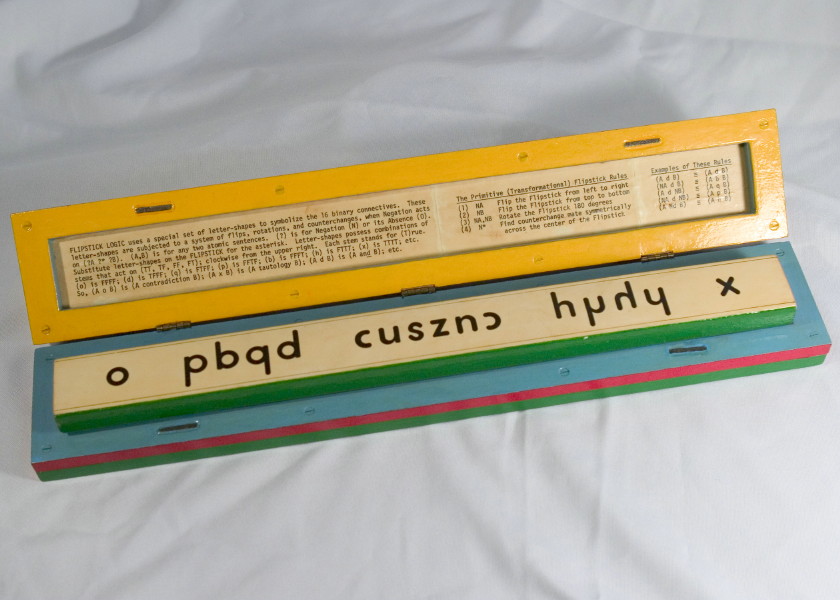
It looks very similar to the "Logic Alphabet". http://www.logic-alphabet.net/images/flipstick_2347_2.jpg Both are systems of symbols meant to encode 4 bits of information. In both cases, pointy bits in the corners of the symbols represent 1 or true, while round bits are 0 or false. A difference is that in the case of bibi-binary the intent is to encode numbers, while the intent of the logic alphabet is to encode truth tables of binary logic operators. But fundamentally they encode the same information. The other difference is that the inventor of bibi-binary was a comedian who obviously did it as a tongue-in-cheek novelty, while the logic alphabet's creator appears to have been quite convinced of the importance of his invention... |
|
|
bibi-binary is intended to encode raw binary data, not specifically numbers (at least not beyond 15). We already have a script and words which work mostly fine for numbers after all.
> The other difference is that the inventor of bibi-binary was a comedian who obviously did it as a tongue-in-cheek novelty
He was also a mathematician — his studies stopped because of world war II forced labour (from which he escaped) and he did patent bibi-binary, it was not just a joke.
And calling him a comedian is a bit reductive, comedianship was his outlet for a passion for wordplay, something he first tried as a songwriter (and poet), but he could find no singer, so ultimately ended up doing it himself.