|
|
|
|
|
|
by kkielhofner
1075 days ago
|
|
|
I'd like to say politics could be avoided on this but not knowing anything about the science, historical stats, etc I've always had a simple nagging question on this issue that hopefully someone can help me understand. Elementary school science classes teach basic cause and effect. My question is: How is it possible the planet can be billions of years old, then all of a sudden we discover fossil fuels in the past few hundreds years and start extracting and burning them at incredible rates, releasing them into the atmosphere. Isn't it safe to assume there would be a basic cause-effect relationship here with /some/ kind of consequence? It just strikes me as a "no free lunch" scenario - I don't fundamentally understand how you could all of a sudden start burning all of this stuff and argue against there being negative effects for the overall atmosphere, ecosystem, etc. Can someone help me understand how/why this wouldn't be the case? |
|
|
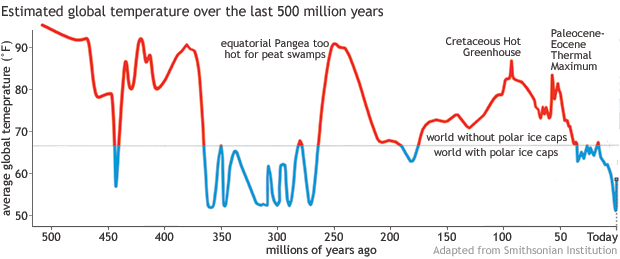
The only people arguing it isn't true are the various think tanks, foundations, coalitions, online PR bots, and the rest funded by the fossil fuel industry - working to persuade those who don't understand the issue, but are sure their opinion is very important.
Atmospheric CO2 science has been researched since the 19th century.
In the 70s Exxon/Mobil had its own climate scientists making shockingly accurate predictions of what would happen.
The IPCC climate change models - produced from 1990 onwards - have usually been conservative.
That is the objective reality. Everything else is spin, FUD, and noise.
https://news.harvard.edu/gazette/story/2023/01/harvard-led-a...