|
|
|
|
|
|
by dougall
1105 days ago
|
|
|
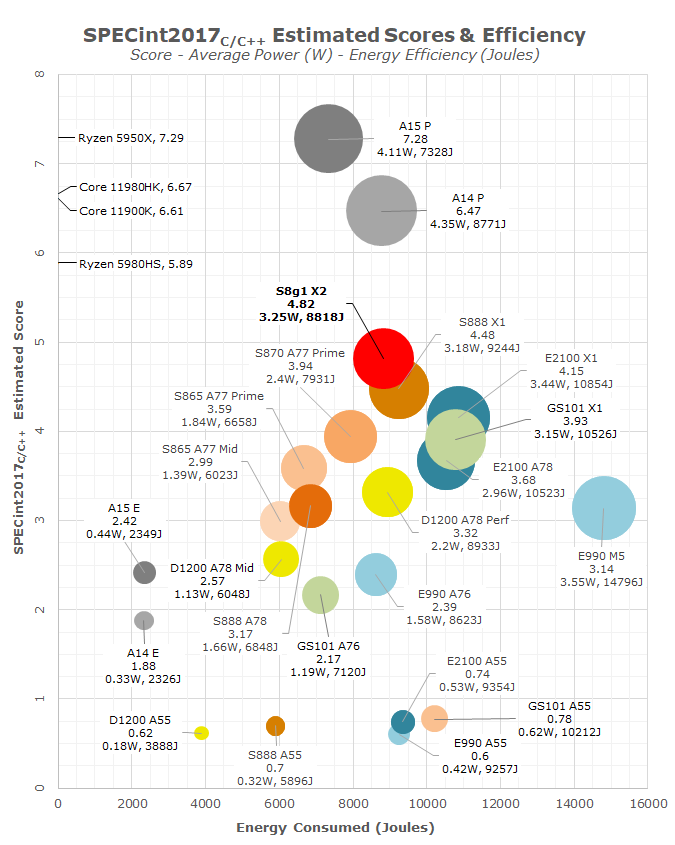
Alas, security generally isn't so important. How many times have you been hacked by a side-channel exploit? (Or people you know? Or any publicly documented case?) Are you going to use a computer that runs at 1/10th the speed to mitigate that risk going forwards? Keep in mind that a ton of non-side-channel exploits are caught in the wild every year, so your slow new computer isn't really secure, it's just not vulnerable to these specific attacks. (For 1/10th: the Cortex-A55 in the following chart is the only "in-order" CPU: https://images.anandtech.com/doci/17102/SPECint2017_575px.pn... - though arguably even it isn't completely non-speculative, and it definitely has branch-prediction, but it's at least a reasonable ballpark.) |
|
|
No, that's nothing like my day-to-day work in a text editor and compiler or CAD app on my personal box, where choosing performance over security is obvious. But it basically describes the hyper-competitive modern cloud computing ecosystem exactly.
Unfortunately, due to consumer irrationality and imperfect information, economics seems to indicate that the best way to get money out of the value that can be added through software is to sell subscriptions to online services, not shrink-wrapped DVDs. Now that this has been discovered, I think we're unlikely to get a world where we all have insecure, high-performance local machines that don't depend on cloud services.
I've never personally been hacked by a side-channel exploit. A customer I work with recently got hacked by ransomware, which was scary, they've spent the last month wiping everything and restoring ~95% of their data from backups, but I feel safe assuming I'm just not interesting enough to be at risk of to high-effort spear-phishing hardware side channel attacks.