Ahhaha, Intel's TDP is 2-4 times bigger under full load (and I guess ~10-15x under moderate load) while having negligible perf advantage over M2. The author can not be serious.
Yep - the total TDP of the comparison is like 600W. The Pro is also for people with strange PCIe card needs - the Mac Studio delivers this performance in a tall MacMini form factor and nearly silent operation. Not that there aren't things to complain about, but Apple Silicon architecture is impressive for what it is. The GPU suffers more for its uncommon architecture that is similar to a phones but is harder to optimize for. Adobe, Logic, and the like will make that effort. I doubt game engines will. But that's why I also have a power hungry windows laptop.
I think Epic could get Unreal to run just fine. Unfortunately they don’t have a great relationship with Apple (I can’t remember why but I think it was something Apple did).
The Mac Pro makes sense for only a few true professionals who need those PCI slots for non-GPU things. But those people are have BIG budgets to spend and are good customers.
Maybe the future Pros will improve, this one is a bit odd. But it has a purpose for those who truly need it.
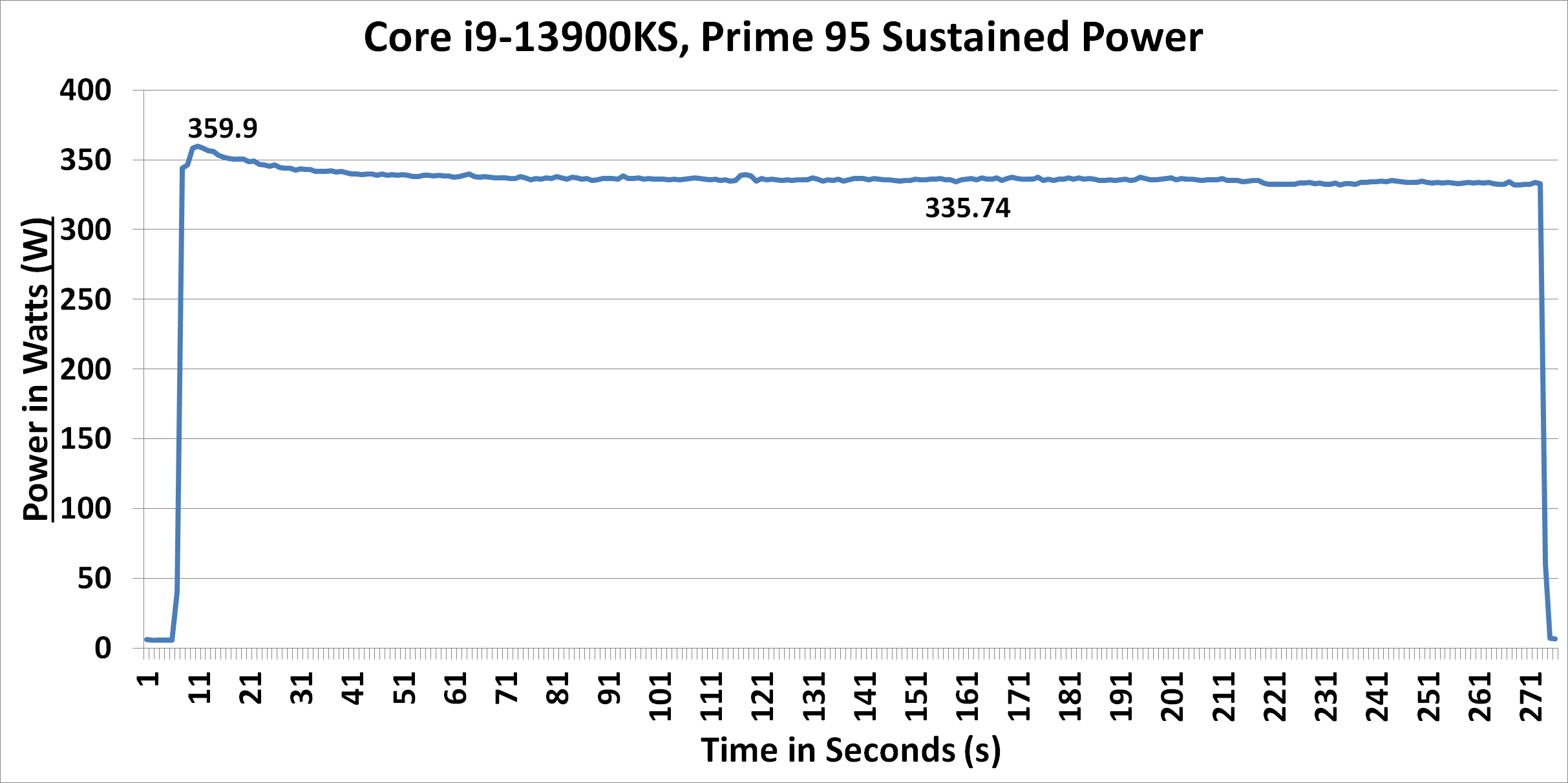
> Core i9-13900KS consumes 150W with 24 cores (8P+16E)
No, the 13900KS has a nominal "TDP" of 150W. That's a marketing number, not a measurement and not even a control target parameter for the default boost management settings. Out of the box, a 13900KS in a typical desktop motherboard will happily draw more than twice that, indefinitely, if you can cool it and have a workload that can actually keep all of those cores busy: https://images.anandtech.com/doci/18728/13900KS%20Power%20Gr...
If you want to compare per-core power, you either have to use a power number for a workload that's actually loading all the cores, or divide the measured power by the number of cores actually in use.
> Economically and environmentally it's absolutely a problem.
[citation needed]
Economically the Intel CPU of the 90s that had a very bad perf/watt compared to today's standards have been awesomely worth it
Environmentally, CPU have been getting better and better, the difference of a few 10s of watts doesn't really make any difference, unless you have numbers to back up your very strong claim.
Citation needed? Do you live in some alternate reality?
> "... the difference of a few 10s of watts doesn't really make any difference, unless you have numbers to back up your very strong claim."
We have a billion power-hungry PCs running on the planet. Power-efficiency matters for economy and for environment, because power isn't free and only a tiny speck of the world runs on clean energy. It always mattered.
According to [1] Human production of energy is even lower at an estimated 160,000 TW-hr for all of year 2019 (a COVID year)
Let's hypothesize the difference is on average 10watt/hour (rather large for the average device), the difference for a billion devices would be 10GW/hour.
Which is exactly 1/16,000,000th of the total.
Assuming every Apple computer consumes 100watts less than the equivalent non Apple, assuming there are 20 million new low power Apple computers (probably there are much less), assuming the CPU are 100% of the time in sustained mode (of course on average CPU do not run at 100% of the power all the time continuously, but let's assume they all do in this example) it would mean 2GW/hour saved, which corresponds to a 1/80,000,000th of the total.
It would allow, maybe, to shutdown an average power plant (the largest one produces 23GW/hour)
Unfortunately there are over 65,000 power plants in the World, 2,500 of which run on coal.
Unfortunately the energy saved could come from renewables, so the difference on emissions would be even less relevant than it already is.
Economically those 2GW even at the Denmark prices ($0.50/KW) would cost one million dollars (2GW = 2,000,000KW). AKA nothing.
As you can see the difference must be quite large to make a real measurable difference.
Most of those systems sit at idle, when they are on at all. Idle power is not the same as TDP. The idle difference is not so great that it's a big deal.
Since when was TDP a deciding factor in desktop purchasing decisions?
Sure M SOCs are great on laptops, but there are no reasons to get them on the desktop, slower, more expensive and with less compatibility.
I've never tried to water cool a 125 watt processor and so I can't speak to that. But especially if one uses air cooling or ideally passive cooling, one's ability to reduce noise is proportional to the chip's TDP. Noise reduction is important to many.
Lower power consumption means less heat, which means you might see more reliable performance (less likelihood of throttling in the middle of intensive workloads)
This doesn’t matter for everyone’s use case, but it is a factor some people might consider.
It’s such a strawman point. But this comparison is totally bonkers. If you’re doing a workload meant for a 4080/4090 then you really have no business pointing at the M2 Ultra as a competitor.
Then there’s comparing like technology to like technology. Something like the 5700G AMD line, and that’s not even nvidia. But that probably isn’t as interesting to the authors.
Whoever is doing the caring should reconsider their life choices at that price. At 51 cents per kilowatt hour, personal solar + batteries are a vailable alternative. If you cared about the planet, you'd move
I considered it an important factor even 15 years ago, long before the reality of the environmental and energy crises really dawned on us. Surely I can't be alone.