|
|
|
|
|
|
by hackinthebochs
1125 days ago
|
|
|
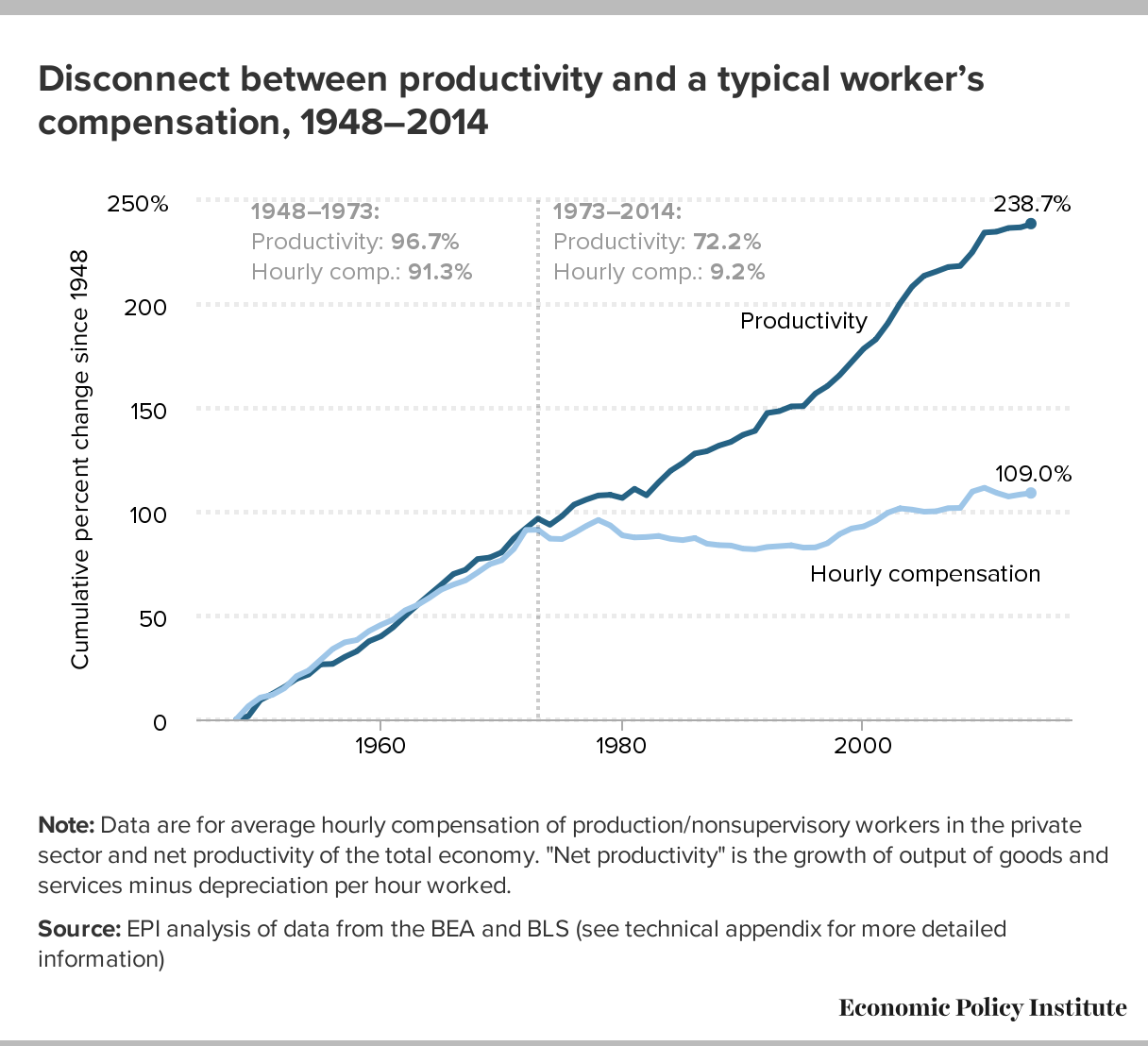
Historically, efficiency increases from technology were driven by innovation from narrow technology or mechanisms that brought a decrease in the costs of transactions. This saw an explosion of the space of viable economic activity and with it new classes of jobs and a widespread growth in prosperity. Productivity and wages largely remained coupled up until recent decades. Modern automation has seen productivity and wages begin to decouple. Decoupling will only accelerate as the use of AI proliferates. This time is different because AI has the potential to have a similar impact on efficiency across all work. In the past, efficiency gains created totally new spaces of economic activity in which the innovation could not further impact. But AI is a ubiquitous force multiplier, there is no productive human activity that AI can't disrupt. There is no analogous new space of economic activity that humanity as a whole can move to in order to stay relevant to the world's economic activity. |
|
|
I don't see any reason why thing must be different this time. Human demands are still infinite, while productivity is still limited (and btw meeting limited productivity with infinite demans is what economic is about). So no increase in productivity will make humans stop wanting more and close opportunities for new markets.
> Modern automation has seen productivity and wages begin to decouple.
Could you provide any sources on this topic? This is a new information for me here.