Hacker News new | ask | show | jobs
by ajeet_dhaliwal 1124 days ago
My dad died from a heart attack in 1992. His arteries were blocked. He had very high cholesterol and statins were unavailable until the mid 90s. I was found to have the same issue and it was so high I was told it had be familial. A couple of doctors told me eating healthy and exercising could help keep it down but others said, no not really, it's not a little high, it's massively high, I need intervention, so I have been on statins for several years and they have kept my cholesterol levels in the normal range. I am grateful and I do hope that if the second set of doctors are right that the first set learn about this.
3 comments

I have familial hyperlipidemia, and my mother and brother both had heart attacks when they were 45.

Do you know omega-3 fatty acids promote something called reverse cholesterol transport?

https://pubmed.ncbi.nlm.nih.gov/28984832/

I couldn’t take statins because of the side effects. I went on a fish only, no plant oil diet, and my LDL is now 200 and my HDL for the first time my life rose above 35 to 52. To me, the key was getting the omega-3 level way higher than the omega six level and totally eliminating short chain poly unsaturated fatty acids.

Note that I went on this diet, because I actually know my genetics. I don’t recommend anyone do the same thing without knowing what I know.

Diet works and it’s sad people can’t commit to it. And I’m afraid for a lot of people it won’t be the vegetarian diet that is normally prescribed.

Remember as well cholesterol is not the only contributors her heart disease. Oxidative stress plays a large role in damaging, or oxidizing, the LDL to cause the plaques.

https://www.frontiersin.org/articles/10.3389/fphar.2020.6137....

Oxidative stress can be caused by external forces, but also by the lack in proper nutrients, like zinc and B6 and riboflavin, deficiency in those supplements are all linked to greater incidence of heart disease.

I am in my mid-50s and I’ve had no issues so far.

Your family history and extremely elevated LDLs are scary. Diet and exercise are not enough to prevent poor outcomes in familial hypercholesterolemia. The rough estimate we quote patients is that the risk of a heart attack in males with FH is ~50% by age ~50 without medical treatment. This is 20 times (not 20%, but 20 TIMES) the normal risk at that age.

I will not give medical advice over the internet, but if I were you, I would not want to be messing around with anything short of the standards of care given those odds. Statin therapy is a core part of that standard.

Statin adverse effects do exist, but they are found to be quite rare (1-2% prevalence) when assessed for through well designed placebo-controlled trials. Additionally, there are newer statins with fewer adverse effects you could consider. Assuming you truly have FH and truly are statin intolerant (or remain at elevated LDLs despite maximally tolerated statin therapy), PCSK9 inhibitors can be considered. In the US, you would likely qualify for one if these through a good insurance plan, assuming the above criteria are met.

If you want to see my charts, feel free to email me. I’ve corrected my cholesterol in a more functional way than a Staten could have. And when I tried to statin and not only lower my cholesterol, but it lowered my HDL as well, which is bad. It also gave me myopathy add myopathy.

I’m not screwing around, I know my genetics, and I know how reverse cholesterol transport works. I also know keeping oxidative stress at a minimum is probably more important than the level of cholesterol. I actually moved to a location with extremely low air pollution for that very factor. You can’t look at LDL only to understand the risk of heart disease.

I had very good doctors and if they thought I was at risk, they would be telling me what to do because that’s what they always do. But now they say there’s no need for statins and they’re not concerned about my heart disease risk anymore.

Followingdao@proton.me

Familial hypercholesterolemia (FH) is an inherited defect in how the body recycles LDL (bad) cholesterol. As a result, LDL levels in the blood remain very high – in severe cases, levels can reach above 190 milligrams per deciliter (mg/dL) of blood.

It sounds like 200 is still trouble. Was it even higher before?

Yes, it was 290 but my HDL was also 30. I just focus on the HDL now. And the doctors no longer bug me about being on a statin.
I keep hearing seed oils are a problem and lead to obesity, but we're addicted to them for cooking, mouth feel, etc.

What do you use as a substitute for vegetable oils in your cooking?

The only oil I use, and use it sparingly, is olive oil. Olive oil is a fruit oil.

You don’t need oil to cook. Your diet will look a lot different, but you certainly don’t need oil to cook.

That makes sense why I hear olive and avocado as sensible alternatives.
If I could advise my younger self, I would say: “Learn how to cook” (for real). It turns out olive oil is all you need, and even not much of that. I discovered that most of my use of oil was simply covering for my lack of ability.

It’s instructive to remember that two hundred years ago, palm oil/vegetable oil/canola oil/avocado oil/almond oil/etc didn’t exist, nonstick pans didn’t exist, and somehow people could still cook amazing food.

Canola is made from rapeseed, which is toxic before processing. (And mostly not toxic after processing. ) The oil it produces used to be used only for greasing engine parts.
there’s no evidence that seed oils lead to obesity, it’s just a fitness fad
It is not that they lead to obesity on their own, but over consumption of them might and the effect they have on the body (inflammation) might have other secondary effects (insulin resistance, higher cholesterol, fatigue).

To say it is "just a fitness fad" is dismissing a ton of good research:

https://openheart.bmj.com/content/5/2/e000898

Meta comment: parent and GP are an interesting contrast between the "settled science" drum-beat dismissiveness narrative and the science/study-based curiosity counter-narrative.

Here's to hoping that with the death of the dollar, the "settled science" practitioners lose their bullhorns.

What do you mean by “eliminating short chain poly unsaturated fatty acids”? Omega-3 is also a poly unsaturated fatty acid, isn’t it?
Omega 3 is a long chain fatty acid.

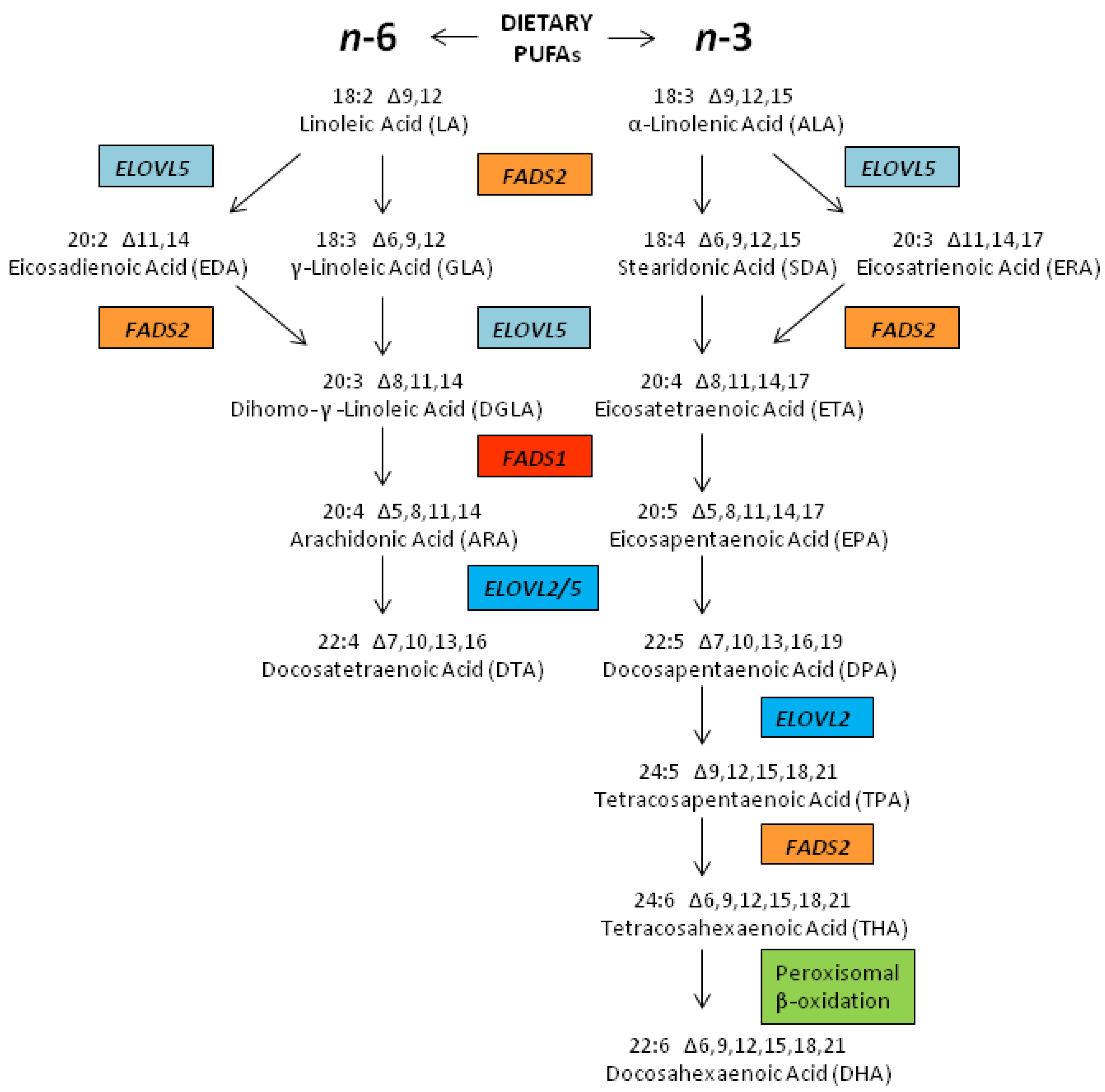
Return short, chain fatty acids into long chain fatty acids by four enzymes FADS1, FADS2, EVOL1, and EVOL2.

https://www.mdpi.com/nutrients/nutrients-06-01993/article_de...

I have polymorphisms in FADS1 and FADS2 that slow down the rate of this pathway. By the way, I have Inuit (SAMI) Heritage.

Not sure if typo but LDL of 200 is still very high.
It is turning out that Cholesterol/HDL ratio is more important and now mine is below 5 always. I do not care about my totals or my LDL.

HDL is an antioxidant and this why HDL rules over all:

https://www.ncbi.nlm.nih.gov/pmc/articles/PMC4607861/#:~:tex....

Sorry to hear about your dad. How old was he? I assume he was Indian given your username. South Asian ancestry is a risk enhancer for heart disease, unfortunately. Being Indian myself, I have so many stories of relatives (esp male) dying of MIs and sudden cardiac deaths at ages 40-50s. I didn’t even consider this unusual till after growing up and esp after caring for ppl of other backgrounds.

There’s no clear/satisfactory answer as to why South Asian patients have so much more heart disease, but the evidence does suggest we should be adopting more aggressive targets of risk parameters for them (A1c, LDL, BP, weight, etc.), and the clinical guidelines likely will reflect this in the future.

Thank you. My dad was 43. Yes he was Indian and I believe you are right about enhanced risk.
Take k2.