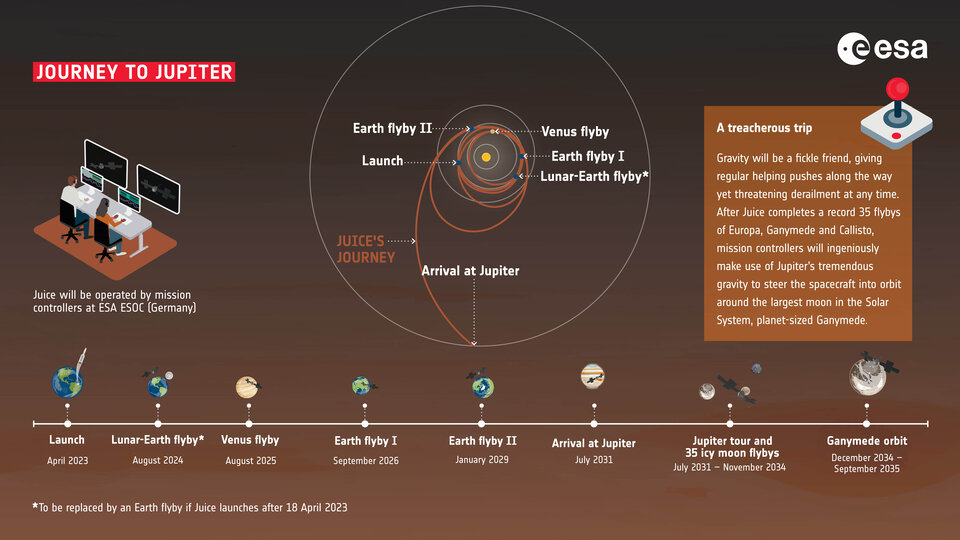
I stand corrected. I erroneously picked up 2034 from the timeline. But the point still stands; 8 years is a depressingly long time. If we base missions on the discoveries of previous missions, there is an 8-year minimum gap between missions.
I'm just hoping we find evidence of extraterrestrial life in my lifetime, and at this rate, we'll be cutting it close..
Europa Clipper, which weighs about the same, is planned to make the same trip in five and a half years, and could have done it in less than three if it had launched on SLS:
Tony Bruno of ULA wrote a nice blog related to this recently. Most launchers are optimized for either LEO or the high energy orbits/interplanetary and are not really well suited to the opposite mission. See Figure 1 for a nice graphic.
The impact the time cost has on careers is significant. From what I've heard through science media, it's not uncommon for planetary scientists to spend half or an entire career on a single mission to the outer planets.
I'm just hoping we find evidence of extraterrestrial life in my lifetime, and at this rate, we'll be cutting it close..