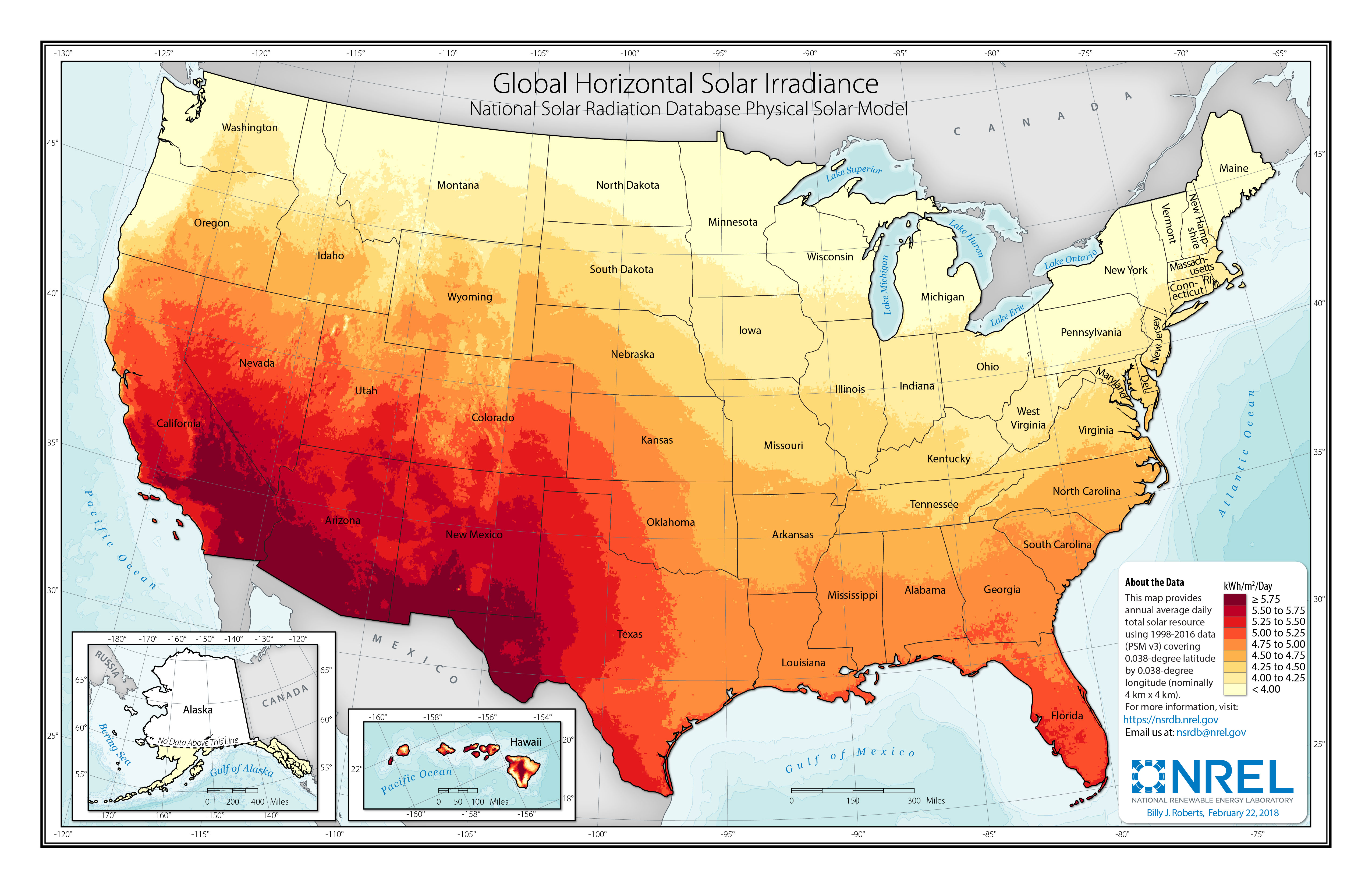
| > Also Solar might work great in California but Nebraska not so much If you think that solar doesn't work fantastically in Nebraska, then I think you need to reevaluate the data, and start holding your utility to account. Solar works great in Minnesota, with lower solar resources than Nebraska. The key difference is whether the utility will allow a financially beneficial decision to made, not the fundamental economics of the technology. Contrast the planned 2023 solar additions in yellow dots on this map: https://www.eia.gov/todayinenergy/detail.php?id=50818 With the amount of solar insolation (note that the color gradient only spans a ~30-40% overall difference, too): https://www.nrel.gov/gis/assets/images/solar-annual-ghi-2018... So while you are right that utilities are slow, which was the main thrust of my original comment, we must also acknowledge the financial incentives of utilities to distort a setup that can not even result be called a market. Electricity decisions are made based on what the utility perceives will give it the greatest profit, with all their biases, and without regard to what will deliver the best overall cost-optimal solution for reliable power. |
As for distortions the biggest problem with retail users is that panels have changed the market but people still expect to use the old rules. Eg be self sufficient 320 days a year but expect eletricity on demand at the same low rates on the few days they need the grid. That isn't scalable and home solar people are getting an unfair advantage from the system, which is why utilities (rightfully) dont like it.