|
Clojure user here since 2010(my earliest Clojure project on Github), and while I agree with the fun point, the iceberg wart for me at this point is the inelegance of the interface hierarchy and its structure behind the scenes. Clojure's forward-facing interface (a hundred functions that operate on one data structure) ended up breaking down for me at some point and became 10 functions on 10 data structures and those data structures became AFn, APersistentSet, APersistentMap, APersistentVector, IFn, IPersistentSet, IPersistentMap, IPersistentVector, ITransientMap, ITransientVector, IndexedSeq, LazySeq, &c, &c, &c. Maybe I started writing code wrong. Maybe I dived too deep into the internals, Maybe it was something else. But at the end, there wasn't one data structure, there were dozens and dozens each with justifiable differences, but even so, that's not what was advertised. It took a decade to reach that point and perhaps the vast majority of folks never will. The sad part is that I know none of it is up for change without creating a Clojure2, and that highlights the problem. Why should changing the internals need to break backwards compatibility? There is one unspeakable reason: the illusion wasn't complete and they weren't really internals to begin with. |
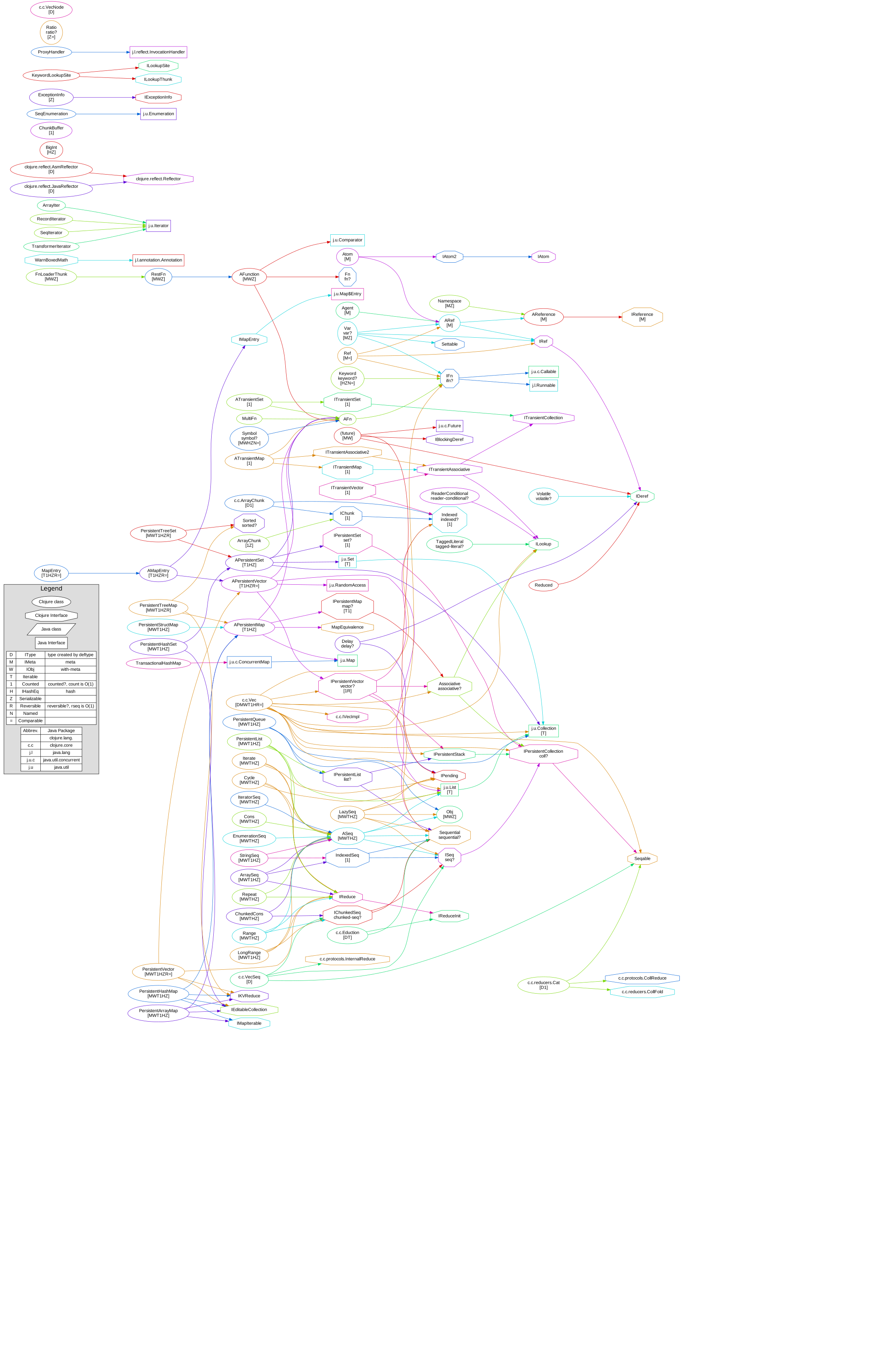
I've only needed to dig into that occasionally for a handful of specific situations (for example, in next.jdbc, where I create a hash map like abstraction over the (mutable) ResultSet object from Java -- to paper over some nasty interop issues).