Hacker News new | ask | show | jobs
by Freak_NL 1278 days ago
The estimates seem a bit high, or perhaps unbalanced from book to book. The Count of Monte Cristo is slated for 208 days at twenty minutes per day!

I read mostly just in bed before going to sleep, averaging around 30 minutes. The Count of Monte Cristo took me three to four weeks (I don't keep notes on that, so it's an estimate), and I'm not a speed-reader. It's just a book that has aged well (i.e., a limited cognitive overhead) and is not particularly hard to read in the English translation.

On the other hand, it lists The Canterbury Tales for 64 days, which seems reasonable given that reading English that old really does take a lot more effort (and that's assuming an annotated edition), but way out of whack compared to Dumas' novel above. (Also The Canterbury Tales is not a work I read in one go; a couple of stories before moving to another book is sensible here in my opinion.)

5 comments

> The estimates seem a bit high, or perhaps unbalanced from book to book. The Count of Monte Cristo is slated for 208 days at twenty minutes per day!

I've started reading Monte Cristo one day. I finished the 1800 pages of it in one long 48 hours sitting, hardly sleeping or doing anything else. That's how you read this book. It was a feuilleton, one page a day in the newspaper, and there is a cliffhanger at the last line of every frigging page. You just can't stop. It was certainly a big selling point for the journal publishing it back then :D

> I've started reading Monte Cristo one day. I finished the 1800 pages of it in one long 48 hours sitting, hardly sleeping or doing anything else. That's how you read this book.

I don't think I could do it in one long sitting. The last time I read it, my "serial" approach was to read one chapter per day, before going to bed. It was hard to stop; but, it was also easy to pick up each day. (Another advantage was it sat next to the bed and I didn't have to carry it anywhere, since it didn't fit in a pocket.) I'm about to read it again and I'm not sure what approach I'll take.

If the only translation you’ve read is the public domain one from the 19th century, it was heavily censored/edited. Newer translations are much better, and have all the hash smoking and lesbian sex. (And yea, I’m being literal)
How does the Penguin translation stack up? It's the only one I can easily find.
Assuming it's the Robin Buss translation - that's the one you want! Only version that was fully translated in the modern era. The earlier ones were all based off the problematic 19th century translations with various amounts of the "scandalous" stuff added back in.

Samples:

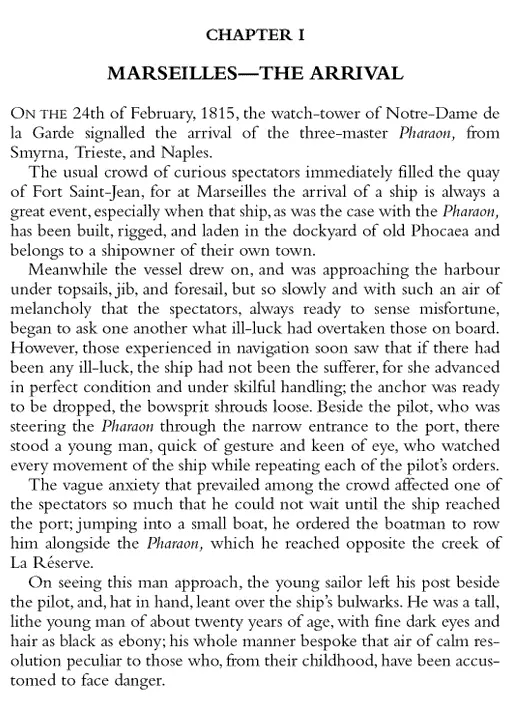
19th PD: https://welovetranslations.com/wp-content/uploads/2018/12/st...

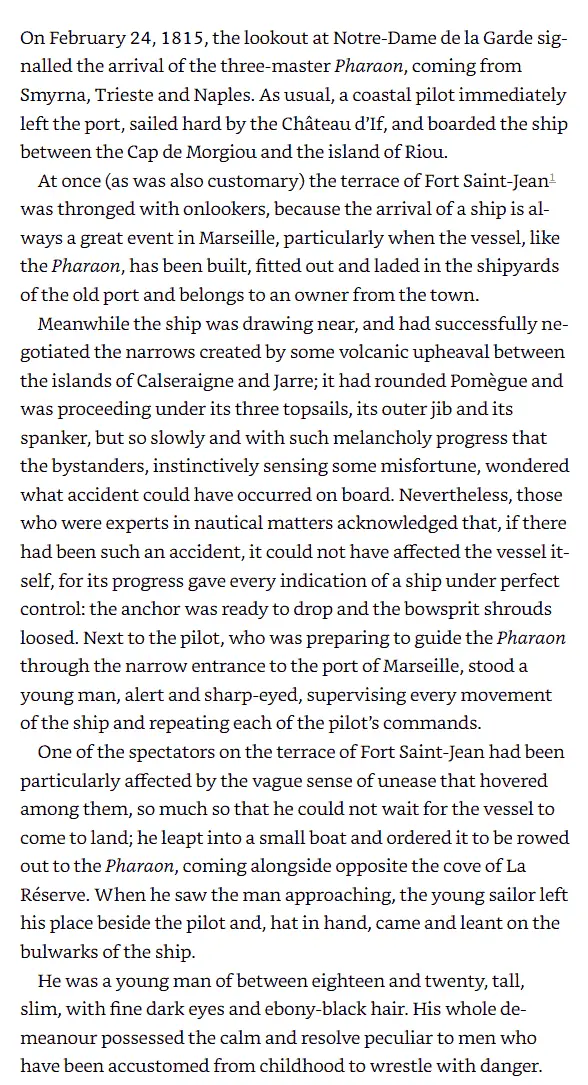
Buss: https://welovetranslations.com/wp-content/uploads/2018/12/bu...

(Not any spoilers really...these are both the 1st page).

Even here, notice the heavy abridgement...two whole sentences axed from the first 3 paragraphs alone!

The Buss just reads so much better and more idiomatically, even ignoring the censorship issues.

Thanks for the information!! I just checked my copy, and it is indeed the Buss translation. I was reading it for several week a few months ago, and I ended up putting it down, just because it just wasn't happening for me and I couldn't figure out why.

Very recently I discovered that I need glasses (for the first time in my life). My eyes went from perfect to downhill very quickly. I'm now trying to get used to wearing reading glasses. This is especially important with a book like this, which has a tiny font. Now I know why I was feeling uncomfortable and getting headaches :-)

> And yea, I’m being literal

highly recommend Ovid then :)

The unabridged Count of Monte Cristo is substantially longer than the more popular abridged version.
The first copy I found have 1286 pages, so that means you read six pages per day at around three minutes per page.
It's harder (but more rewarding) reading certain books the umpteenth time because they are so complex or require other reading to fully grasp and appreciate. For me some examples were

J. Joyce Dubliners

Dante's Divine Comedy

several others.

The hard work makes the journey meaningful (for me) and I'm absolutely bored ticking check boxes just to brag about having speed read through 60 classics in a year.

Your comment reminds me of a description I once heard of the Divine Comedy: "once you've read the Divine Comedy, you're ready to read the Divine Comedy."
You may have read the abridged version while the estimate is calculated on the unabridged version.