Hacker News new | ask | show | jobs
by mytdi 1298 days ago
>"sawdust and mistakes, mostly" Love that phrase. Will share it with my father who has a woodshop. Also agree with your thoughts about woodworking.

I also started doing some wood work, I got myself a desktop CNC and some other basic woodworking tools.

2 comments

I would go as far (as I did) and recommend not buying any expensive power tools at all.

Hand tools!

CNC? Table saw? What's that?

A basic woodworking tool is a good 50+ year old hand saw that can sharpened by hand. I have like four. I actually ground the teeth off completely on some of them and created a new set of teeth from a completely smooth straight metal edge. Very satisfying!

This is what I learned it from (well this and a many of the other videos on his channel): https://www.youtube.com/watch?v=mTqZTGPPRj0&list=PLqyeNiM0BJ...

What's a planer? Who's got money to buy that or space to put it. Or the dust extraction you'd want?

Buy an actual 50+ year old hand plane or two! I have 3 and each one has something that's broken. Be it a handle, a screw that's not original etc.

Dunno about the US or other countries, but here in Canada https://www.leevalley.com/en-ca/shop/tools/hand-tools can also be good to buy new if you are so inclined. I have a mix of new tools from them and old tools from Ebay that I restored.

Don’t act like re-toothing a crosscut saw is some easy process and everyone has all the tools available :) at a minimum you need the correct needle files, a saw set, a bastard file, some kind of vice preferably a saw vice, and the skill on what pitch and yaw to file at. Hand saw sharpening like most woodworking is a lovely ‘rabbet’ hole.

Edit: this was meant as a bit of tip of the hat to anyone who can sharpen a crosscut panel saw, not snark.

I never said it's easy if you have nothing yet. But it's satisfying ;)

And yes, I started by building Paul's workbench actually. I built the version that uses regular old 2x4s and 2x6x glued together. He also has a version using plywood. I built it using only hand tools I bought off Ebay and the "work bench" I used to build that was just some old Ikea table I had. You might use a couple of cheap saw horses and a sheet of plywood. Heck you can make the saw horses using just 2x4s and hand tools without any "bench" and go from there. https://paulsellers.com/paul-sellers-workbench-plans/ and his first video literally starts with "How do you make a work bench when you don't have a work bench to make it on. Here you are on your knees ...". But there's also a video on his channel where he actually makes on of these in his back yard like I mentioned.

And yes, I bought files, both to get rid of the existing, bad, teeth and cut in the new teeth. Also a tooth setting tool for the left/right 'bending'. I only did that once I had his work bench finished and a vise mounted to it. No "saw vice" (whatever that is) needed. FWIW, I've only had to sharpen my rip cut saws so far though. Cross cut will be harder, yes. Looking forward to it!

Also I see you meant your reply in a good way, i.e. yes, I'm way down the rabbet hole. I do have a manual router from Lee Valley ;)

I've been taking woodworking classes from a fine furniture for about 6 months total now (2 different classes, just finishing it up). There's a lot of value in having power tools, but some hand tools just do a better job in so many areas. I love mixing both, and there is something very satisfying of doing a rabbit plane or using a low angle block plane that isn't felt when sanding. Smoother surface and better cuts too if you sharpen 'em.
If you're in it for quick results, absolutely agreed. If I had to earn a living making furniture or any kind of carpentry, I'd definitely use power tools. Even Paul uses them. I.e. as far as I know he does the rough cutting and planing for projects using machines but finishing is done using hand tools.

Something I totally forgot until your reply made me remember. Paul Sellers actually made a piece for the president of the USA. He used to live in Texas.

https://paulsellers.com/2020/11/a-white-house-design/

That's not what we're talking about here tho if you ask me ;) The point is to to do something that is not easy. Something that takes time. Skill. Mastery. And do it badly lol! I sympathize a lot with the OP here, i.e. in software, I make a boo boo and I force push a `git commit -a --amend` and (almost) nobody is gonna notice. In any case I squash it all before merging, whatever may have happened "in between" in the course of "getting there". This is quite different when physical things are concerned. It's much, much harder to hide your mistakes when woodworking. It needs more knowledge and skill to hide the mishap when cutting that dove tail :)

Stop gate-keeping woodworking. It doesn't take any more skill to use hand tools, but it does take more time and physical exertion. It's not more pure, it's not better in any way. Wood is not a material you can treat with precision, it changes and moves with the seasons, with power tools or hand tools you can make cuts that far exceed the precision that can be maintained with wood.

It's not even cheaper, a router and a table saw can do cuts that would take hundreds of hand tools to accomplish. You can't tell in the end how a cut was made or how a board was processed, you are going to eliminate any evidence with a scraper or by sanding!

Unless you are making very square hyper-modern furniture out of planks you need so many specialized hand tools. Even doing something as simple as jointing and planing a board requires hundreds and hundreds of dollars of hand planes, or else months of searching for them in very rough condition and then the know how to refurbish planes. A Stanley hand plane costs about $150 each if bought new, and will probably still be almost unusable without a few hours of setup. A knockoff Indian plane will cost $70, but it's quite possible that no amount of effort or setup will make it usable. You need at least 3 different hand planes to plane a rough board. An electric planer costs $300 to $500, it makes absolutely no sense to buy $500 of hand planes unless you specifically want to spend 500x the effort and time.

At that point, why do you even allow yourself a set of planes? Why not literally sand the board like they did in Mesopotamia with another board and a bucket of sand? Why allow yourself a Stanley type cast iron plane, why not limit yourself to a 1700's style wood plane and a poor iron that can barely keep an edge? Why not limit yourself to a bronze hatchet? It's beyond arbitrary to decide that there is some kind of magic in choosing the most modern thing you possibly can that isn't motorized, something that can only be manufactured using the same sorts of technology that you are avoiding by using it. They were never flattening cast iron planes by hand, they aren't rolling the steel for the plane irons by hand, and they never did. They do it with giant machines in giant mechanized factories. These planes were only ever bought because the kinds of mechanization they had available in the factory wasn't available in the locations people needed to shape wood at that time.

If you want to fetishize the process or experience the history of woodworking like a worker at Colonial Williamsburg, or you are Amish, then by all means concentrate on the tools and the process, and by all means your personal experience and the value you find is fine, but don't tell people there is something lesser about the tools they use to build the things they want to build. I promise you, all those thousands of workers who spent their days sweating over their work without air conditioning or power tools would throw those hand tools directly into the trash if they had a choice to use modern tools. Which they largely did when those more modern tools became available. I am certain they would find it funny and ridiculous, if not unbelievable, that anyone would ever decide there is something spiritual and desirable in doing the sorts of physical labor they went to great lengths to minimize and which over time wore out their bodies. It's no different than insisting on digging a ditch for fiber optic cable by hand because it requires so much more time, skill, and mastery of various kinds of shovels.

> It's not even cheaper, a router and a table saw can do cuts that would take hundreds of hand tools to accomplish... Unless you are making very square hyper-modern furniture out of planks you need so many specialized hand tools. Even doing something as simple as jointing and planing a board requires hundreds and hundreds of dollars of hand planes, or else months of searching for them in very rough condition and then the know how to refurbish planes.

This is not true. The YouTuber Rex Kreuger[0] has a series where he explains how to get started woodworking with mostly hand tools, making very much not-modern furniture with relatively cheap tools. While he does advocate buying and restoring tools from second-hand sellers, he also does a lot of his work with relatively new tools (such as this video[1] about using a disposable DeWalt saw for joinery) and shows how to use limited tools in historical ways to make a large variety of cuts, applicable to any woodworking you'd want to do. In fact, he specifically says that he only uses 3 planes for the vast majority of the work he does, and that should be enough to make fine furniture.

> Stop gate-keeping woodworking.

I would argue that demanding an investment of many hundreds of dollars and large amounts of floor space (that a router and table saw would require) is more gatekeeping than recommending hand tools.

[0]: https://www.youtube.com/@RexKrueger [1]: https://www.youtube.com/watch?v=mQBz4QHn7u4

I sponsor Rex Kreuger on Patreon and have for a couple of years. He has a top of the line Saw Stop table saw and he rents a small commercial building to do his woodworking in. I think he has a wide interest and doesn't ever shame people or make out like he is more pure somehow, he is very practical and puts a lot of effort and intelligence into understanding the process for our benefit. Rex is great. Watching his channel and his explanations would help anyone improve as a woodworker regardless of how they hack chunks off of boards.

Another thing Rex does is try to make the tools himself (sometimes this is a disaster, like his lathe, but even then you learn a lot about what makes a lathe the way it is). He is above all practical, and when he says you can make furniture with some cheap tools he isn't claiming it's better or demonstrates more "mastery", it's just a way you can get started cheap. I think if you can make a tool by hand from garbage or whatever, and then you can use that tool to build other things, that is somehow very different from just bragging about how you use hand tools 'because mastery and time'. Buying a plane that was made in a huge industrial factory around the time of WW1 and then using it 100 years later to act cool is very different than being able to demonstrate that you can 'get by' without spending thousands of dollars. How to build the tools and how they work and building those tools by hand from scratch is also interesting in itself.

I think it depends what you mean by 'fine' furniture. He has shown how to make some very simple colonial stools and boxes using simple techniques and hand tools. But more to the point, he is interested specifically in the history of woodworking and understanding how craftsmen were able to make things with the limitations they were under. If you want to help preserve that history I support it, but there isn't anything special about doing woodworking that way, any more than there is anything special in doing anything in an archaic way. By all means if you have more fun doing work by hand then do it by hand, what I take issue with is the claim that it is somehow closer to some ideal and other ways of doing things are not as desirable somehow.

Watching that guy in Australia build up from being naked in the forest to smelting iron tools is incredibly interesting and valuable, but I don't recommend it as a strategy, and there's no shame in not.

Anyway, my point was that a router and a table saw can take the place of hundreds of hand tools. If you look at a cabinet makers tools before power tools you will see dozens and dozens and dozens of planes for all the patterns they will want to cut. Cutting a panel for a cabinet door is amazingly complicated without a table saw and requires many specialized tools (https://www.youtube.com/watch?v=h_ZACHmBMJo). Doing the same thing with a router and a table saw requires skill but doesn't require any other tools (maybe some chisels and of course clamps). I'm not saying "there does not exist furniture you can make with 3 tools", I'm saying modern tools take the place of hundreds of hand tools that would cost far more than their modern (more general) replacements. Besides, you can't buy those tools anymore and they haven't been made for over 50 (80?) years, you would have to find antiques. So yes, you can make some stuff, but you can't make a lot of things with hand tools anymore because the tools aren't made and can't be found reliably for any price. Where would you find this pattern again: https://ebay.com/itm/165789909012 or these: https://ebay.com/itm/175492072722 Even if you cut a pattern in an iron and manage to temper it you would have to cut the same pattern into the wood, I have no idea how you do that or it requires a negative of the iron? Do you cut them at the same time using some kind of jig to keep everything perfectly aligned? It would be interesting to know how they are made, but I don't want one, and I certainly don't want 50. I don't want another one to cut rabbets, and I don't want any of the rest of them. You can collect a few hundred of these things or have a router table and a carbide bit set that costs about $100 and you can buy at any big box store or on amazon.

Whoa, that's quite a bit of text but it all went off the rails in the first sentence already and you go on a tirade from there that's wholly uncalled for:

    Stop gate-keeping woodworking
I don't see where I "gate-keep" woodworking. My first sentence specifically said:

    If you're in it for quick results, absolutely agreed. If I had to earn a living making furniture or any kind of carpentry, I'd definitely use power tools.
That's the opposite of gate-keeping. I'm saying, power to you if you want to use power tools, like one of the other replies says they do because it's just an enabler of other hobbies to them. And I say even I would if I had to make a living being a carpenter for example.

I'm saying what I love about woodworking and why I use hand tools:

    The point is to to do something that is not easy. Something that takes time. Skill. Mastery. And do it badly lol!
For me the fun is in the process and seeing that these results can be achieved with just these hand tools. I find that amazing. It was a lot of fun scouring EBay for cheap, in-enough-shape-to-be-useable planes and saws. Why do I choose one arbitrary limit over another? Well because it's arbitrary and I chose it and I'm having fun with it!
I love Paul Sellers’ videos. He has such a calm, confident demeanor. My kids love watching them with me, too.
paul sellers is a treasure. quite the treat. he makes dovetails look like anyone can do them
Sure, in most cases the power tools are strictly time savers and not "do the job better". But router or orbital sander (hell, anything powered related to sanding) is gonna save so much time they are worth every penny
Depends if you ask me.

Sanding the deck to repaint? Absolutely! That said, I did use a hand scraper last time actually. The time before I used an orbital sander.

Of course you're gonna get the tree house done faster if you use the circular saw!

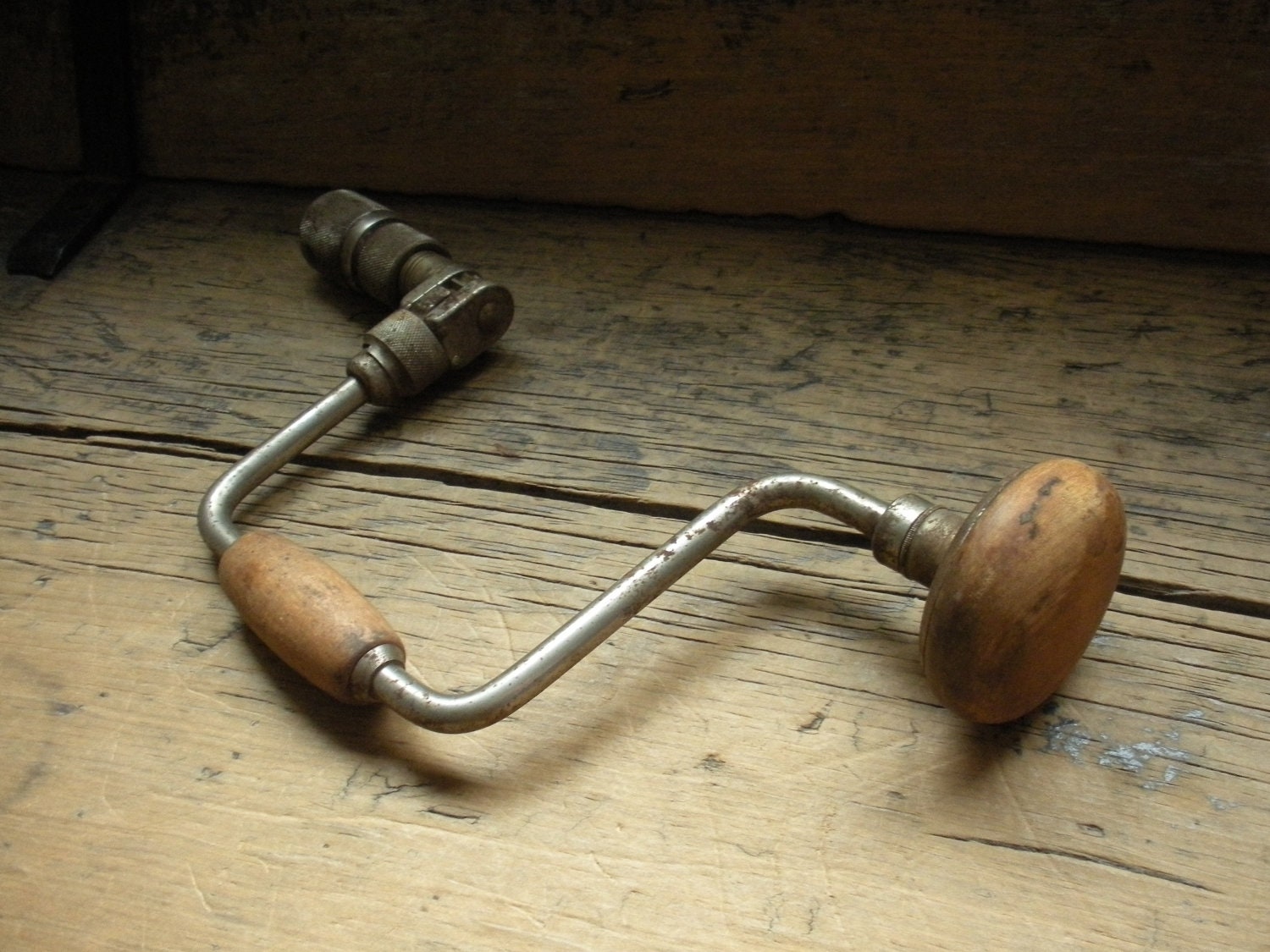
That's not the point. Not even the quality for me. For me, as a software developer, it's about doing things the slow way. Not necessarily the "better" way. I.e. using my hands. Meaning I built our tree house using only hand tools, save for the battery powered drill. Driving all those screws by hand, no thank you. Yes I did buy a hand crank drill as well and some drill bits to go with it. But I only use it to bore holes, not to drive screws, though you could too. Like this one https://img0.etsystatic.com/006/0/6916650/il_fullxfull.35811...

Some of you may appreciate this: http://www.supertool.com/forsale/2022nberslist.html (see main page and newsletter as well if you really want to buy - he's got already restored/more ready to use material than what you may find on ebay and the like, if you want to pay the price)

My perspective is a bit different because woodworking is a bit of a hobby that I use in other hobbies. I enjoyed making a stand for my synthesizers or various shelving and cases for my electronic things, and I didn't rush it or anything, but in the end getting a tool that just does the skill I already learned ("cutting the board straight") just leaves more time for my other hobbies.
I don't see the need to choose just hand tools or not. Buy some of both, make good investments where it matters and buy what you need for what you're making.

If you appreciate the feel and quiet of hand tools (like a nice hand plane!) that's great, otherwise if you like the accuracy and efficiency of a nice router, more power to you (rimshot!).

I would recommend everybody get a small table saw and chopsaw. Neither is expensive and both are transformative, especially for clumsy people like me who can't saw a straight line.

That said both chisels and planes are wonderful hand tools to work with and greatly reward even the most basic experimentation.

I’ve found these videos to be really helpful, especially the ones one sharpening plane irons https://woodschool.org/video-index/
my other pithy statement that I stand behind is my poorly routed sign that says "Glasses and Mask, Jackass" and sits right in front of the door entry to my workshop.

haste makes waste, but even worse, it can make for blind people with breathing problems