Hacker News new | ask | show | jobs
by Arnt 1388 days ago
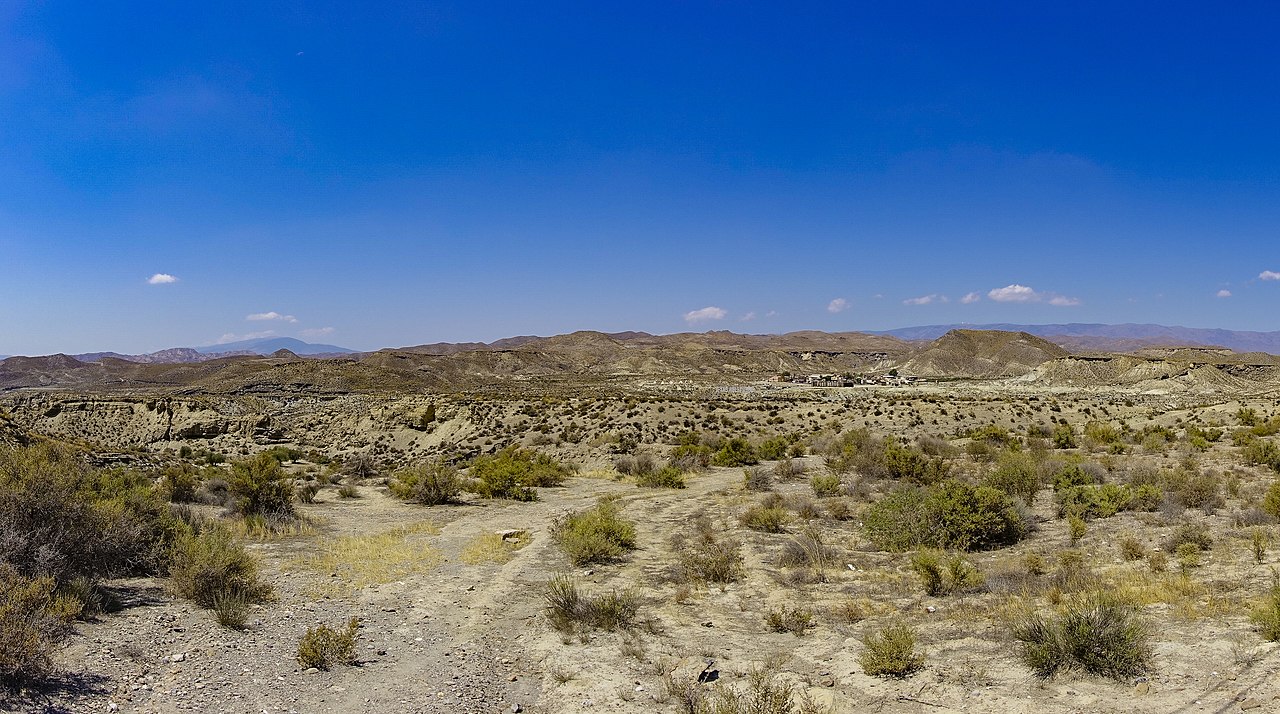
Parts of Italy and Spain. Landscapes like this: https://upload.wikimedia.org/wikipedia/commons/thumb/f/fb/Al...

Solar requires surprisingly little space. The city where I live now generates about 90% as much renewable electricity as its total average use, and it doesn't really show. Visitors don't say "wow, there really are a lot of solar panels here!" or anything like that. You don't have to look far to find some solar panels, and there a few geothermal facilities, but it's not immediately noticeable. It's been retrofitted to a densely populated city and doesn't really show.

1 comments

> Solar requires surprisingly little space

Not really. If i look on average production for utility-scale power plants (e.g. [0]), i get average net production of 5 MW/km^2. Germany has average total primary energy consumption ~387 TW, so to satisfy it with solar, one would need to use ~20% of Germany area for solar power plants.

It is very rough estimate, on one hand, primary energy is often less efficient than electricity, on the other hand, it completely ignores the issue of seasonality of solar power, just comparing yearly averages.

[0] https://en.wikipedia.org/wiki/J%C3%A4nnersdorf_Solar_Park

You've cherry picked a project at 53 degrees north and come up with a value that is barely area constrained once you include wind in the mix. There are numerous countries south of 40 degrees where existing projects produce over double the power per area. Example: Nunez de Balboa which is mid latitude spain has an average capacity factor of 20% at a latitude where winter capacity is usually around 60% of summer -- easily hitting the constraints of >10% and within transmission distance where geopolitical, cost, and efficiency factors are manageable. Southern spain, italy and greece have some areas that are even better.

Moreover, the existence of a plant at 53 degrees with under half the capacity factor achievablein europe is strong evidence for the thesis that solar is both sufficiently cheap and small, otherwise it would have been built near munich, not hamburg.

Moreover you need to compare like for like. When the proposal is to spend tens or hundreds of euros per net watt on multi junction panels that can handle shock loads of 1000s of Gs using launch capabilities that don't exist, then compare against something other than the cheapest available previous generation modules.

A 29% efficient hybrid silicon perovskite panel would be an example. This would produce double to triple the net wattage again as they perform much better in partial cloud or with sunlight further from normal and with realistic projections for cost would be around €1 to €2 per net watt installed as a dedicated facility including land.

In total you're around a factor of 5-15 over what is necessary.

A reasonable proposal then puts your "20%" figure at something more like just putting panels on top of the built up and paved areas starting south of Nuremberg and only going north when you run out of space. So to conclude

> Solar requires surprisingly little space