| > The Ryzen chip's TDP is configurable between 15W and 28W, TDP isn't a relevant number since the Ryzens will exceed their "configured TDP" for an unlimited period of time. see, eg, Anandtech's Tiger Lake review where a "15W cTDP" Renoir chip pulls 23W, and it is allowed to sustain that boost for an unlimited period of time, going against Intel chips that actually obey the 15W configured sustained-power limits... https://images.anandtech.com/doci/16084/Power%20-%2015W%20Co... The relevant number for comparing Ryzen against Intel/Apple SKUs is what AMD calls the "PPT" which is their sustained-boost TDP. The "cTDP" number is basically pure marketing these days, nobody is running at base clocks outside of contrived scenarios. (the Intel boost TDP is allowed to exceed the rated TDP too, but they only allow it for a limited time, it's a "sprint" feature on their chips, where AMD has just turned it into their new sustained TDP number, with the advertised TDP being essentially fake for marketing purposes it's specified at base-clocks that nobody ever runs.) |
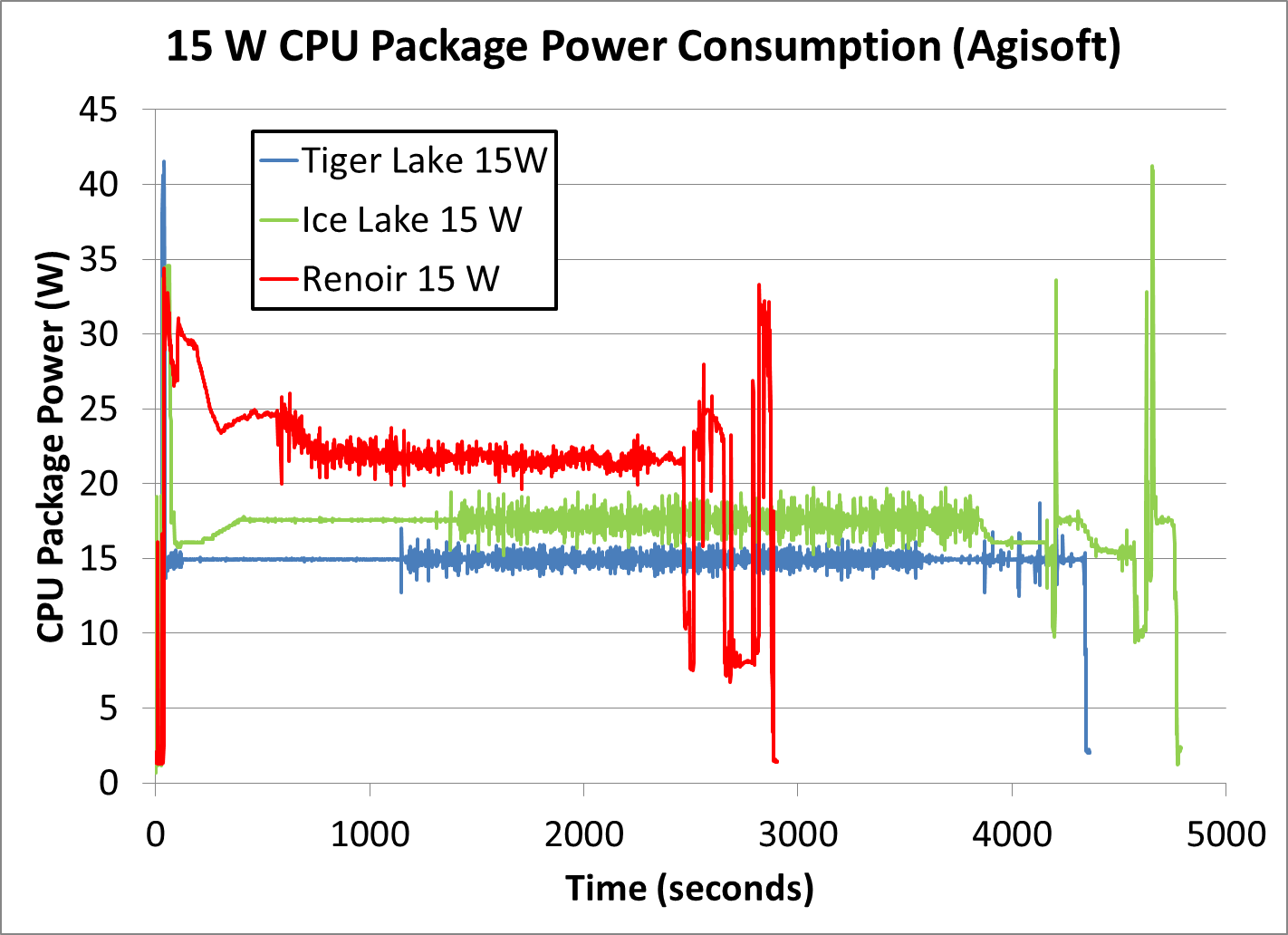
I don't know the figures for lenovo's thinkpad, which is why I quoted the full range AMD offers. And even then, TDP is just a long term target for the purposes of cooling - workload, implementation and environmental (i.e. temperature) details might leave two chips with identical TDPs to nevertheless consume vastly different amounts of energy.
In any case, we simply don't know how much power these systems used under this load. The expectation certainly is that the AMD system used more, but it's not clear how much more.