Hacker News new | ask | show | jobs
by SirensOfTitan 1509 days ago
Questions that come to mind:

1. What percentage of land use for dairy cows is arable?

2. What percentage of water consumed by dairy cows is recycled (eg from rain water), how does that compare to something like almonds?

3. What percentage of greenhouse gas emissions are added to the environment over already existing in the environment and just being moved?

6 comments

> What percentage of land use for dairy cows is arable?

Pretty much all of it. It's either being used directly for grass, or indirectly to grow grains which are fed to the cows.

> What percentage of greenhouse gas emissions are added to the environment over already existing in the environment and just being moved?

I think the number itself is the amount over what already existed.

You must consider other factors as well. The grass where cows are feeding is also a home and food for many other species. Making the land arable makes that void. Add pesticides, add other things to fight animals eating crops and the picture you get is just another extreme.
Not really. First, most beef isn't grass fed. By and large most cows are fed corn and soy, which means most of the land used producing beef already has those bad side effects. Second, if you grow food directly, you actually need less land to produce the same number of calories in plant material instead. So, you'd actually be able to creat more wild grassland without beef than with it.
Cows emit a lot of methane, and are in fact the single largest source of agricultural GHG emissions globally. As I understand it, there's a fair bit of research going into how to reduce emissions from cows, but it would also be good to reduce the number of cows if possible.
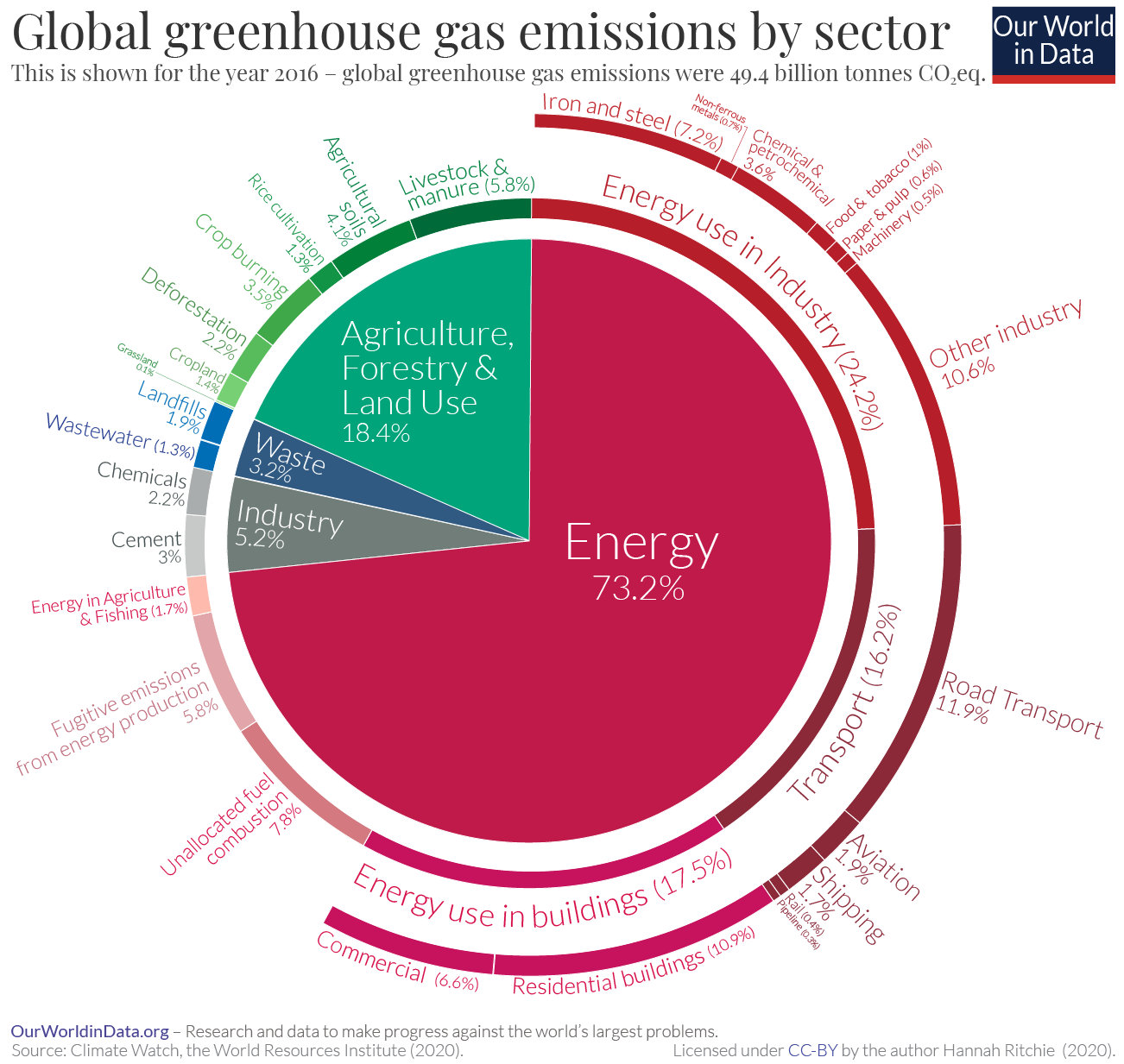
- Emmisions related to livestock are 5.8% of _all_ global CO2 and other GHG emissions [0]

- Methane leaks from Oil and gas drill sites and abandoned wells alone account for 5.8% of global emissions. [0]

Ethically I am aligned with animal welfare but rationally it is a lot more realistically that we force Oil&Gas to clean up their act than to expect everyone worldwide to switch to oat milk.

[0] https://ourworldindata.org/uploads/2020/09/Emissions-by-sect...

If it’s not arable then the cow’s food has to come from arable land somewhere else. You can’t just put a cow on a rock and expect it to produce milk.
Between land that gets enough rain for intensive cultivation without draining aquifers and land that's a barren desert there's a wide range and you can still graze cows on most of it, though it takes more land per cow in drier areas.
It’s not just about land use for cows directly, but also for their feed. Industrial dairy farms have way more cows than just the land can support.
Not if this is related, but WaPo published a big story on how American beef consumption is destroying the Amazon today:

https://www.washingtonpost.com/world/interactive/2022/amazon...

This is more about beef than milk, but the situation is likely very similar.

I misparsed that as "American beef consumption is significantly reducing the commercial viability of an AMZN project named "Amazon Today," and was surprised when I clicked.

I guess it was a combination of us being on HN right now and the fact that I apparently downregulate how much signal I expect to get from English grammar rules when reading text written by strangers on the Internet. I certainly don't see any problems with your grammar upon re-reading.

I wonder if I would have correctly parsed "...published a big story on how American beef consumption is actively destroying the Amazon"?

"Are Cows really Bad for the Planet? Why did we start blaming them?":

https://www.youtube.com/watch?v=SdrhpThqlCo