Hacker News new | ask | show | jobs
by jodrellblank 1544 days ago
> "We don't "need" Lisp machines. We "need" Lisp software."

Nobody goes into Java because their self identity is "a Java programmer" to gather a team of people to create a Java machine running Java software to unleash the power of Java for the masses by enabling them to do everything in Java for the sake of doing everything in Java, By Java, With Java, For Java. And if they do talk like that they would be a Sun Microsystems marketing pamphlet from 1999, or a joking reference to Zombo.com, or suspected of having zero interesting ideas and defaulting to Ouroboros-naval-gazing.

Adobe Photoshop Lightroom is C++ and Lua. Blender is C++ and Python. Excel is C++ and Visual Basic for Applications. LibreOffice Calc is C++ and Python. These are large, popular, programmable systems which exist today and are good enough; good enough for people to spend lots of money on them, good enough for people to spend years skilling up in them, good enough that once they existed people wanted them to keep existing and they haven't faded into the past.

The added allure of an imaginary rebuild of them like "if you took the lid off Excel you'd see VBA inside so you could rework the way it handles multiple sheets using only a skill you have and software design skills and Excel-internals knowledge you don't have" would get a hearty side-eye and slowly backing away from most Excel users. "Everything inside looks the same" is as attractive as "if you open your car trunk you'll see leather seats and plastic dashboard components making it move" or "if you sit in this car you're sitting on engine parts because the top priority is that a welder in a scrapyard can build the entire car without leaving their comfort zone". There are certainly people who want that, but the way the world hasn't developed that way suggests it isn't particularly desirable. Even when such things have been built, people can today use a Smalltalk, an APL, save their running work in a memory-dump and reload it and rewrite parts of it in itself, people flocked to Jupyter notebooks instead.

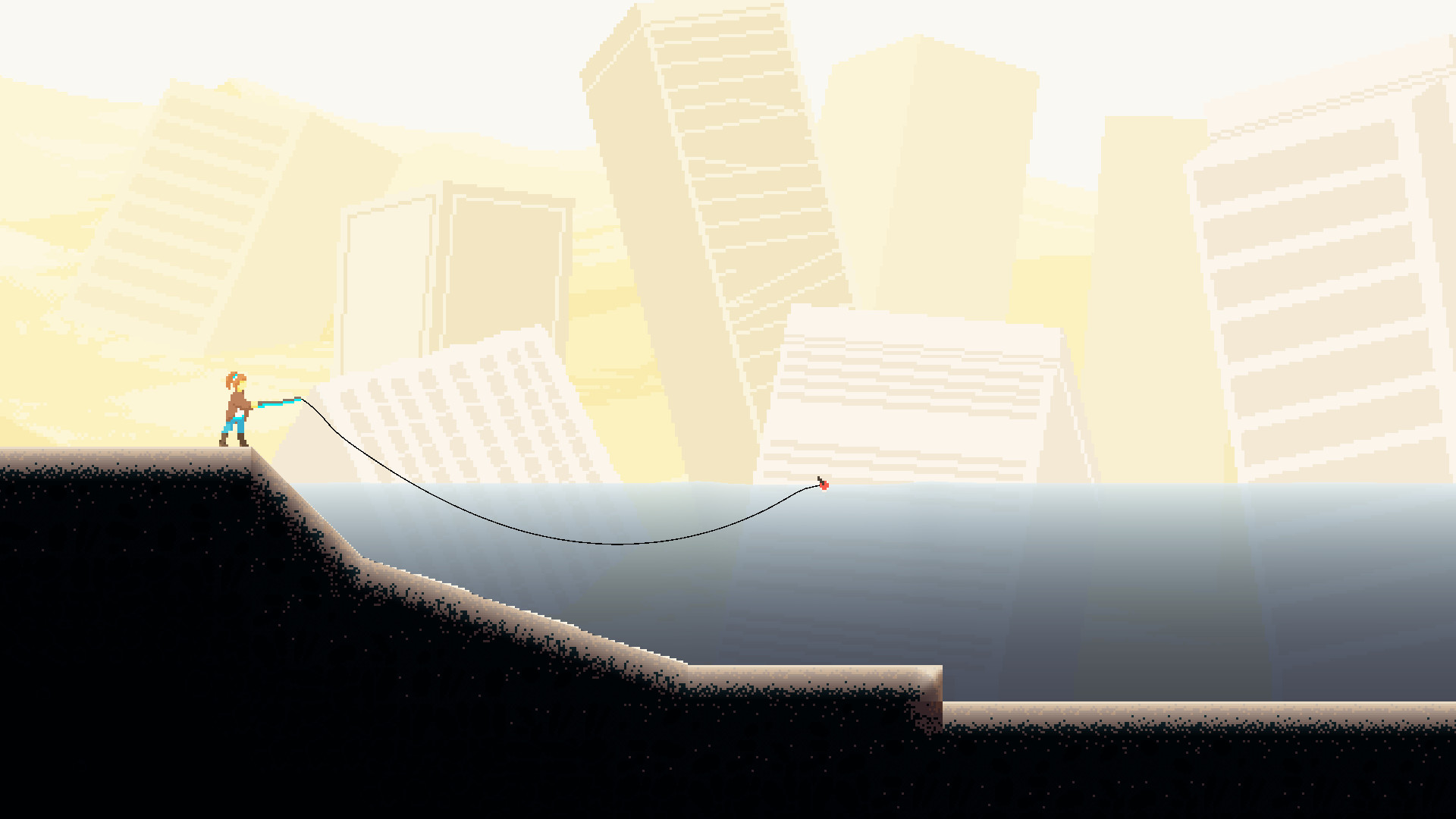
> "[1] Kandria is a neat platformer developed entirely in Common Lisp"

https://cdn.akamai.steamstatic.com/steam/apps/1261430/ss_a3f...

Without mocking a team who has built, developed, polished and planned to release a project, because that is respectable, it also looks like computer gaming of the early to mid 1990s Intel 386/486 era; remeniscent of Prince of Persia, Gods, Lemmings, Monkey Island. But it needs an Intel i5, 4GB RAM and 1GB storage. It's not even released yet and has no reviews, but you describe it as 'superlative' ("Of the highest order, quality, or degree; surpassing or superior to all others") - are you rating it so highly based on it being written in Lisp or what?

2 comments

I don't know how to respond to the whole "Lisp programmer identity" stuff; it doesn't seem relevant to anything I said. I also didn't suggest anybody rewrite anything in it. The success of Lisp doesn't depend on the existence of fancy machines, it depends on people choosing to write software in it. That's basically all I meant to say.

As for Kandria, did you play the demo, or did you just look at screenshots and system requirements and make your brazen judgment? I don't think Kandria is at all amateur or sloppy, regardless of to which aesthetic era you think it belongs. Many have claimed that it's not even possible to write a game that doesn't blow because Lisp is dynamically typed and garbage collected. Now the goalposts have moved to, "well, it takes 1GB of memory and doesn't even look like it's from 2022."

I commend anybody who ships.

It's relevant in the sense of being a reply to "we need software written in Lisp" and how, if you substitute Java and say "we need software written in Java", people would just shrug and ask "why do we?". People are saying "we need sofware written in Rust" and other people are asking "why?" and one answer is "to avoid the memory and race condition problems we have from C and C++ code". Maybe correct or not, maybe compelling or not, but it's a practical, outward-looking concrete reason. The answer for Lisp from your comment is "The success of Lisp doesn't depend on the existence of fancy machines, it depends on people choosing to write software in it" and that's the kind of self-referential Ouroboros loop I mentioned. "OK but why?". The success of COBOL depends on people choosing to code in COBOL, but nobody uses that as a reason to support COBOL. People who identify as "Lisp programmers" are going to care about that because if it dies, their identity dies (which is daft because as you say, anyone can choose to write a LISP environment at any time).

> "Many have claimed that it's not even possible to write a game that doesn't blow because Lisp is dynamically typed and garbage collected. Now the goalposts have moved to, "well, it takes 1GB of memory and doesn't even look like it's from 2022.""

JavaScript appeared, took over the world, demonstrated good games in a dynamically typed and garbage collected language at least a decade ago. Goalposts move, time moves on. Some AI people complain "once you wanted AI to beat chess, now that's not good enough? Stop moving goalposts!". Software today can recognise people, generate images from text descriptions, complete sentences, describe photos, self-drive cars over constrained environments, walk robots over rough terrain and jump onto ledges, steady cameras on flying drones following a person. DeepBlue beating Kasparov was impressive in 1996, it's not impressive now. There are AI experts today who were born after that.

Especially contrasted with "it's the best language", "superlative applications", linking something which looks like software of 25 years ago on 10,000x less powerful computers is a big difference in expectations. (It may actually be an amazing game, hence me asking what it was that made you say it is, before it's released). Years ago a company writing Transport Tycoon in assembler was very impressive. Now a single person can write a math animation video generator in Python as a hobby side-project while being a double-major student.[1] Expectations ramp up, year on year, and "coding on the libraries of giants" is a real effect. Pythagoras calculating the length of a hypotenuse was impressive. A school student doing it today isn't.

Hacker News is written in Arc. It's impressive to build a language and build a forum in that language, even though forums existed years ago. But if someone claimed it was the best language which needs to be preserved because it can do the best things, and then used HN as the example, anyone who has used a modern forum with all the trimmings would do the "yes, Grandpa, everything was better in the old days" polite smiling and nodding.

Electron isn't bad because it lacks Lisp, it's bad because it's sluggish and ramps up fans and drains battery life. WhatsApp isn't great because it was written in Erlang, it's great because it connected hundreds of millions of people on all kinds of featurephones and early smartphones. Visual Studio Code isn't very customisable because it's written in JavaScript, it's customisable because they built it to have lots of extension points. The answer to why we need software written in Lisp is like the answer to why we need software written in APL or Prolog: we don't. We also don't need softwre written in Java or C# or Python or Ruby. We may need software written in C, x64 Assembler, because of hardware lock-in. Tools are for doing things with, not for falling in love with.

[1] https://www.3blue1brown.com/about

I think we are talking past each other, and I think it's because you're fixated on and aggravated by a premise I did not stipulate, which is that Lisp is superior to other languages, and as such, you're interpreting "superlative" as "the best software ever written", instead of how you're supposed to interpret it, which is "the best software written in Lisp in the past 10 years", which is precisely what I referred to.

In isolation and without context: We do not need software written in Lisp. Nothing compels us to choose Lisp as a language to express programs that solve problems.

If we want a non-UNIX, non-C ecosystem, then what we need is software, not hardware. Lisp is one type of previously proven ecosystem that works. So it is reasonable to discuss that as a potential option, which is partly the topic of the article we both are posting comments to. I argue that if we want a Lisp ecosystem, we need better and more comprehensive software written in Lisp.

If we don't want a non-UNIX, non-C ecosystem, then we needn't discuss writing software in Lisp (or Smalltalk or ...) as a possible solution to that (non-)problem.

In any case, I simply argue that old hardware or even obsolete operating systems aren't really a productive thing to talk about in this context, except on a case-by-case basis.

Again, regarding "superlative", the word is in reference to last-decade Lisp software alone, which I contend describes Kandria. I don't even attempt to compare software written in Lisp to the entire universe and history of software, which it seems you're doing, but doesn't seem pertinent to the discussion. (Though, to be clear, even when comparing to all of that, I still think you're wrong. But we can argue to no end about our own subjective opinions.)

>anyone who has used a modern forum with all the trimmings would do the "yes, Grandpa, everything was better in the old days" polite smiling and nodding.

HN could have indeed been written in many languages, but IMO the simplicity is a strength. I'd rather be here than twitter, reddit, or any other forum. There's no dark patterns, no recommendation engines or other annoying nonsense trying to game "engagement", no ads, basically none of the things that make the modern Internet an awful user experience.

Regarding Kandria:

You might have heard of this thing called "Art", and that it has styles, and that not only one of them is called "pixel art" for celebrating that kind of limitations, Art as a whole is often talked in terms of self-imposed limits used in creation of a work.

That said, a game can deliberately target such style, and yet hide considerable richness of implementation (consider: Noita, Dwarf Fortress).

Another thing with Shinmera and his team is that they produce both interesting stories, interesting games, but also code I'd argue is art too.

> "That said, a game can deliberately target such style, and yet hide considerable richness of implementation (consider: Noita, Dwarf Fortress)."

It definitely can, and Monkey Island and other SCUMMVM games are examples of having lots of gameplay and comedy, despite constrained graphics. As are card games and board games, for that matter. Fancy 3D isn't the be-all, end-all. In more recent years SpeedRunner[1] isn't pixel art but it's quite simply styled, and is fun for leaning so heavily on a single game mechanic.

I'm not meaning to diss Kandria which might very well be a great game. I meant to call out the gulf between Lisp as "the best language" and "superlative applications" being developed with it then linking to Kandria might set one up to think of the "best games" of recent years, by popularity or profitability or ambitiousness or multiplayability, or replayability, or storyline, or VR support, e.g. Pokemon Go, Grand Theft Auto series, Dark Souls series, Fortnite, Fifa, Half Life Alyx, Tony Hawks Pro Skater remakes, Spiderman PS5, Elite Dangerous, Roblox and Minecraft, Final Fantasy series. Which all seem to have done alright without Lisp, and no game development houses have done the Paul Graham "Lisp as secret weapon" to make a game nobody else can make with other tools.

[1] https://steamuserimages-a.akamaihd.net/ugc/58020036161797293...

Well, the end effect was that your post seemed to concentrate on dissing Kandria, not the way the article went about it (which wasn't the best honestly).

As for games where Lisp was secret sauce, Uncharted series would count, I think ;) It was a return to GOOL-style programming (like in Crash Bandicoot) instead of full engine written in Lisp (like GOAL was for Jak&Dexter), however for narrative-heavy game the tooling used for making that narrative should count as secret weapon.

BTW, a huge underappreciated thing about why Kandria can't fit into less RAM is simple fact that today games generally render at much higher resolutions, and I believe Kandria does have multiple buffers and passes involved (like most game rendering engines these days, though I will have to read Shinmera's paper about shader composition system to verify)