| This blogpost can be summarized as with an XKCD essentially. It positions itself with the following assertions: > Q. If a user has chosen to trust a platform where all binaries must be codesigned by the vendor, but doesn’t trust the vendor, then reproducible builds allow them to verify the vendor isn’t malicious.
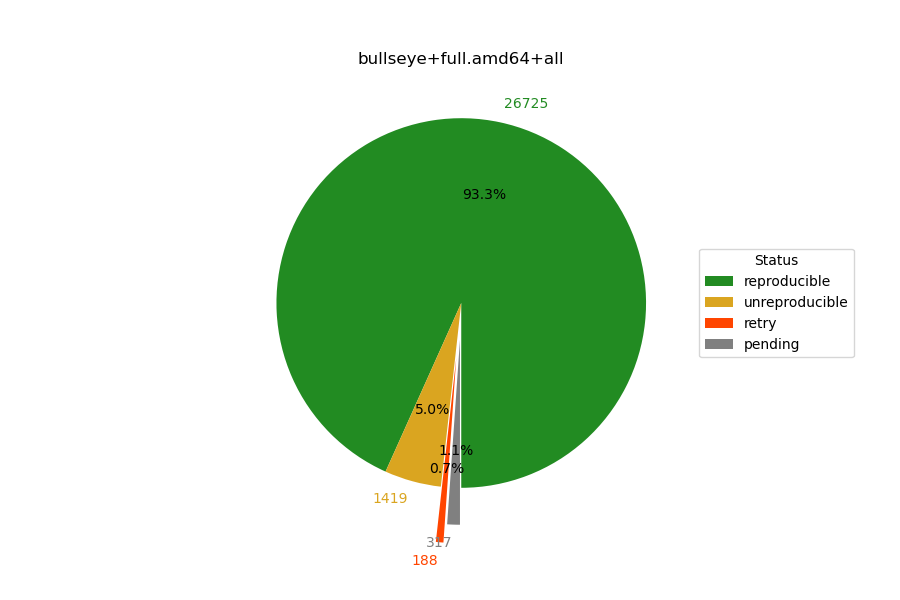
> I think this is a fantasy threat model. If the user does discover the vendor was malicious, what are they supposed to do? The malicious vendor can simply refuse to provide them with signed security updates instead, so this threat model doesn’t work. Which only works in the context of proprietary vendors and not in the context of FOSS distributions. Nothing can be denied as everything is freely distributed. You want to have the ability to verify the work done by packagers and build servers. Next up is the essentially the claim that "reproducible builds can't solve bugdoors. Thus it's insufficient to solve any problems". But this is essentially just an XKCD argument; https://xkcd.com/2368/ Reproducible Builds is a nice property of any build system for multiple reasons. It's also part of the supply-chain security story and not the entire story alone. As for how much effort it is? It's a lot. But considering the core community of reproducible builds people is below 50 people, and we are still able to come close to an 88% reproducible builds in real world distributions should point out how achievable this goal is. https://reproducible.archlinux.org/ |
Indeed. Open source isn't a vendor it's just volunteers from the Internet. If you look at the way people behave in nearly every other walk of life that isn't software, it would seem amazing that we somehow managed to create such a beautiful thriving gift economy. In order to keep it that way, we need to have reproducible builds, because they promote transparency.
It is however very very expensive. Even if you manage to surgically remove all the dependencies on things like __TIME__ then you still need to audit the code for things like iterating over hash tables. Many core libraries these days such as expat xml parsing will seed their data structures using /dev/random. You can qsort but you might get snagged by the fact that it doesn't use stable algorithms. If things don't work out then it helps to have deterministic execution too so you can run the build and see what it does differently that causes it to produce different output. Sadly, with things like kernel imposed memory randomization that's easier said than done.
So the unfortunate reality is that open source isn't arching towards determinism. The trend is very much the opposite where it's becoming more non-deterministic, especially in the last five years. So if having deterministic builds is something your org cares about then you really need to hire an expert and in many cases change the engineering culture too.