Telegram can't do anything if Google and Apple threaten to remove its app from the stores. On Android they've started promoting sideloading the app for a while already, but that's not an option for Apple devices sadly.
They've restored the bot functionality for accounts that are registered with non-Russian phone numbers though.
That only works in so far as the government you're blowing off doesn't have the willingness to actually shut you down and block you or actively threaten your employees in the country (as reportedly happened to Google).
telegram also removed bots from Navalny team which you could ask what non-ruling-party candidate has most chances to win, to facilitate "protest", tactical vote, much the same as the app would do. Telegram CEO cited some nonsense about "silent days" (why would he had obey them?) which are not even a thing with current 3-day voting in Russia.
Many people agree Durov just got threaten that telegram app would be yanked from appstores, just like navalniy's app.
Huge win of the current government in their intimidation tactics.
“Silent days” are still a thing. The new bit is that the day before the election is not included, only the election days themselves. This prohibition makes sense to me.
My personal opinion is that telegram’s actions are reasonable in this context.
Navalny’s team fucked up by publishing their recommendations only on the 15th, two days before voting. I don’t understand that decision at all.
You have these "silent days" in most countries. When we have elections in France, we just look at Belgian or Swiss newspapers to see how the votes are going on. They do not care about these days, only French newspapers and media do.
Twitter does not, Facebook does not, Telegram does not - nobody cares except for France.
You either believe that this regulation makes sense, or you don’t. France, apparently, is in a situation where nobody cares enough to enforce, but taking the law off the books is not politically feasible. I do not know whether that’s a good thing.
As a Russian: the election has a limited relevance beyond a certain type of signaling. The majority of United Russia is largely guaranteed by the “electoral sultanates”, so votes cast now will not impact new legislation over the next five years.
If your purpose is to signal things, being morally clean is more important than the number of votes you manage to achieve. If a law is reasonable, and a norm in multiple other well-regarded systems, it makes sense to comply.
> France, apparently, is in a situation where nobody cares enough to enforce
It is strictly enforced in France. But Internet knows no borders so the statistics of votes (which is is illegal to provide in France during the voting day) are available outside of France (usually in French speaking Belgian / Swiss online newspapers, or Twitter/FB/...).
My point is that a country cannot expect that other countries (and services in these countries) will follow their rules.
> If your purpose is to signal things, being morally clean is more important than the number of votes you manage to achieve. If a law is reasonable, and a norm in multiple other well-regarded systems, it makes sense to comply.
It’s not strictly enforced. Exit polls published outside France are collected inside France. Those who collect with clear intent to immediately publish are subject to French law, and may be fined. Which, from what you are saying, does not happen.
> I am not sure I understand that point
I am not sure how to explain it better. You should not both demand lawful election and circumvent electoral laws at the same time. You can, and people do, but it’s not a strong position.
Hmm, I've been wondering the same, and I'm not sure this applies here. They clearly used other legal means (marking the org as terrorist). If you have a leaflet already at home, you can still read it. If you walk to your local party's branch, you can read the leaflets there. Websites of most parties do not close during silent days, only advertisement is forbidden. Finally, this Smart Voting app does not seem to use any real-time polling result, does it? It's basically a directory with local candidates per area.
What I meant is essence is that moving the information outside the country to an entity that is independent (and cannot be bullied like Apple or Google were) would allow for access to that information (the dynamic part (the part of the information that changes) is interesting because, as you noted, once you have it, you have it)
Doing that before the election (I assume your plan, if you were Putin, is to have all 225 “recommended” candidates withdraw?) is more difficult than subverting the, very optimistically, 30 that will get elected.
There is a theory that Telegram is a Russian op, given that they still having office in Russia, which they are very secretive about, despite the claims of Durov being nearly chased by KGB on every corner.
Telegram had been banned by Russian authorities with a demand to disclose E2E encryption keys previously, then that ban was miraculously lifted last year. What is happening beneath the curtain is anyone’s guess.
Setting aside any speculation as to whether they are in fact a state-backed covert operation, last time I checked it appeared to be a tiny company of undisclosed structure, which—while in a way glamorous/romantic—does not strike me as a radically more acceptable/sustainable state of affairs, as it makes the individuals involved liable to be influenced (including through [in]direct fear for personal safety, a mechanism markedly more effective than fines or legal action) by whomever is able to find them.
We now see that Apple and Google routinely remove apps by request of Russian government. How come Telegram was never removed? Maybe the russian government never really asked?
They asked, but before this situation, there were no serious reasons for that. But a few days ago, the Navalny organization (FBK) was declared by the court to the status of an extremist organization.
They just put the opposition on one list with terrorist organizations like ISIS and the Taliban.
For now, Google and Apple ban "another dangerous organization," not political opposition.
Google and Apple already censor all the content and application for local markets.
It's nothing new. Many youtube videos are restricted in some countries but accessible in others.
Companies want to make money, not to play political games, and to declare war for freedom. It's not their responsibility. But in Russia, many local players dream about a ban of Google and Apple to finally take all the market.
Mail.ru, Yandex, Vkontakte, Sber, etc., all these companies got money from an oligarchy in Russian, and for them, Google and Apple are the leading competitors in the market.
Many local clones of google search, mail, WhatsApp, youtube, twitch, TikTok, and other services, but they can't win the market because of US companies.
I think, in the future, Russia will ban US giants on their market. Everything goes to this.
I actually researched it. All sources that every story about 'they asked' cited in the end pointed to RosKomNadzor press release on their own website. And it is very well known that Russian government never lies.
There were no public confirmation from either Google or Apple that they did receive such request and refused to act on it, like they earlier did on LinkedIn.
Telegram is used widely by many people, including people in government. Removing Telegram will wreak a lot of chaos. It's like cutting of external Internet. Technically possible, but very unpopular measure.
You are correct that there is this theory, yet I haven't seen any evidence of that.
Deleting Navalny's bot seems like a response to a threat from Apple and Google. To fight this, it would be great to abandon Apple and distribute all apps via Android APKs, circumventing the app stores. (Not gonna happen, I know)
First they came for the American opposition, then they came for the Russian opposition, then there was no opposition at all.
> In this case there's not many reasons for it to be a native app instead of a Progressive Web App. This would simplify distribution.
The opposite of this is true. Blocking a web application is very easy for Russian authorities, there are well-established legal and technical protocols for that, it's a routine, it happens every day. The opposition uses apps precisely because they are more difficult to censor.
So is this app using some other protocols that aren't DNS/http(s) that would make it immune to a dns level block? Because a native app that makes http calls is just as easy to block as a pwa
The app uses the same technology as some trojans: it connects to different pseudorandomly-generated domain names under Cloudflare protection, changing at least several times per day.
The client still needs to receive those domains somehow though, and that's the tricky bit. Unless the domains are unique per user, the blocker can just install the app and block the domains as they change.
You can embed the domains in the app, obfuscated. It's not foolproof but as long as they can't crack it in the few days that are left until the election...
Not really. You can use whatever you like, the possibilities are endless. AFAIU, the most straightforward approach would be to use Android / IOS push notifications (which can't be easily blocked) to regularly push a constantly changing (to avoid censorship) URL of your backend API servers to the mobile apps.
Unless those urls are unique per user, then the response to that is for the blocker (Russia in this case) to install the app and block the URLs as they change
They don't have to be strictly unique per user. You can send out different sets of URLs to different cohorts of users, then correlate new URL blockings with client IDs to detect rogue app installations and excommunicate them. Telegram did that when Russia tried (unsuccessfully) block it.
The advantage of a web app is that it can be distributed in any number of ways though. It's trivial to take it and re-host it on different servers, as an onion service, or go the full decentralized route with IPFS or similar.
Yes, you can re-host, but propagating the new URL to your users will take days, and the authorities reaction time is, for high profile cases, measured in hours. Another interesting question is how will you propagate the new URL? To do that, you need some way to reach your users when your website is down. And if you have such a way, do you really need a website?
Just e-mail people an update from random address with GPG signature. That should be the more resilient and hard to block way to communicate information. It's fun when the old proven tech proves superior to new shiny tech.
Just as the gov required google to remove the app they can also require the big email providers to block all emails with links to it.
99% of the people are on the big email providers.
Also, you will quickly find out that sending many emails from random addresses (ie: spamming) doesn't work these days, they will be blocked by existing anti-spamming techniques, as evidenced by multiple posts on HN of people trying to do that from their own mail server.
You need to go through a whitelisted mail service (MailChimp, ...) which is another block point.
Not now, but people adapt when there's an incentive.
Already if you go in a country with restrictive internet, you'll find the average working-age person knows how to use a VPN. Regular drug users in western countries know how to use Tor. Hong-Kong protestors were using a bluetooth mesh network app.
I'm not sure about Tor, but I know from my friends in Russian, who have direct access to this information, that the Russian government inherits all the practices and technologies from China, with DPI and all the things.
Now even VPN + shadowsocks won't be a permanent solution.
It's obvious cooperation of governments that can help each other, one with tech to control, and the other with cheap resources for manufacturing. (you can google how Russian almost sold part of territories to China, there are even cities where all the administration are Chinese).
Not as of yet. Actually, if you use tor (with out-of-Russia exit nodes, which I think is the default when using it from Russia?), you can already freely access all the sites blocked in Russia, non-onion ones. But, obviously, tor and VPNs are good solutions only for people willing to go an extra mile to get to the prohibited content.
> On Friday, sources confirmed on background that at least one of the U.S.-based companies implementing the restriction felt compelled to comply for fear that local staff could face legal action upon receipt of a takedown order from the Russian Federation.
Really making the world a better place. How hard would it be to have employees from outside the country make the app review, and shield local employees from this? These companies do what they want to do, and they didn't think this was a hill worth fighting for, which is sad.
What would prevent Russian authorities from taking action against local employees anyway? The buck stops at the government. The only options for private companies in these type of situations are: comply or exit.
I don't think it has to escalate as aggressively as you're making it out to be, and yet exiting is an option as we saw from Google's reaction to China's demands. So here we're just seeing what things they consider bad enough and my comment is that it was sad this wasn't bad enough for them to put their foot down.
"Shield local employees from this" is the main hard part of this proposal. The Russian government does not especially care which part of the company Google claims is responsible for app review, and they will happily arrest/prosecute/murder any staff they can get their hands on if there's a chance it'll get then what they want.
Yeah, that's an old story, but there were engineering offices of a few big US companies in Russian before.
Almost all of them left in 2010x when they understood what was going on there. Same for Belarus, companies moved their offices to Ukraine and other Eastern European countries.
I wish there was a foreign power interference in Russia. At this point I will accept NATO intervention (will never happen though, West is just complicit with Putin).
The restrictions are quite useless (and BTW the website is quite horrible and has a bad security record). Even in Yandex you can easily find the list on various websites. It has even been duplicated to Wikipedia:
> You may not see this option if:
You've changed your country within the last year.
> You aren’t currently in a new country.
> How does Google know my location?
> Depending on the products that you’re using and the settings that you choose, you may provide Google with different types of location information that are critical to making some services work and making others more useful for you. Location can come from real-time signals, like your IP address or device location, and also your past activity on Google sites and services, to tailor experiences for your context. Below are the primary ways we may get information about your location.
Never, never, never ever enable the GLS, and emergency location service (read the disclaimer, it's the same GLS)
If you never had GLS enabled, the only way Google can guess your location is your IP.
There is no opt out later in account setting to remove GLS info forever.
The current elections are shameful even by Russian standards. These are the recordings of some falsifications that happened in this cycle: https://www.youtube.com/watch?v=1knqpiDrtUs (until YouTube bans this video too).
I know that "violence is never the answer" but it's pretty pretty hard to swallow when corrupted thiefs and murderers have state-guaranteed monopoly of physical violence.
Russia was blamed with USA elections rigging because someone payed for facebook ads to promote one of the candidates.
In this case we have every evidence, that a group of people, financed by foreign organizations, created multiple apps, websites and other sources to manipulate people voices.
Wake up guys, such activity should and will be banned in every country.
I see very little difference in the two countries. Big money and powerful people control the narrative and social structures of both countries to the point that the average person has little say in the outcomes of elections.
Most people will never wake up. The system's very existence relies on it. Or alternatively, our system arises from humans being basically apes with very strong in-group/out-group instincts.
Guarantee people most outraged about this are same people who wanted to yeet Mango Mussolini from Facebook and Twitter for being Russian agent. None of them are having a lonely thought in their head how the said companies might have oppressed domestic opposition and if they did it's Good & Beautiful.
To me it is hillarious that the thing called "Smart Vote" (the one that was banned) means actually "vote for whoever you are told to vote for by the Navalny team". I only found it out a few days ago.
This doesn't sound really smart to me at all. Quite the opposite. "Mindless vote" would be more correct. It doesn't care about the candidate's person, political agenda, views, biography, anything. It doesn't care about the party you are told to vote for, either. You should just vote for X or Y, for party X or party Y, and that's it :)
It's "smart" when compared to the previously employed strategy that was "vote for anyone, but United Russia candidate". Now the idea is to consolidate opposition votes for a single candidate in every electoral district that has the best chance to win over the main governmental candidate.
The list of candidates has very little to do with ideological support for the actual candidates on it. Most of them I'd say are crooks and shills themselves, but they are not THE crooks and shills the government wants to see in the State Duma.
It was less widely reported that Telegram, supposedly independent messenged closed access to Telegram bot which Navalny team tried to use to replace these apps. They claimed it was done in compliance to russian laws.
Why don't they just make a hundred new accounts and upload it under different names?
The government could do the same - but if Google and Apple were really concerned about democracy, they could just delete the fake entries faster than the real entries.
What did the app do? The article quotes a tweet which describes it as a "Russian strategic voting app", but I can't imagine what that would involve. Does it send you notifications to go vote or something?
It’s curious that Putin in simultaneously able to subvert the election, but is scared enough about his flagging popularity that he feels the need to block this strategy.
How would this title be worded if it was Biden blocking a Trump app?
Lawmakers stop GOP attempt to rig election.
Wise technosleuths uncover plot to fix election.
No, stopping the app isn't stealing the election.
Now let's flip sides:
Trump disenfranchises minority voters.
Trump kills app designed to help underserved communities.
Machine learning can identify left and right news sources, this tells me they are not news but biased propaganda. It would be nice to have reporting without bias and use the same word playbook for every story.
I'd like to give a bit of perspective on what "smart voting" actually does and why there's reason to dislike it even if you dislike current Russian government.
Let's say there is a niche party or organization, which is ineligible to participate in the elections. So they get this bright idea: let's figure out who's the most proficient challenger in every district and recommend people vote for them. Seems like a decent way to shift the scales, but with plain majority voting the plan would not change the winner, only the margin he'd win by.
The key point is though: those challengers are working hard to improve their election results, in many cases they are really nice people who really want to do some good (in many other cases, they want to do some good only to themselves, but that's beyond the point). So they campaign and meet people and talk and generally work hard to get their ideas to the public. On election night they manage to snip another 5 percent points on top of their previous result from the juggernaught which is the local United Russia's candidate. They did good, right?
What happens now is that instead of talking about how they worked hard and tried to do some good and whatever, suddenly people start tweeting and telegramming about a great success for "smart voting", which is deemed the only reason the opposition candidate has improved his percentage. People talk about how the niche party (which has done nothing apart from distributing a list of names) is the actual "people's winner of the elections" as they managed to "kick UR's ass" and "make Putin afraid". They don't talk about the challenger candidates, those become puppets for "smart voting" after the fact and without any option to not participate.
Now imagine you are this hard-working opposition candidate, robbed of your accomplishments in the public eye. What would you think of "smart voting" and people behind it?
You can’t cheer government rulings when it comes to some things (e.g. app store workings) and expect companies to obey, yet complain about them when it comes to others (… also app store workings) and expect companies to resist or exit the market.
I'm pretty sure if this would be in Nazi Germany then Apple and Google would supply locations of the Jews. Because it was "illegal" not to.
We are years away from the global fascists superpowers (with mass surveillance, AI, nuclear and bio weapons), but no one seems to care. Let's feed the beast even more.
There is a book about IBM's involvement in the Holocaust. Now, I have no illusion that Apple, Google, and co. would not do the same in the circumstances.
Considering Apple complied with this request, we can be absolutely 100% sure that they would never even consider complying with the request to abuse their “CSAM detection” system to find dissident content.
This is what was given up when people chose App Stores over the web. You want centralization and safety? You also get companies that must comply with local law.
And very often, the law doesn't give a shit for your freedom. Especially not outside the 'West'.
Russian government is already preparing hashes of CSAM materials. This list of hashes will be distributed to a number of parties, that will do blocking/removal/reporting.
My alternative is to use smartphone only in exceptional use cases, as banking apps or emergency calls.
For calls use simplest phone available.
Actual phone calls are the best user experience.
Emotionally fair and transparent. You don't have to write thousand emojis to express emotion.
You don't wait someone to respond or ignore. Things are direct and effective.
On the app side of things. There is no app that I need and I don't have on my laptop.
4G LTE Mifi with VPN. Intel core 2 duo / PureOS (removed ME).
I am fan of big and powerful desktops and multi-monitor setups.
Recently I discovered my dream desktop computer: https://shorturl.at/apqP3https://shorturl.at/ceB06
If I want a photo, I have a small camera. If I know I will shoot, I grab my Leica.
It is all about the information diet.
I want my mind to be clear and my perceptions sharp.
Smartphone UX and small screens in general are not the best way to consume information.
iPad was cool middle ground solution, but I cannot trust Apple or any closed source software anymore.
And neither of them are feature complete with Pine phone either which is the reason for this thread :-)
Actually owning your own phone to the point of deciding yourself what runs on it and what does not and being able to repair it easily are two huge features when you start to think about it.
I'll be getting rid of my Android device once the PinePhone is back in stock. I only ever use my phone for SMS, calls and maybe a flashlight here and there, so it should be a pretty comfortable transition.
A lot of people have reached the point of needing an iPhone. Nope, Android won't do, because it's not an iPhone. Too much friction and learning curve to ever use anything else than an iPhone. Game over.
Wonder how many orange-man-bad posters is having a gear move in their head and wonder how many times they complied oppressing domestic opposition since 2016.
Probably don't want to think too much about that, much better be outraged about far away distant lands as your moral sword.
As far as I understand those apps were illegally gathering and storing personal data - real names and addresses - storing them abroad - which is no-no not only in Russia but in EU (GDPR).
In terms of voting - people can still lookup candidates proposed by Navalny's team online without breaking the law.
Surprisingly most of them are from Communist party of Russia.
> Surprisingly most of them are from Communist party of Russia.
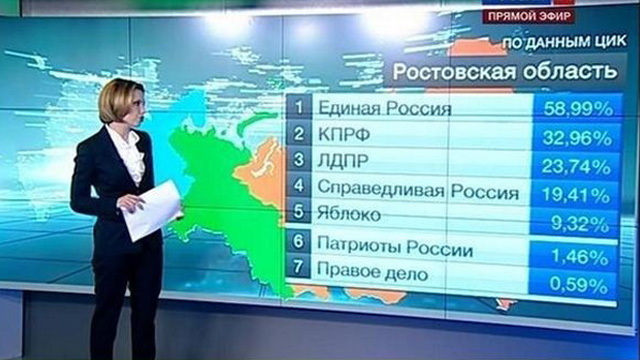
It's not surprising at all. The communist party is the second-largest party here (polling at around ~20% in the last polls I saw). The point of the Navalny app is to highlight the candidates most likely to win against Единая Россия (Putin's party) in each district, which will usually be the candidate of the second largest party (with some exceptions).
(Just providing this information, I don't support Navalny)
Apple is in no position whatsoever to fight governments.
The amount of money and power they wield in the market and society is huge, but it doesn't even rank in competition to the power of the state. (For scale, the US, just a single country, has spent, only on the military, 4.3x the entire market cap of Apple ($2410B) since the iPhone was introduced.)
They have to do whatever the CCP tells them to do, as they are completely, inescapably beholden to the millions of people near the factories that produce 100% of the iPhones and iPads ever that hold machine guns (the PLA). Apple cannot exist without the consent and cooperation of the CCP; they will ban any emoji, text message content, camera content, VPN app, or protest coordination app that they are told to.)
(Yes, the 100% is slight hyperbole - Apple has started assembling a relatively small number of iOS devices in other places, but my point stands.)
Same goes for any large market, like Russia or the USA. If the state comes knocking, Apple and Google do not have a choice.
Even their options for public resistance are limited.
Remember, corporations are only allowed to exist or engage in trade with the consent of the state.
Those that fool themselves with marketing fluff are the ones to blame.
"Do no evil" from Google, or "Think differently" from Apple, really, how naive one must be to think the end game isn't only about money and keeping the board happy about exponential growing sales?
> Given that, one would assume they are willing to take a hit in profit (by not selling & not cooperating) in places like Russia and China.
If Apple didn't cooperate with China, there would be no iPhones, and Apple wouldn't meaningfully exist. iPhones are nearly exclusively manufactured in China. All the chips in iPhones, iPads, and now the most important macs are exclusively manufactured immediately adjacent to China, in a territory claimed by China.
Taiwan is irrelevant to the point I'm making. As the Taiwanese people are acutely aware, if push comes to shove, that supply chain comes under the physical control of the CCP/PLA in single-digit hours (albeit in a nonfunctional state).
The CCP has veto power over the production of all iPhones and iPads (and soon Macs) in the whole world. This has little/nothing to do with Taiwan, other than their unfortunate proximity to China.
If Apple wants to continue existing in any meaningful form, they must presently do what the CCP wants.
This goes the same for selling their devices in any given jurisdiction, such as Russia, to keep this on topic for TFA.
The latent power of big tech is incredible. Apple is so awash with cash, they could probably just stop doing business in a country without taking much damage. I don't know how big the russian market is for them - but for many countries smaller than that, they could dicate terms. Imagine the CEOs of a couple of tech companies meet for brunch, and decide to do something about human rights in order to feel good. So they tell country XY, get your human rights affairs in order, or, lol, no modern cell phones for you. (China would surely step in after some time, but look how much trouble Huawei was having with the sanctions and without Google apps recently outside of China.)
Also, consider that Apple, Google, Microsoft essentially have a backdoor on every piece of consumer electronics. They can push updates and do anything they want. Granted, this is a one-shot thing and might be ruinous for the company if abused, but if I was a foreign government I would be terrified.
I bet there are a lot of beind the scenes power struggles going on - the US supplies a lot of critical software, the PRC lots of hardware, Tawian has TSMC, Europe has ASML (and this is just the tech sector). Nobody wants to use their nuclear options, but with every public development you see, these powers are priced in. Probably, Google and Apple had long conversations with the state department, and somewhere the decision was made to comply with the Russian government. But the result could have easily been different.
Apple is most certainly in a position to influence government. They have a device in the hands of more than a billion people who spend hours per day staring at it.
They absolutely have a responsibility to fight for human rights and freedom. By your logic, no one would ever engage in any kind of civil obedience and no one would be able to effect change: the government, after all, is also more powerful than any individual protestor and many of them are risking their livelihoods or even their lives by protesting.
The most famous advocate of civil disobedience in the US got executed as a result of his prominence.
(In an ultimate irony, Tim Apple keeps a picture of him (MLK) on the wall in his office, alongside a picture of the guy who signed the order as Attorney General to have the FBI put him under 24/7 surveillance (RFK), which resulted in the FBI sending him (MLK) anonymous letters attempting to blackmail him into suicide.)
Apple knows which way the wind blows. Even if they wanted to engage in the maximum amount of resistance that is feasible/practicable, that's not really very much, especially when an organization friendly to the US military has literally every single rich/connected person and the entirety of the executive, legislature, and judiciary under bulk surveillance at all times.
> They have a device in the hands of more than a billion people who spend hours per day staring at it.
Including 99% of Russian legislators. They're suckers for luxury.
To be fair, though, executing political pressure through this kind of means might raise certain red flags back in US, even if that only happens in Russia, one time.
- YouTube blocks videos with Smart Vote instructions.
- Telegram blocks a bot with Smart Vote the instructions