Hacker News new | ask | show | jobs
by umeshunni 1755 days ago
I find it representative of the sorry state of tech 'journalism' that anyone would think that a cell phone in 2021 is capable of satellite internet.

A quick search will show anyone the size of even the smallest Starlink receiver and common sense dictates that current generation phones cannot have any meaningful signal strength connecting to even an LEO satellite.

9 comments

I agree it wasn’t going to happen, but I understand their confusion. Current satellite phones are the size of regular cellphones. That’s the equivalent of very low bandwidth internet access, but even low bandwidth access can still be really useful. https://www.g-comm.us/iridium-9555-satellite-phone.html

Dropping that to something that fits in an iPhone would be a very significant improvement, but it hardly breaks the laws of physics. Thus https://xkcd.com/2501/

Devices that can send an emergency beacon to LEO are tiny.

https://www.iridium.com/wp-content/uploads/2021/07/mini3.jpg

Here it is with the case removed so you can see how big the helical antenna is.

https://fccid.io/img.php?id=1547768&img=bg1.png

Apple dumped a bunch of R&D money on a group of antenna experts years ago, so we'll see if they came up with a flat alternative to a helical antenna for satellite communications in the same way that the terrestrial cell phone networks did.

Apple has streamlined very significant improvements before

(and nobody cares if an obscure android device had it five years beforehand, Apple has wowed and brought many things into commonplace)

I would agree that there would typically be something obvious in the supply chain or a proof of concept before the iphone randomly has a significant improvement though

I think it slightly disingenuous to just pretend that big honkin’ antenna isn’t there and then say “it’s the size of regular cellphones”. My Motorola Startac from 25-30 years ago didn’t have an antenna that big.
It’s 143mm x 55mm, the iPhone pro is 146.7 mm x 71.5 mm and the iPhone pro MAX is 160mm x 78 mm. Granted it’s also thicker and slightly heavier, but calling it cellphone sized is reasonable IMO.
That’s with the antenna collapsed. Extending it looks like it adds another 10cm or so.
The antennas on those things are monstrous compared to anything on a mainstream smartphone. The image in the link is of it collapsed, this is what it looks like extended. https://www.amazon.co.uk/Iridium-Satellite-Prepaid-Airtime-I...

That’s dictated by basic physics and it’s not going in an iPhone effectively ever. Iridium satellites are in geo orbit though. You might be able to make a useful connection to something in LEO with a more compact antenna, but the satellites would have to be designed to support that. Current star link satellites have antennas designed to work with current star link base station antennas, not phone scale antennas. That could change though.

> In 2007, RIM [...] held multiple meetings after the iPhone was launched and accused Apple of lying about the capabilities of the new device. The claims focused on how it was impossible that a device with such a larger touch display could have any usable battery life. [0]

> [...] it couldn’t do what they were demonstrating without an insanely power hungry processor, it must have terrible battery life, etc. Imagine their surprise when they disassembled an iPhone for the first time and found that the phone was battery with a tiny logic board strapped to it. It was ridiculous, it was brilliant. [1]

I agree with you regarding the next iPhone not having satellite internet. But I don't think it represents "the sorry state of tech journalism" or lack of common sense. I can understand why some people would believe Apple is capable of doing the impossible: because they have seen Apple doing the "impossible" before.

[0] https://www.iphoneincanada.ca/news/rim-thought-the-2007-ipho...

[1] https://macdailynews.com/2010/12/27/rim_microsoft_were_in_de...

The only "sorry state of tech journalism" is over-reporting this as "omg it totally will" instead of "qualcomm released a new chip which could pave the way for the iPhone to have satellite connectivity"

The issue isn't limited to tech journalism at all and in fact tech journalism may be the least affected by this issue of all.

But, frankly, I know my headline won't generate as many clicks or views and that's why they do it. Because we collectively react more to the sensational.

The fault, dear lanna, is not in our stars, but in ourselves.

> In 2007, RIM [...] held multiple meetings after the iPhone was launched and accused Apple of lying

That in itself is completely absurd. The iPhone was disruptive because it had a slick touch interface and thoughtful UX. There were phones doing vastly more (e.g. multitasking) than the iPhone years prior (Symbian, Windows CE), with a full day of battery life. It's no wonder RIM ended if they were that disconnected from the smartphone market.

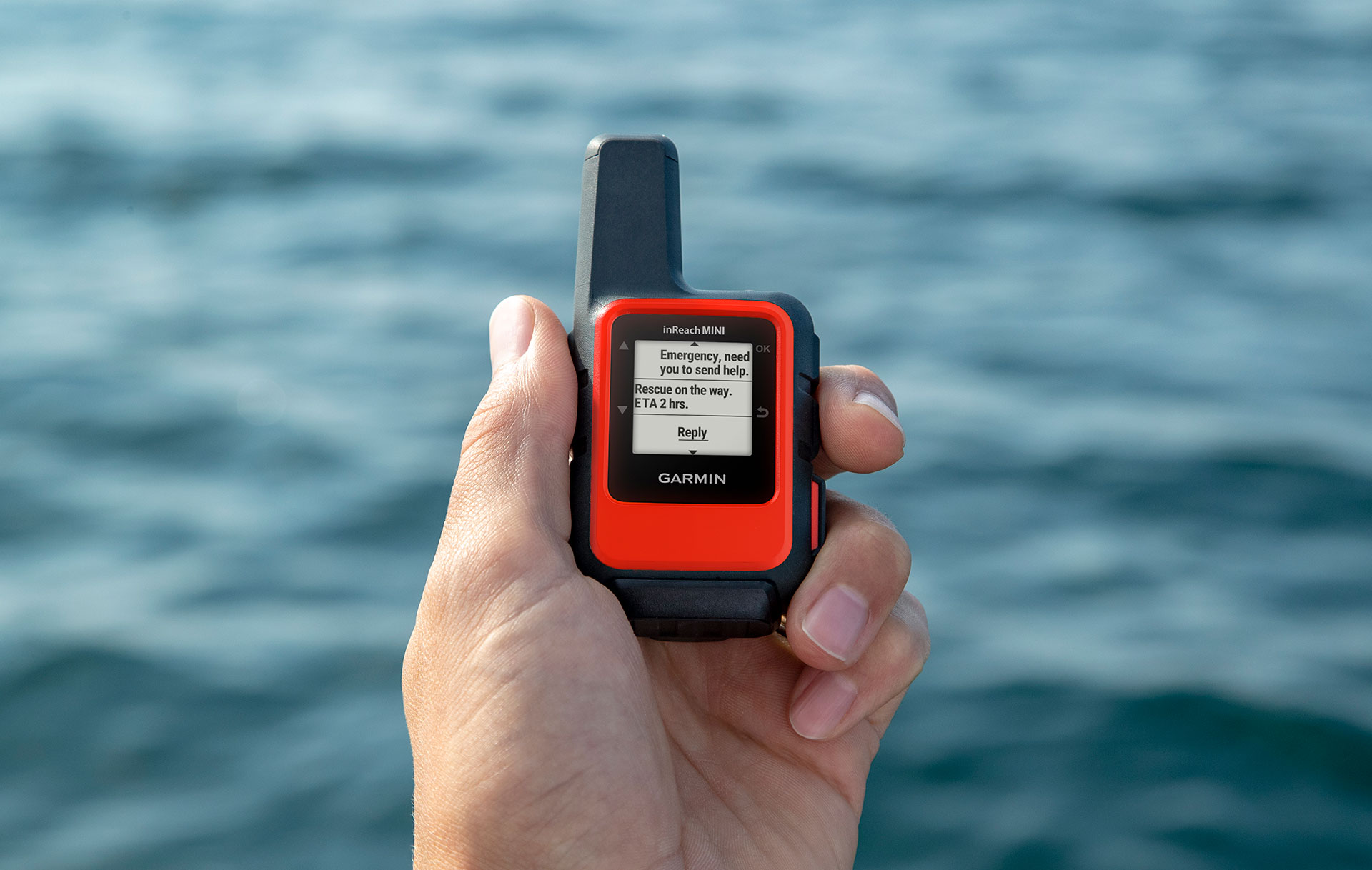
The Garmin Inreach Mini is physically possible. It’s considerably smaller than a cell phone.

https://www.switchbacktravel.com/best-satellite-messengers

The joke's on you; multiple startups are working on satellites that can communicate with unmodified cell phones. It will probably be limited to SMS but it's not literally impossible.
Plenty of startups works on impractical stuff. Not to pass judgement but the fact that startups are trying doesn't necessarily confirm validity. See wireless power.
You can buy a range of actual wireless power tech today going all the way back to crystal radio‘s. Charging pads, RFID tags, and fully radio powered sensors etc aren’t want we thing of as wireless power but yesterday’s magic is today’s background noise.
> yesterday’s magic is today’s background noise.

Yesterday's magic is today's Ikea product. I have a few of their 5 Euro Livboj Qi charging pads for charging my phone and Airpods and they work just fine.

I've heard there is a startup that has developed devices to automate and miniaturize blood tests!
I wonder what the theoretical minimum size would be for an antenna that can maintain a half-decent connection with the current generation of starlink/iridium/et.al. satellites.
Check out the Garmin inReach Mini or Rock Seven's RockBLOCK 9603. They're already relatively small -- I could imagine those circuits getting smooshed into a phone case. However, I doubt the connection would be anywhere close to half-decent. Would be useful for emergency text-messaging after a disaster, though.
>Would be useful for emergency text-messaging after a disaster, though.

Disaster is probably the least useful use case for this. The satellite would be overloaded from all the people requesting help. A far more plausible use case is if you got lost hiking or something.

Or multicast down, but probably couldn’t get more than a few kbps without killer expenses.

Outernet was an application of this concept:

https://en.m.wikipedia.org/wiki/Othernet

But reality is that cellular coverage world wide gets better and better.

I would presume it's not that much smaller than the size they built Dishy
Why? Look how fast technology progresses these days and how people have become so used to it. Seemingly impossible technological advances are rarely met with skepticism and disbelief but rather a shrug of the shoulders and a “Huh, guess they figured that out.”

That’s partly why people are so easily scammed by companies like Nikola and Theranos.

Iriduim phones are much smaller (~5x, I guess) than first Motorola mobile phones. They are capable of internet access, likely with first-generation GPRS speeds, and at killer rates.
It wouldn't even make any sense.
...but Apple
They can put in all in vast space they freed up when they took out the headphone jack.