Satelite "internet"? All I have read about is the ability to send emergency text messages. The author goes on a tirade about how you can't browse Bloomberg with a 256kbps internet. Straw man much?
> As per GlobalStar, they are capable of up to 256kbps (32Kbps). This is with optimal, unobstructed conditions and high power and gain antennas.
For text messages, even 256 bps is more than enough, hell, even 2 bps is usable for that.
> The source of this rumor is from Ming Chi Kuo
Ignores that the linked article from Bloomberg does not rely on Ming Chi Kuo and is much more concrete than just "the modem supports a frequency".
> Globalstar believes that over half their revenue will come from terrestrial spectrum licencing.
...
> The most likely path forward, and the one that Globalstar proclaims themselves, is licensing this spectrum for use on a terrestrial basis
...
> The recent meteoric rise in Globalstar’s stock price is almost entirely unwarranted.
??? If you're claiming that the new frequency in Iphones is for terrestrial use, then that validates Globalstar’s own strategy, so how is it unwarranted?
It’s odd that this article is titled to state that the iphone 13 doesn’t have satellite internet, but the content states that it nevertheless will have some sort of satellite connectivity. Clickbait much?
I seriously seriously doubt it will be X60 and a half.
It will be X60 ( And if will have Touch ID ), does not support the band and it is as simple as that. And on the subject of Modem, I thought HN wanted Apple to get rid of Qualcomm?
> The most likely path forward, and the one that Globalstar proclaims themselves, is licensing this spectrum for use on a terrestrial basis.
So no, not clickbait. The conclusion of the article's author is that n53 band support is not for satellite connectivity but for terrestrial connections using that band.
Maybe I’m reading it wrong, but this article quotes directly from the bloomberg article about how the satellite service will be unreliable, needs a long time to connect, and will only be able to send short emergency messages.
This isn't for an upcoming iPhone model, but more of a future indication. COSPAS-SARSAT return link is a feature undergoing testing today.
COSPAS SARSAT basically means Search And Rescue Satellite in both Russian and English. It's the international space-based search and rescue system. Today some Global positioning satellites (including GPS) are part of this programme as MEOSAR (Medium Earth Orbit Search and Rescue), looking down if they see a suitable digital beacon signal they will remember and, when able to see a ground station, relay their estimate of the beacon position and the beacon message (which may include a truncated GPS position from the beacon). The beacon might be a relatively bulky component on a ship, a handheld but still cumbersome personal beacon, or even an oversize wristwatch from Breitling, the Breitling Emergency isn't exactly a dainty piece of wrist jewellery, but it's not bigger than an iPhone.
Today that's a one way system, you activate your beacon and rescuers know which beacon it was, and where you are, and hopefully they come rescue you.
But return link is an upgrade so that beacons can receive a message back in the other direction e.g. "We see you" (which at least means you know the beacon worked) or maybe some day "We see you. Rescue team on foot to you. Stay nearby" which further improves morale. We know morale is very important in serious accidents. GPS birds are equipped to transmit of course, that's the whole purpose of them, so this is a relatively reasonable upgrade for them.
Thus today you can't get anywhere close to "Internet access" via this, it's even less practical than IP Over Avian Carrier. But in the future it's less of a stretch than you might imagine that a phone-sized device could in an emergency far from civilisation get some basic network access to find you assistance.
True, but note the GPS data transmission rate is only 50 bps; yes, just 50 bits per second. The signal is so week and so slow that after headers and error correction you get less than 4 bytes of data per second.
When comparing satellite reception it's not so much if you can receive data or not, but at what bandwidth. By contrast, data rates for Starlink are roughly 50 to 100 megabits per second; a million times greater than GPS.
So that's why the Starlink dish and electronics are orders of magnitude larger than a phone. Or to put it another way, that's why mobile phones can handle GPS data but not Starlink data.
> Apple has created a mechanism that will ask users to be outdoors and walk in a certain direction to help the iPhone connect to a satellite. Linking to a network also won’t always be instantaneous, with testing of the feature indicating that it could sometimes take up to one minute to work.
While that's in the style of a pull-quote, it is not a pull-quote. It's a quote from the Bloomberg article that the author of this article is generally disputing.
Back in the days there were stories about Bloomberg writers getting paid more if their stories move the markets [1]. According to the linked article this one really did the job, "Globalstar, a satellite services business, had their shares soar 90% from mid-August lows"
I have no idea if it will make it into the next iPhone, but it's certainly something Apple has been dumping R&D money into for several years.
From 2019:
>Apple Inc. has a secret team working on satellite technology that the iPhone maker could use to beam internet services directly to devices, bypassing wireless networks, according to people familiar with the work.
The Cupertino, California-based iPhone maker has about a dozen engineers from the aerospace, satellite and antenna design industries working on the project with the goal of deploying their results within five years
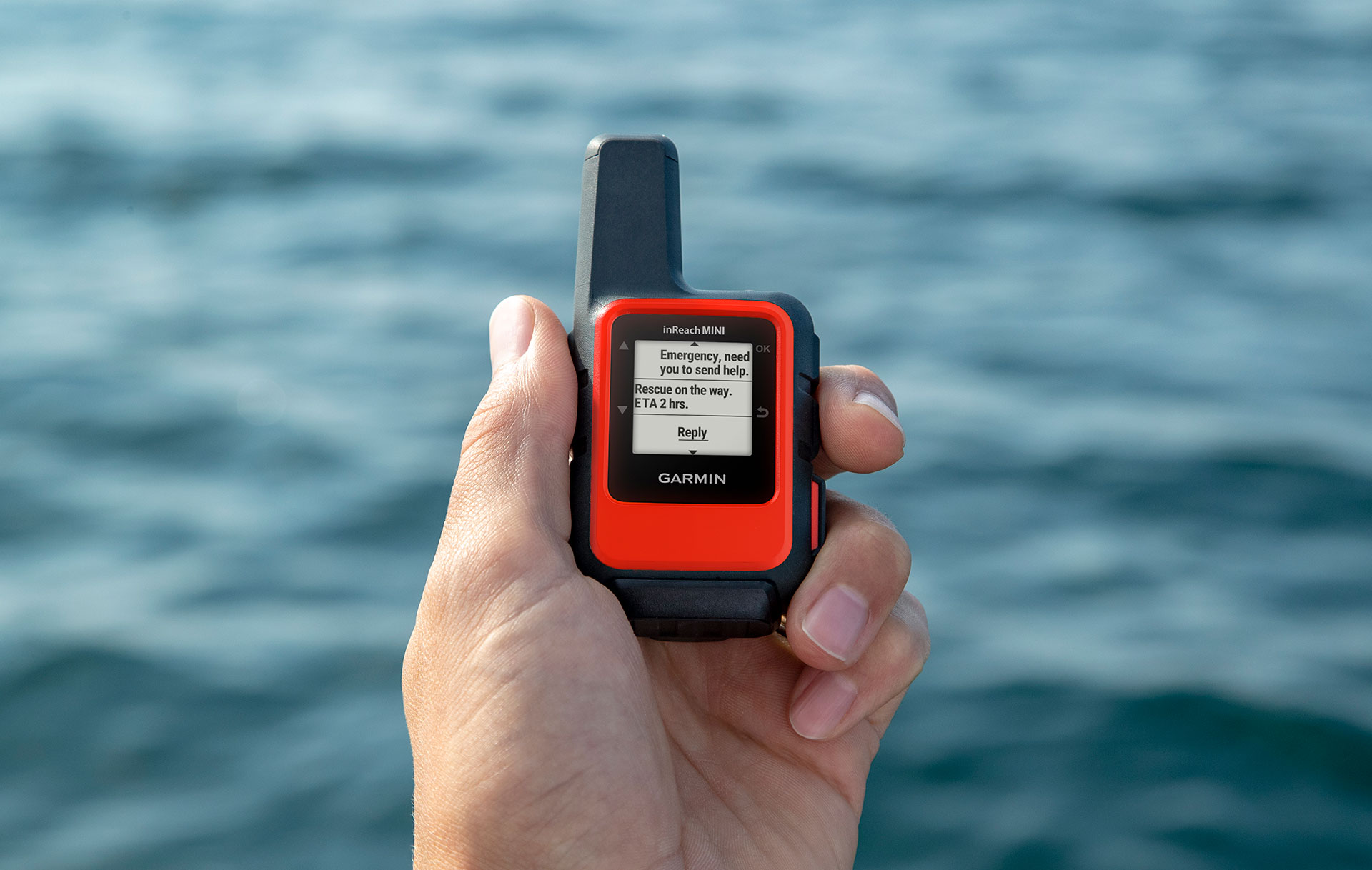
Gurman has the best sources inside Apple, and he is still saying that emergency satellite communications (as currently sold in tiny devices like the Garmin Inreach Mini) are actively being worked on.
>The rumored satellite features for future iPhones are reserved for emergency uses only, according to Bloomberg’s Mark Gurman. A few days ago, a report by well-known analyst Ming-Chi Kuo said the next iPhones will come with support for Low Earth Orbit satellite calls and messages. Gurman’s sources said, however, that Apple isn’t turning its devices into actual satellite phones, at least for now. Instead, the tech giant is reportedly developing at least two emergency-related features relying on satellite networks.
Kuo has the best sources inside Apple's supply chain, but we've seen him get the timeline wrong for components graduating from prototypes to mass production before.
> The most likely path forward, and the one that Globalstar proclaims themselves, is licensing this spectrum for use on a terrestrial basis.
Maybe it will be used for connecting iPhones to wearable devices, as an alternative to Bluetooth? Or maybe Apple is planning on something like Amazon Sidewalk?
Or maybe Apple is planning literally nothing, it just comes bundled as one of the plethora of functions that the Qualcomm chip can do because it's cheaper to make 1 design to do everything than to tape out more designs.
I find it representative of the sorry state of tech 'journalism' that anyone would think that a cell phone in 2021 is capable of satellite internet.
A quick search will show anyone the size of even the smallest Starlink receiver and common sense dictates that current generation phones cannot have any meaningful signal strength connecting to even an LEO satellite.
I agree it wasn’t going to happen, but I understand their confusion. Current satellite phones are the size of regular cellphones. That’s the equivalent of very low bandwidth internet access, but even low bandwidth access can still be really useful. https://www.g-comm.us/iridium-9555-satellite-phone.html
Dropping that to something that fits in an iPhone would be a very significant improvement, but it hardly breaks the laws of physics. Thus https://xkcd.com/2501/
Apple dumped a bunch of R&D money on a group of antenna experts years ago, so we'll see if they came up with a flat alternative to a helical antenna for satellite communications in the same way that the terrestrial cell phone networks did.
Apple has streamlined very significant improvements before
(and nobody cares if an obscure android device had it five years beforehand, Apple has wowed and brought many things into commonplace)
I would agree that there would typically be something obvious in the supply chain or a proof of concept before the iphone randomly has a significant improvement though
I think it slightly disingenuous to just pretend that big honkin’ antenna isn’t there and then say “it’s the size of regular cellphones”. My Motorola Startac from 25-30 years ago didn’t have an antenna that big.
It’s 143mm x 55mm, the iPhone pro is 146.7 mm x 71.5 mm and the iPhone pro MAX is 160mm x 78 mm. Granted it’s also thicker and slightly heavier, but calling it cellphone sized is reasonable IMO.
That’s dictated by basic physics and it’s not going in an iPhone effectively ever. Iridium satellites are in geo orbit though. You might be able to make a useful connection to something in LEO with a more compact antenna, but the satellites would have to be designed to support that. Current star link satellites have antennas designed to work with current star link base station antennas, not phone scale antennas. That could change though.
> In 2007, RIM [...] held multiple meetings after the iPhone was launched and accused Apple of lying about the capabilities of the new device. The claims focused on how it was impossible that a device with such a larger touch display could have any usable battery life. [0]
> [...] it couldn’t do what they were demonstrating without an insanely power hungry processor, it must have terrible battery life, etc. Imagine their surprise when they disassembled an iPhone for the first time and found that the phone was battery with a tiny logic board strapped to it. It was ridiculous, it was brilliant. [1]
I agree with you regarding the next iPhone not having satellite internet. But I don't think it represents "the sorry state of tech journalism" or lack of common sense. I can understand why some people would believe Apple is capable of doing the impossible: because they have seen Apple doing the "impossible" before.
The only "sorry state of tech journalism" is over-reporting this as "omg it totally will" instead of "qualcomm released a new chip which could pave the way for the iPhone to have satellite connectivity"
The issue isn't limited to tech journalism at all and in fact tech journalism may be the least affected by this issue of all.
But, frankly, I know my headline won't generate as many clicks or views and that's why they do it. Because we collectively react more to the sensational.
The fault, dear lanna, is not in our stars, but in ourselves.
> In 2007, RIM [...] held multiple meetings after the iPhone was launched and accused Apple of lying
That in itself is completely absurd. The iPhone was disruptive because it had a slick touch interface and thoughtful UX. There were phones doing vastly more (e.g. multitasking) than the iPhone years prior (Symbian, Windows CE), with a full day of battery life. It's no wonder RIM ended if they were that disconnected from the smartphone market.
The joke's on you; multiple startups are working on satellites that can communicate with unmodified cell phones. It will probably be limited to SMS but it's not literally impossible.
Plenty of startups works on impractical stuff. Not to pass judgement but the fact that startups are trying doesn't necessarily confirm validity. See wireless power.
You can buy a range of actual wireless power tech today going all the way back to crystal radio‘s. Charging pads, RFID tags, and fully radio powered sensors etc aren’t want we thing of as wireless power but yesterday’s magic is today’s background noise.
Yesterday's magic is today's Ikea product. I have a few of their 5 Euro Livboj Qi charging pads for charging my phone and Airpods and they work just fine.
I wonder what the theoretical minimum size would be for an antenna that can maintain a half-decent connection with the current generation of starlink/iridium/et.al. satellites.
Check out the Garmin inReach Mini or Rock Seven's RockBLOCK 9603. They're already relatively small -- I could imagine those circuits getting smooshed into a phone case. However, I doubt the connection would be anywhere close to half-decent. Would be useful for emergency text-messaging after a disaster, though.
>Would be useful for emergency text-messaging after a disaster, though.
Disaster is probably the least useful use case for this. The satellite would be overloaded from all the people requesting help. A far more plausible use case is if you got lost hiking or something.
Why? Look how fast technology progresses these days and how people have become so used to it. Seemingly impossible technological advances are rarely met with skepticism and disbelief but rather a shrug of the shoulders and a “Huh, guess they figured that out.”
That’s partly why people are so easily scammed by companies like Nikola and Theranos.
Iriduim phones are much smaller (~5x, I guess) than first Motorola mobile phones. They are capable of internet access, likely with first-generation GPRS speeds, and at killer rates.
Whatever. You know most of you and everybody else in the 1st world is gonna order one within 1-3 months of it coming out anyway. Apple's phones are so good.

> As per GlobalStar, they are capable of up to 256kbps (32Kbps). This is with optimal, unobstructed conditions and high power and gain antennas.
For text messages, even 256 bps is more than enough, hell, even 2 bps is usable for that.
> The source of this rumor is from Ming Chi Kuo
Ignores that the linked article from Bloomberg does not rely on Ming Chi Kuo and is much more concrete than just "the modem supports a frequency".
> Globalstar believes that over half their revenue will come from terrestrial spectrum licencing.
...
> The most likely path forward, and the one that Globalstar proclaims themselves, is licensing this spectrum for use on a terrestrial basis
...
> The recent meteoric rise in Globalstar’s stock price is almost entirely unwarranted.
??? If you're claiming that the new frequency in Iphones is for terrestrial use, then that validates Globalstar’s own strategy, so how is it unwarranted?