|
I found one of the perceived weaknesses of Clojure (in this article), it being dynamically typed, is a tradeoff rather than a pure negative. But it applies that tradeoff differently than dynamic languages I know otherwise and that difference is qualitative: It enables a truly interactive way of development that keeps your mind in the code, while it is running. This is why people get addicted to Lisp, Smalltalk and similar languages. > To understand a program you must become both the machine and the program. - Epigrams in Programming, Alan Perlis Two of the big advantages of (gradually-) typed languages are communication (documentation) and robustness. These can be gained back with clojure spec and other fantastic libraries like schema and malli. What you get here goes way beyond what a strict, static type systems gets you, such as arbitrary predicate validation, freely composable schemas, automated instrumentation and property testing. You simply do not have that in a static world. These are old ideas and I think one of the most notable ones would be Eiffel with it's Design by Contract method, where you communicate pre-/post-conditions and invariants clearly. It speaks to the power of Clojure (and Lisp in general) that those are just libraries, not external tools or compiler extensions. |
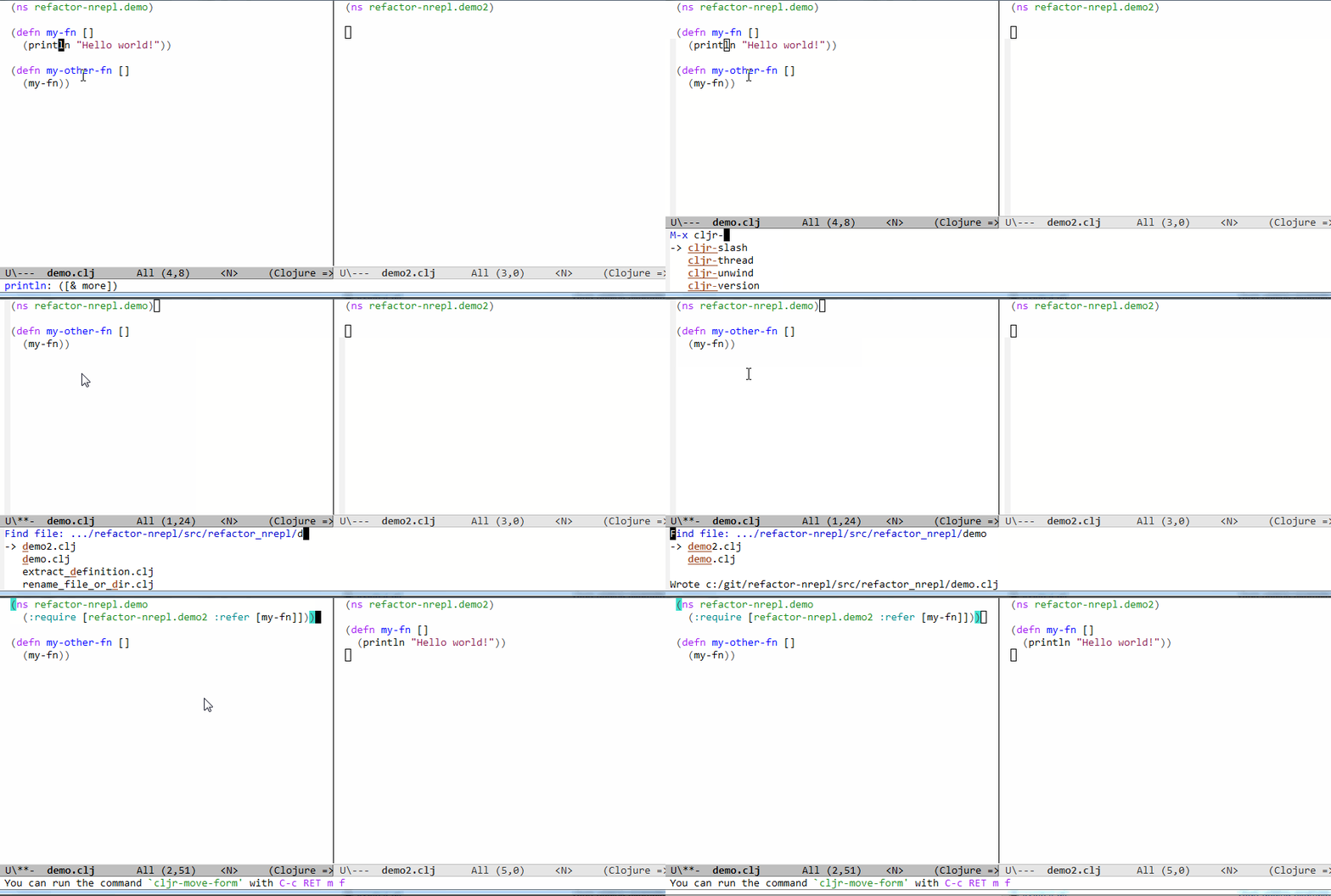
The current crop of statically typed languages (from the oldest ones, e.g. C#, to the more recent ones, e.g. Kotlin and Rust) is basically doing everything that dynamically typed languages used to have a monopoly on, but on top of that, they offer performance, automatic refactorings (pretty much impossible to achieve on dynamically typed languages without human supervision), fantastic IDE's and debuggability, stellar package management (still a nightmare in dynamic land), etc...