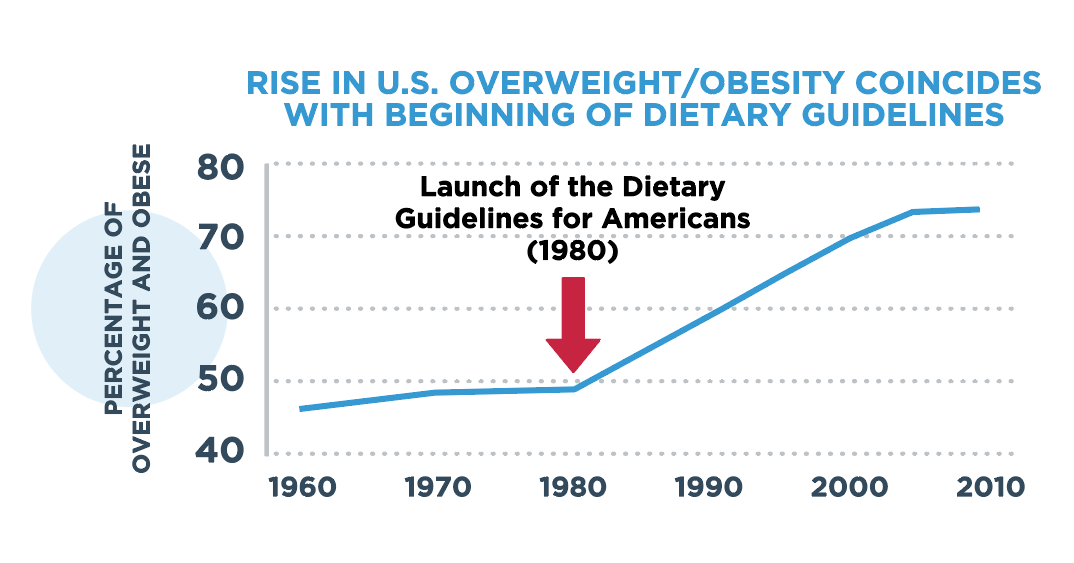
| I think this author is not being very scientific. E.g. in part 2 he dismisses carbs as a cause of obesity, and he begins by citing a trial involving 16 people. "A study from 2003 examined low-fat diets in 16 overweight people. Naturally, this low-fat diet was high in carbohydrates. When patients started the low-fat diet and were told to eat as much as they wanted, they actually ate 291 calories less per day." I think it is important to note that obesity skyrockets from 1980 on. The exact year the USDA began mandating a high carb diet.
https://images.squarespace-cdn.com/content/v1/5a4d5666bff200... I recommend listening to Garry Taub instead. He is a physicist. Nutrition scientists are literally not allowed to deviate from the official dietary fat causes obesity/lipid hypothesis. So it requires outsiders to get at the truth here. Why We Get Fat: https://youtu.be/qKuDamgGkZQ Big Fat Fiasco:
https://youtu.be/exi7O1li_wA Big Fat Nutrition Policy:
https://youtu.be/hzQAHITIUhg Edit:
Carbs are sugar strung together. They are quickly chopped up and metabolized, raising your blood sugar level. To maintain homeostasis the liver responds with a squirt of Insulin. Insulin signals to your fat cells to start storing the excess sugar, which would otherwise poison you by hyperglycemia.
In a normal high fat/ low carb diet, you feel full after eating, and your blood sugar returns to normal. At this point your fat cells can release those sugars back to the blood stream (to prevent hypOglycemia). But with a low fat diet your body doesn't get enough vitamins and minerals (most of which are fat soluble and removed, or made indigestiable without fat) so you stay hungry. You are forced to eat more of this high sugar food, which keeps your blood sugar high and prevents your fat cells from completing the second part of the fat/glucose cycle. So your fat cells swell and divide, making you bigger, and the bigger you are, the more nutrients your body demands. The obesity epidemic began in 1980 when the USDA began dictating a high carb diet. There are dozens of trials involving 10s of thousands of people going back 70 years that show a clear trend of carbs causing obesity in the West. I say West because it also clear that there is a genetic component involved in the carbs/fat cycle or insuline response. Which may explain why one isolated community can consume a lot of carbs from root veg and stay lean. |
Around 2017 I was ~100kg when I started a keto diet which excluded basically all carbs except for what is present in green vegetables, and ate more than 50% of calories from fat. Didn't control calories, just ate as much as I felt like but making sure I would still be in ketosis (used blood tests to check). I lost 5 to 6 kgs very quickly (mostly water weight) then the weight loss reduced drastically to .1 or .2 kg a week. On the other hand my BP was sky high (went even higher than before) and I got kidney stones (never happened before, and not an experience I would wish on anybody).
I quit the diet after a month and went back to eating normally. In January 2021 I was still 100kg, I started on a vegan whole foods, zero added fats/salt diet. I eat whole carbs, fruits and vegetables, but most of the calories come from carbs (yes pasta). Unlike the keto diet, after a couple of weeks the cravings stopped and it's easy to eat in a caloric deficit while feeling full because the food is way less calorie dense. I dropped 30kg in 6 months, for me the diet is easy to be on and my BP dropped to normal levels (120/80) without medications.
Again, this is just a personal experience, but my advice would be: 1) talk with a doctor/dietitian before changing your diet, especially if you have health issue, (2) don't assume because you see testimonials of things going flawless with one approach that the same will apply to you (3) keep things monitored