|
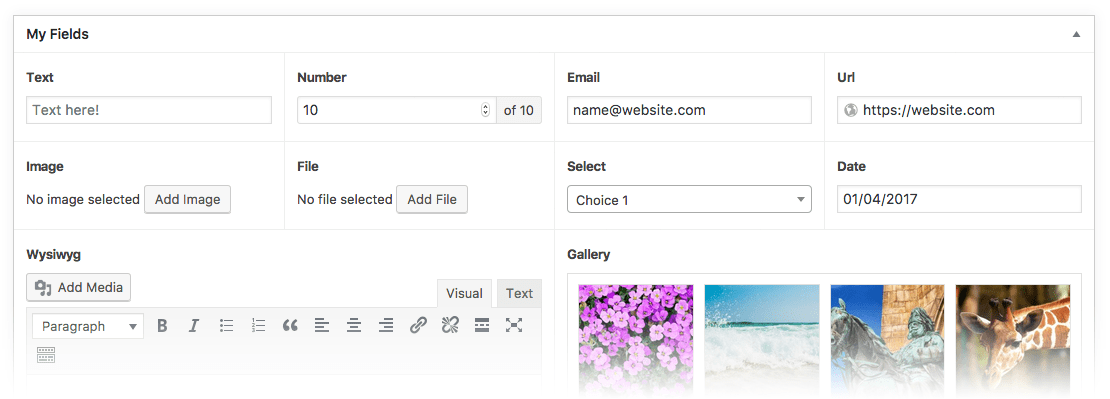
In terms of modeling, it handles nesting extremely well (repeater fields, Flexible Content Field). It has powerful conditionals (show X button if Y field = Z). In terms of layout, it can present a layout of fields like this sample (https://www.advancedcustomfields.com/wp-content/themes/acf/a...) whereas most headless CMS just show fields one after another in one long list, or at most inside a collapsible accordion. The combination of nestable, reusable blocks + conditional fields means that you can really make the editor experience streamlined if you put in the time to design a good layout. The other CMSes don't really give you that choice; you're bound by their editor frontend's limitations (as in you can't rearrange fields, can't group them together logically, can't put them into tables or columns or rows). It's the kind of stuff that doesn't matter to devs much (it's all JSON once it gets to us) but can make the editor experience more intuitive. Edit: Also, coupled with custom Wordpress taxonomy plugins, it allows you to model things that aren't necessarily pages (menus, products, quotations/testimonials, events, etc.). Many of the other FOSS CMSes use file-based models in which every model has to be a file/page. You can often work around that but it's not very intuitive, like if you wanted to nest a testimonial inside an accordion on a product page, how do you model that? It's pretty easy in ACF or the DB-based headless CMSes, not so easy in the file-based ones. |