I've turned on plenty of cell phones that hadn't been charged or powered on for a couple of years and everything worked normally. Same with thumb drives I've picked up after years.
I mean, anything can fail after three months. Your statement doesn't really add anything without stating the failure rates. For all I know the failure rate could be less than that of physical hard drives.
Thanks, now I understand where this is coming from.
And the linked article makes clear it's not a worry at all. Key part:
> All in all, there is absolutely zero reason to worry about SSD data retention in typical client environment. Remember that the figures presented here are for a drive that has already passed its endurance rating, so for new drives the data retention is considerably higher, typically over ten years for MLC NAND based SSDs...
Average users virtually never pass the endurance rating, so @teddyh's claim seems awfully sensationalistic.
if that is true disks should come with a very visible note stating this... seriously, 3 months would be nothing. i doubt it is true because 3 months is a time frame which should be surpassed quite often making this more known.
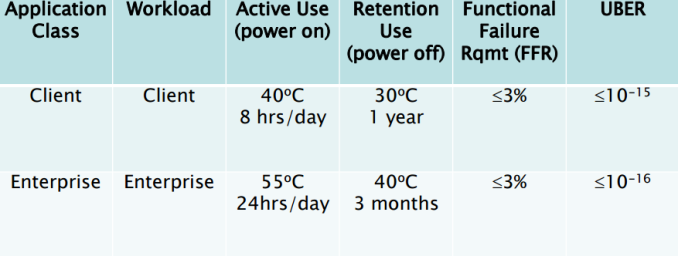
Three months is the minimum standard for data retention from an enterprise SSD that has used up its entire write endurance and reached end of life, but is still being stored in a hot chassis.
Outside of that narrow scenario, the three months figure is wildly wrong and should not be repeated. Lower temperatures, a consumer drive, and not having used up 100% of the write endurance will all drastically lengthen data retention.
(However, under no circumstances should you trust a cheap USB thumb drive to retain your data. Those tend to use lower-grade flash memory and lower-quality controllers. If you need an external device to reliably cart around data, shop for a "portable SSD", not a "USB flash drive".)
That's a document from nine and a half years ago, and it states:
> It depends on the how much the flash has been used (P/E cycle used), type of flash, and storage
temperature. In MLC and SLC, this can be as low as 3 months and best case can be more than 10
years. The retention is highly dependent on temperature and workload.
Are there any modern sources provide more accurate stats? "3 months to 10 years" is so vague as to be useless.
It occurs to me now that the key word here may be “unpowered”. As in, if you unplug an SSD and leave it on the shelf, it may lose (some) data in as little as three months. There might not be many people who do that, and those who do might not notice the occasional corruption.
I've turned on plenty of cell phones that hadn't been charged or powered on for a couple of years and everything worked normally. Same with thumb drives I've picked up after years.
I mean, anything can fail after three months. Your statement doesn't really add anything without stating the failure rates. For all I know the failure rate could be less than that of physical hard drives.