I think the confusion arises because because people (the author of the article included) confuse "color" and "spectral color". Spectral colors are what you when you look at light of a single wavelength, e.g. a green 520nm laser pointer. Not all colors are spectral colors, e.g. you'll see purple if you look at a source that produces 600nm and 450nm light, which is a color that can't be produced by any single wavelength.
Coming back to the color of the sun, it (the sun + the atmosphere) emits light over a range of wavelengths, which we usually perceive as white.
Most people describe it as yellow, and if you google image search for "sun", most of them range from orange to yellow. Though it actually covers the full visual spectrum, much of the blue gets scattered, making the sky blue and the sun yellow.
Yes, it's white. In space, and from the ground when it's not near the horizon, under almost all atmospheric conditions.
As for the confusion... oh my, such a rich area.
The Stanford Solar Center outreach site[1] could be a fun place to start. It manages "It is a common misconception that the Sun is yellow, or orange or even red." On a site heavily themed in, yes, yellow and orange and red. Other outreach sites don't even manage that warning, despite similar colors. It then continues with a common color misconception "However, the Sun is essentially all colors mixed together, which appear to our eyes as white." Followed by a miscolored ground spectrum[2], of which there's a diversity[3], on a page named GreenSun, reflecting a misconception that ground irradiance spectrum peaks in green (rather than 490 nm cyan/blue), and another misconception that spectrum peak determines object color, and thus another that the Sun is in some sense green.
In US popular culture, Sun color is yellow[4]. And that's pervasively used in K-12 astronomy and earth sciences illustrations, competing with orange.[5]
Astronomy textbooks, including the top 10-ish introductory astronomy college texts (thanks Library Genesis!), similarly use yellow. This is reinforced by "G2 class yellow star", while failing to mention that classification's blue "white"-point (Vega). And further reinforced by a diversity of aphysically colored H-R diagrams.[6]
We've known Sun color for a century, had detailed limb darkening and tint numbers for decades, and now years of intensive effort on stellar atmospheres in support of occultation and exoplanet work. And science education content manages to remain decoupled from all of that.
Confusion... sigh. There's a physics education research line, "if you think your lectures are working, your assessment also isn't". I'd extend it to "if you think your science students, content, and instructors, aren't deeply steeped in misconceptions, then your knowledge of your field's education research also is". Confused mess doesn't begin to cover it. The juxtaposition of good caring people putting in lots of (tragically not-broadly-collaborative) effort, with baseline that's so very ghastly... sigh.
If you know of anyone/project/lab/forum/etc with an interest in speculative exploring "what might science education conceptions/progressions/interactives look like if they weren't a disaster?", even if, as with Sun color, there's little hope of fixing it any year soon, I'd very much appreciate hearing of them. Thanks!
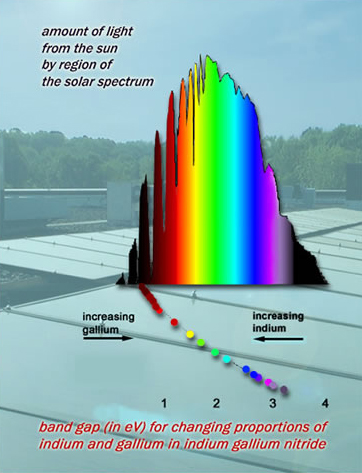
Coming back to the color of the sun, it (the sun + the atmosphere) emits light over a range of wavelengths, which we usually perceive as white.