| I feel that is not entirely clear how you enable this workflow that keeps all this text dependencies at sync. The collaborative part makes sense. But what's more important about this tool is explained with a somewhat vague graphic (https://uploads-ssl.webflow.com/5fb84e8c68f67b29553103fa/604...) I think it would be more useful to see an explanation that showcases how this text components sync across all tools and how that allows you to always have a single source of truth for your text. I think another valuable thing to showcase is to showcase the features of this solution by persona. What do you get from this as a writer, designer, PM, developer... That's extremely important IMO. If you don't do this, it's pretty hard to relate to this problem and solution. Verbalizing the problem in the communication is particularly important. I know this is a problem many cross-functional team have but it's a very discrete problem. It's easy to familiarize and relate to this problem if you explain it. "Forget about outdated text in your product and the painful and lengthy process to update it. Ditto is a platform that allows you to write and collaborate on your product text while keeping everything in sync. From design mocks in Figma to your text strings in your production code, with Ditto everyone gets the same product text seamlessly." |
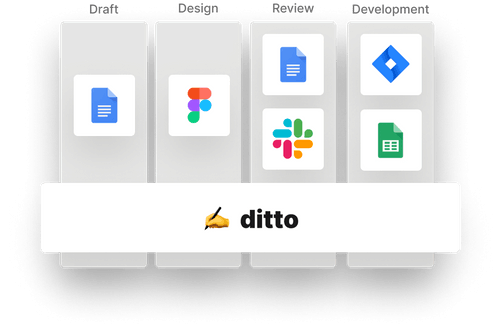
Agreed that we should explain how Ditto syncs text across the stages of product development better, especially since that's the big vision (end-to-end text management).
We do have persona-specific pages for writers, designers, and developers (you can find those in the Product dropdown in the top nav, in the section near the bottom of the page, or in the footer). On these pages, we try to verbalize the specific problems those segments are facing, and then specifically how Ditto solves them.