|
Audio person here. I found the post fascinating, but I wish they did more to explain what they were talking about to a layperson. Basically, all sounds that you hear are composed of many layered sine waves of different frequencies and intensities. The graphs in the post are spectrograms, which graph those frequencies over time. The Y axis represents pitch, the X axis represents time, and the brightness at any given point represents how loud that particular frequency was at that particular time. Most sounds, even seemingly simple ones, look very complex on a sonogram, like a smudged pen stroke. The images of different instruments below demonstrate this; these are all very complex sounds, even though we only hear it as a single note being played. The voice one is one of my favorites, because it shows just how weird and complicated everyday sounds can get. But bird songs are different; on a sonogram, they appear as a single line. The complexity of the bird songs here comes from the fact that they're taking a single sine wave and changing the pitch over time. Where most sounds look like a complex mix of smudged paint strokes, bird songs look like a single, precise, bouncing stroke. |
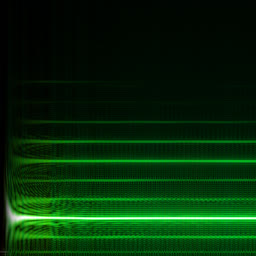
Which is akin to dragging a single finger across different piano keys. Only a single frequency, or note, played at a time. This is common among songbirds.
Contrast that with the sound of a crow. The sonogram is much more broadband in signature. This is akin to mashing a bunch of keys on a piano all at the same time. Many frequencies present at simultaneously.