| Interesting. A few questions that come to mind: 1. What is the dew point of the compressed air? Many applications using compressed air require very dry air so as to avoid corrosion issues (e.g., air tools) as well as problems related to heating of water vapor (e.g., tires). For small applications, the dew point is reduced using simple traps, silica gel beads, or molecular sieves, but for even-drier air or larger applications, refrigeration-based dehumidifiers are needed. If the use of water in the compression stage leaves the dew point significantly higher than what you get from reciprocating or Roots-type compressors, that added complexity could be a deterrent to adoption. 2. What's the energy efficiency of the process? Does the claimed "20% lower cost of ownership" account for the difference in efficiency (whatever it is)? 3. What sort of pressures can be achieved with a tabletop or shop-sized compressor? Presumably, this is related to the speed at which the drum is spun, but what are the practical limits? I mean, I use a decent amount of very dry air at 300 bar (yeah...), and I'd love to replace the noisy beast of multi-stage compressor with something quieter and more efficient. |
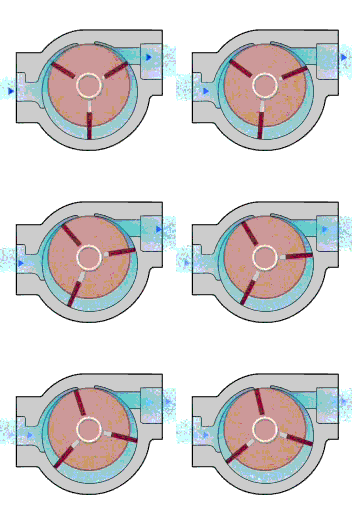
Indoor Scroll Compressors are around 47db (IE 100-1000 times quieter than the 70db mentioned here). They are completely oil-free and produce class 1/class 0 air. That is, you can use them to breathe from They are not as energy efficient as rotary screws, but it's only off by about 20%.
In practice, the flow of air into a tank produces way more noise than the compressor itself with these.
Even rotary screws are around 60-65db, and there are both oil and water cooled versions. They are very energy efficient, and due to the design, can be put on VFD's and modulate air-demand incredibly well.
Oil carryover is typically <3ppm, and you can use oils meant for incidental food contact/etc or filter it down further.
Both the above have 100% duty cycles. They can be on continuously (and in fact, oil-flooded rotary screws get unhappy if they are used too little).
Without more, or at least, based on what this article says, it's really hard to see what part of the market this thing will inhabit. They also don't talk at all about how to modulate them, what their duty cycle is, etc. Nor the dewpoint, etc.