|
|
|
|
|
|
by jjk166
1946 days ago
|
|
|
There's still a substantial group that thinks the impact was part of a 1-2 punch with the eruptions of the deccan traps, which produced a far larger impact on the atmosphere but over a longer period of time. Iridium from the asteroid impact is found in the basalt deposited by the deccan traps, so they definitely happened concurrently. That said, if you look at the patterns of extinction, survivors seem limited to things that could hide in burrows or in deep water and then survive for an extended period exclusively on scavenging, as if everything that happened to be on the surface was suddenly killed and then photosynthesis stopped working for a few years. Notably, species that would normally be very sensitive to climate change like small amphibians survive whereas generalists capable of long distance migration die out. There may have been ecological stress beforehand but a singular cataclysmic event turned it into a mass extinction. |
|
|
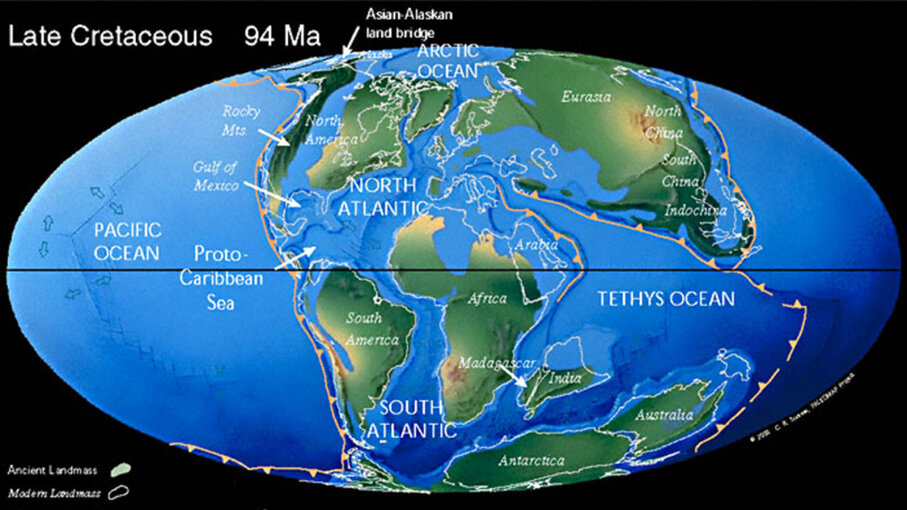
Do we know for sure that the volcanism in the Deccan traps wasn't caused/triggered by the asteroid impact? I know they're pretty much located at the opposite ends of the world, so could the shockwaves from the initial impact have created an amplified node at the other side?
(edit: wikipedia[0] says it's inconclusive:
> Although the Deccan Traps began erupting well before the impact, [..] the impact may have caused an increase in permeability that allowed magma to reach the surface and produced the most voluminous flows, accounting for around 70% of the volume
[0] https://en.wikipedia.org/wiki/Deccan_traps#Chicxulub_crater )