Hacker News new | ask | show | jobs
by tobobo 1948 days ago
I inherited a 1928 model A from my dad last year that he’d had since the early 1970s. I’m looking forward to giving it a drive, but it’s in a garage at the top of a hill and I’m afraid if I drive it down I’ll never get it back up. If anyone had tips for caring for and operating old cars, I’ll take any advice I can get!
4 comments

The Stutz building is a former auto factory in downtown Indianapolis that is now an office complex. Stutz is another Indiana luxury car manufacturer from around the same time as Duesenbergs. Last I knew, Turner Woodard [0] is the owner. Back in the 2000's Mr. Woodard had his extensive auto collection housed in that complex, including Duesenbergs, Stutz Bearcats, and memorably, a 1920's Reo Speedwagon fire engine.

My point is this, if you can get in contact with his people, you are likely to find experts in maintaining those old cars. I definitely remember watching Duesenbergs used in parades when I was growing up.

0: https://www.turnerwoodard.com/

Thank you for the resource! I’m realizing through these replies that I’m talking about a different (and much more common) Ford Model A- but it looks like he has one of those in his collection as well.
Careful on the gears, the gearbox is unsynchronized so you can't just switch from gear to gear, keep it in neutral in the middle of changing gears, release the clutch and then re-engage the clutch before revving up or down to your next target gear speed then move the gearshift and release the clutch (see 'double declutching').

Read up a bit on how to deal with manual spark advance, what it does and how to operate the lever, that's probably the biggest difference to running a modern engine, and of course you're going to have to manually operate the choke.

Make sure that you have the right gas for that engine, add lead replacement additive to ensure you don't wreck the head and the valves.

Starting it is a nice little job by itself, here is the 'short' checklist: (assuming everything works...):

- gear in neutral (better get this right or it will be an expensive day), roll the car a bit if you want to verify that worked

- ensure handbrake is on (just in case...)

- set the spark advance to the 'start' mark or if it isn't there to 'retard' or all the way up

- close the air intake to the carb ("choke") to let just a little bit if air in (open this up once the engine is running bit by bit)

- ignition to 'on'

- throttle about 1/3rd to half open

- open the tap to enable fuel to run to the downdraft carb

- wait a few seconds for some fuel to make it down

- next depends on whether you have an electric starter fitted, look for a button on the floor. If you do, it's like any other car at this point, if not:

- slowly rotate the engine until you feel backpressure on the starter crank, then whip it through that point and be ready to pull the crank rod out if the engine starts. This is the most risky bit, if the crank rod does not nicely disengage the 'u' will be more than happy to break your wrist so make sure that the starter hole is clean and that the rod moves in and out smoothly, and put some grease on the tip where it engages the crankshaft.

- in warm weather it should be a lot easier to start than in cold

- to shut it down: reverse the order above, obviously without the bit about the hand crank

If it doesn't start: prepare to learn a lot about this engine :) But that's time well spent.

After you've shut it all down double check that fuel stop because if it is even a little bit open you'll end up with an engine full of gas!

Take it easy, and seriously, very easy.

The reverse gear is a lot lower than 1st so if you can't go up a hill in 1st try doing it backwards, good chance that will do the job.

Also: it got to that garage at the top of the hill somehow so I'm assuming that it either got there under its own power or there was some means of transporting it there, that may still be around.

The engine in there is a flathead 4 cylinder, if you are nice to it it will last forever. Make sure you check the fluids before going on a trip and ensure that the brakes work, especially if you're going to start downhill, they could easily be seized if it has been sitting for too long.

Check your tires for any visible damage or drying out.

In driving: plan your breaking points on your calendar. These old drum brakes are nothing at all like modern disc systems so get a good feel for how good (or terrible) the brakes are before rolling to a stop behind someone else's car in traffic. And prepare to bang your nose on the wheel the next time you drive a 'normal' car ;)

Enjoy your fantastic car :)

This is helpful! As noted in my other comments I’m realizing that the car I’m talking about is a Ford Model A which is completely different- and an indication of how much I have to learn. This post reminds me of this guide I found on my dad’s computer after his death:

BEFORE STARTING

Connect fuse at starter motor. Turn on gas under dash. Retard spark, which is the lever up position. Open up gas mixture at choke lever a turn. Turn over the car while pulling out the choke in short bursts, usually the car starts on the first choke pull.

WHEN THE CAR STARTS

Advance spark which is the lever down position. Gradually close the fuel mixture down to a 1/4 to 1/2 turn out (in the 9-12 on the clock range).

WHILE DRIVING

Retard the spark at stop signs and the care while idle more smoothly. Open the fuel mixture up to 6 o'clock if the car lags on hills.

PARKING THE CAR FOR THE NIGHT

Turn off gas under dash. Disconnect fuse at starter motor. put up top to keep dust and water out.

GENERAL THIINGS TO CHECK

Water level, if you can see water everything is fine. The radiator temperature gauge works by the way Tires, 30-35 psi is about right. Oil, not apt to be a problem.

THINGS TO REMEMBER

THIS IS A 6 VOLT POSITIVE GROUND CAR, WHICH MAKES JUMP STARTING ALMOST OUT OF THE QUESTION.

WHEN CHARGING THE BATTERY, THE BLACK CLIP GOES ON THE STARTER MOTOR POLE, RED ON THE FRAME.

Good news: you have a starter motor :) And I did write about your model A. A friend of mine has one so I'm pretty familiar with them.
I have a British 1920's car and I can verify that this is all on point. It's an amazing machine to drive but you do first really have to get to understand how that machine works. Modern cars are very good at doing a lot of the hard work for you to the point that by comparison you're not actually really driving the car :p
What do you have?
Holy hell, this is terrifying! Let me get this right: do 14 different things you're not at all used to doing. And if you make a small error, you can easily trash the motor, break your wrist, cause an accident. Have I summarized this correctly? Wow.
No, you won't trash the motor, but if is full of gas it can get pretty hard to get it back out...

But if you're not prepared for the backlash of the crank then you could easily get hurt, so better be careful, after all it is an engine.

There is a good reason starter motors were not considered to be a luxury by the public at large, even though Henry Ford thought otherwise. He lost a lot of market share due to that decision alone. With some luck there is a starter motor there, which will make this a lot easier.

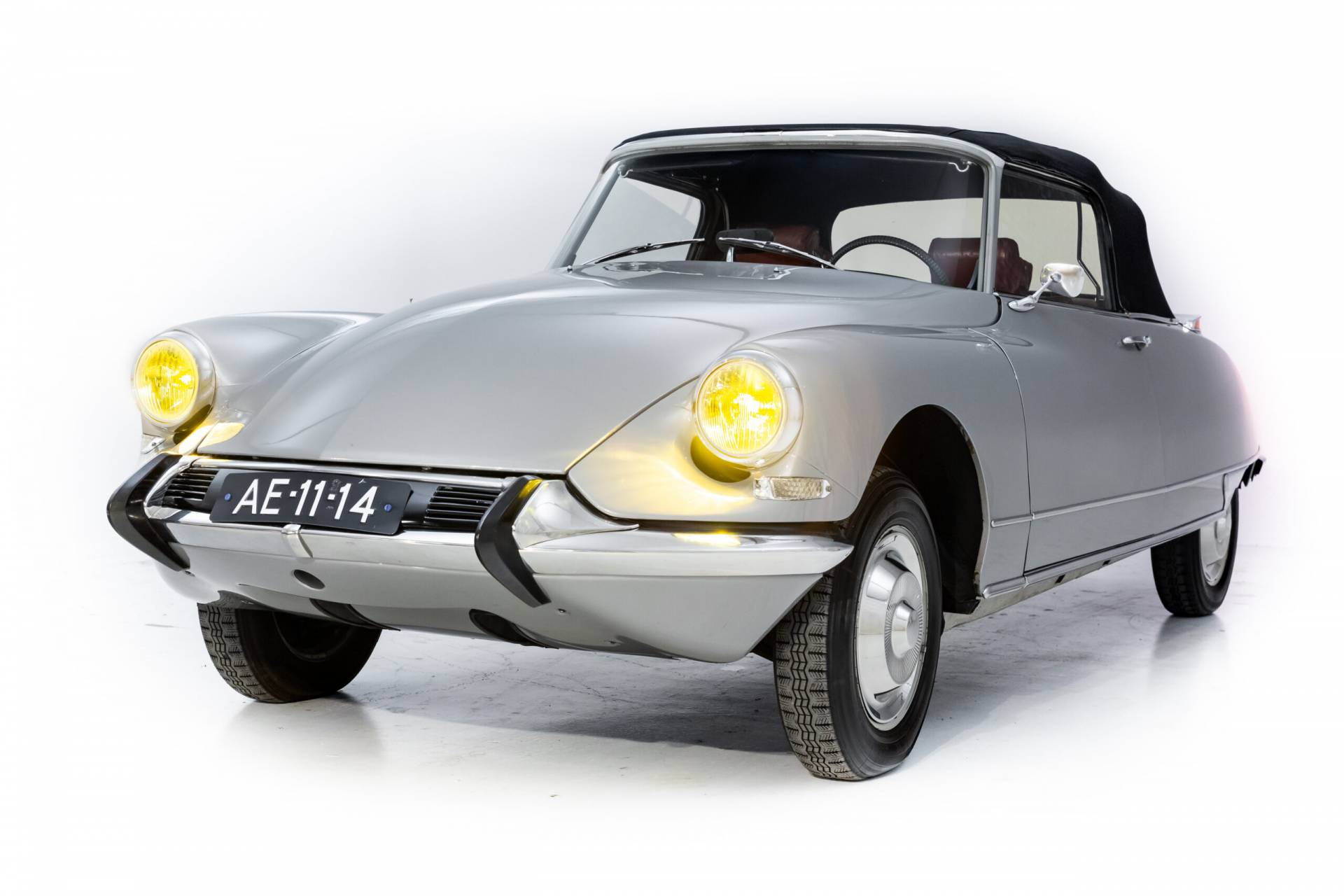
Fun fact: the Citroen DS's sold in 1975 still had an emergency starter crank shipped as a standard, and you could , if you really wanted, still crank it by hand. I tried once and figured that it had more symbolic than practical value.

You can see the hole for the crank clearly here:

https://cdn.classic-trader.com/I/images/1920_1920_inset/vehi...

If anything then getting such an oldie to run and take it for a spin will make you appreciate how much you take for granted when operating a modern car, and that even though conceptually nothing has changed the implementation itself is what makes all the difference.

Generally, find a club, or group, or forum that specializes in whatever vehicle you have. But, Fred & Augie only made 444 Duesenbergs, so I would start with the ACD museum to get a recommendation for someone who could look it over for you and show you the quirks. Leno’s YouTube channel has several videos about them to start you off. Trivia: they were all made in the same year, but the depression struck, and so they were all sold and titled over the following decade.
Good tip. I am realizing that the Ford Model A I’m referring to in my post is a totally different. car but I know this advice still stands- my dad had forums he would visit to find parts, I wonder if I can figure out which ones those were.
Ah, facepalm! Fords are much more accessible. Here is a rundown on two large national groups: https://www.fordbarn.com/forum/showthread.php?t=46185&showal...

There also appear to be a number of state/regional groups. Decide if your near-term goals are a) a safe running car b) a clean looking unrestored car c) restoration/concours with a big budget and then try to connect with a retired enthusiast who has plenty of spare time and a willingness to share info and advice. Safe travels.

ps. Everything jacquesm wrote, plus grasp the crank gently with your thumb still next to your index finger, not around and on the other side of the crank. Avoids a broken thumb on backfire.

I have no advice, but what a cool thing to have passed down!