Regarding power usage, I'm not very familiar with how those drives compare [0]. To be honest, power consumption was of interest for the build I was talking about because I wanted it to be fanless (I actually ended up adding a very silent fan, just for peace of mind). For my NAS needs, I'm building in a recycled server, so power usage isn't as much of a concern.
However, I did look for 2.5" drives (the server comes with a 2.5" backplane) and there don't seem to be many "consumer" drives in this format that are both high capacity (>2 TB) and non SMR (I'll be running ZFS). I'm also not looking to spend very much, so SSDs are out.
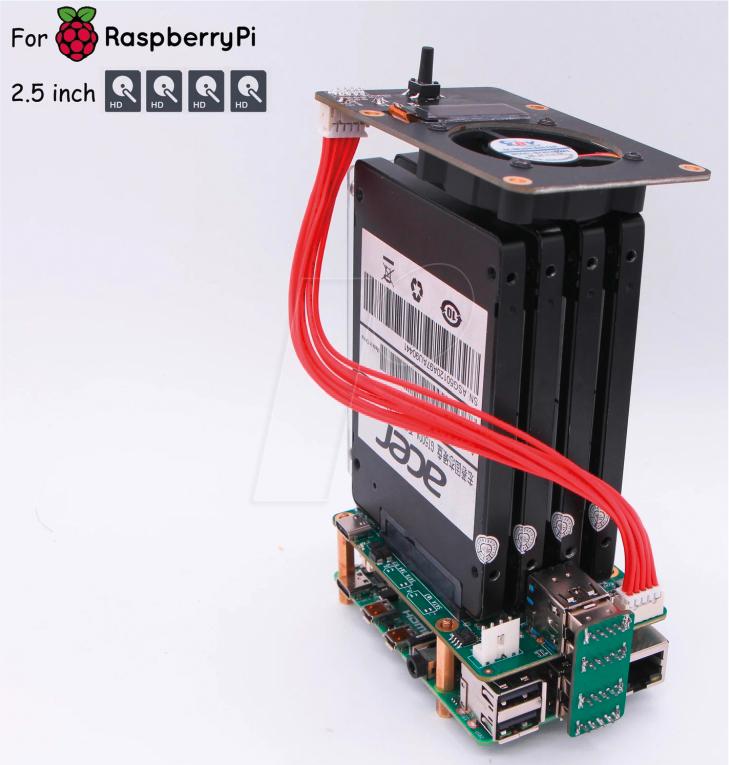
The startup current is 1.2 A under 5V. So if you're running four of them, you'll need 24 W just for the drives. Not sure if the "cheap" enclosures are able to stagger drive startup.
My Gigabyte motherboard cannot, so it would require a PSU large enough to drive both the board (CPU + RAM + etc) and the drives for a little while. So with four drives, you'd be looking at 50 W to be sure it fits.
50W is way more than I am willing to operate. I want it to be extremely low powered. I think that a 2.5 inch SSD might be a better fit for me then, maybe M.2 if there's a adapter for the PI.
SSD and low cost is still possible, but one has to make compromises in terms of storage size. A 1 TB network drive would be enough for my use case, be it 4 x 256 SSD's or one big.
Peak power is significantly different from operational power on many of these setups. The intel setups, frequently idle at a 1/10th or less the rated power. The rpi4 OTOH, isn't nearly as dynamic, particularly if your running 64-bit debian. Its still just a few W, but its not going to drop down into the mW range when its idle because debian/etc doesn't have particularly good power mgmt on that board.
So in the end the rated W can be quite misleading, particularly for home use where the NAS will tend to sit idle a large part of the day.
Okay, but what I really wanted to say is that I want a very small and low powered NAS without a big PSU. The PI is powered over USB, that's fine for me.
I went looking for 2.5 inch NAS/ video recorder drives this past weekend and came up empty handed. I’d hoped to install them into a mini-pc NVR. The form-factor doesn’t appear to lend itself to the reliability drive manufacturers target for this class of drive. They’re optimized for high write speeds and very high write loads. You can of course use consumer laptop drives in a NAS, but write speeds will be lower and reliability may suffer.
1Gbps is the max. anyways for my home setup, no matter how fast the drive is and I have a backup for important stuff, I'm not dependent on enterprise NAS drives.
I want: extremely small, low cost and very low watt usage.
The main issue is that larger capacity drives (> 2TB) seem to be SMR in the 2.5" range. I've looked and haven't found a PMR one (except maybe for "enterprise" drives which cost more than an SSD). Depending on how you want to use those drives, you may be having a bad time. For example when rebuilding a ZFS pool. [0]
If your use case / setup allow you to deal with the complete loss of your array (which, granted, is not 100% likely) or don't use ZFS, then I suppose you could look at Seagate's 2.5 Barracuda line. They're relatively cheap given their capacity and I don't think they're particularly unreliable in and of themselves.
[0] There are many people talking on the internet about ZFS performance with SMR disks. Here's a quick find:
However, I did look for 2.5" drives (the server comes with a 2.5" backplane) and there don't seem to be many "consumer" drives in this format that are both high capacity (>2 TB) and non SMR (I'll be running ZFS). I'm also not looking to spend very much, so SSDs are out.
[0] Seagate specs for 2.5" Barracuda: https://www.seagate.com/www-content/datasheets/pdfs/barracud...
The startup current is 1.2 A under 5V. So if you're running four of them, you'll need 24 W just for the drives. Not sure if the "cheap" enclosures are able to stagger drive startup.
My Gigabyte motherboard cannot, so it would require a PSU large enough to drive both the board (CPU + RAM + etc) and the drives for a little while. So with four drives, you'd be looking at 50 W to be sure it fits.